Deutsche Bank may shrink trading arms as a profitability booster
Bank also mulls reducing interest-rate business and prime finance activities catering to hedge funds
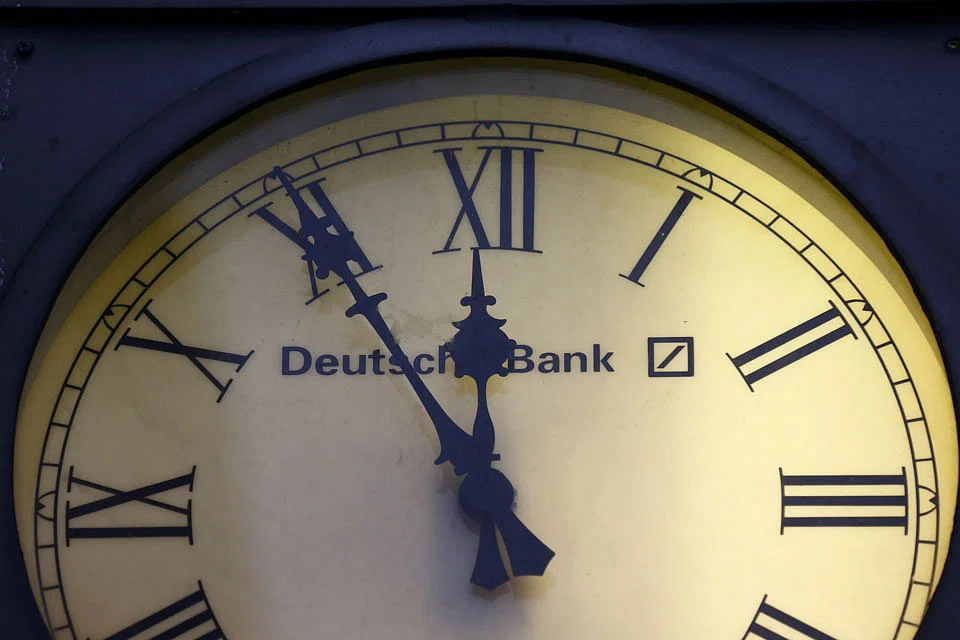
Frankfurt
DEUTSCHE Bank AG, which runs Europe's biggest investment bank, is looking at shrinking its trading businesses as it reviews three options to boost the firm's profitability, according to a person familiar with the matter.
To help lift returns, the bank is considering paring its interest-rate trading business and the prime finance activities that cater to hedge funds, said the person, who asked not to be identified speaking about private discussions. One option would shrink the investment bank by almost a fifth, the person said.
Deutsche Bank co-chief executive officers Anshu Jain, 52, and Juergen Fitschen, 66, have sought to keep a full-fledged investment bank and consumer-lending unit since 2012, even though higher capital requirements hurt profitability and weighed on the stock price. Meanwhile thousands of job cuts by European competitors Barclays Plc and UBS Group AG were welcomed by shareholders, boosting those banks' stock prices.
Deutsche Bank's managers "know where they're not making enough money", Alevizos Alevizakos, an analyst at Keefe, Bruyette & Woods Inc in London, who predicts that the shares will underperform, said by phone on Monday. "The rates and prime finance businesses are negative for the capital ratios and they don't make us much money as they used to."
Autonomous Research LLP analysts last month advocated cutting the interest-rates trading business in half to help improve Deutsche Bank's return on equity. The report noted that such a retreat "would be a difficult pill for management to swallow, given the firm's DNA and commitment to be the 'last man standing'".
Mr Jain spent most of his career in fixed-income trading, having helped build the business after joining Deutsche Bank from Merrill Lynch & Co in 1995. He and Mr Fitschen succeeded Josef Ackermann, a former investment banker who drove the German bank to global status, at the helm in 2012. Paul Achleitner, Deutsche Bank's supervisory board chairman, is a former Goldman Sachs Group Inc banker who worked with Deutsche Bank on its US$9 billion purchase of Bankers Trust Corp in 1998, a major step in its transformation into a global investment bank.
Deutsche Bank's stock trades at less than 80 per cent of its so-called tangible book, or theoretical liquidation, value. Zurich-based UBS, which announced 10,000 job cuts in 2012, trades at 1.5 times tangible book, while Barclays trades at 0.90 tangible book after saying last year that it will cut 7,000 investment-bank jobs.
As part of a strategy overhaul, Mr Jain and Mr Fitschen are weighing a sale of its consumer bank in a reversal of their pledge to remain a universal bank, said two people with knowledge of the matter. The bank presented three options for revamping its strategy to its supervisory board on Friday, said the people.
Under one scenario the bank would sell Postbank, the German consumer lender acquired under Mr Ackermann, the person said. That would free up capital by allowing the bank to shrink risk-weighted assets by about 45 billion euros (S$73.48 billion), the person said.
Some of that equity could help absorb any losses from shrinking the securities unit's leverage assets by 150 billion euros, said the person. That amounts to about 18 per cent of the investment bank's leverage assets, estimates by analysts at JPMorgan Chase & Co show. The analysts recommend that the bank cut 115 billion euros of such assets.
Deutsche Bank already cut the balance sheet of its investment banking and trading unit 16 per cent to 1.21 trillion euros in the two years though December, company filings show.
Further cuts wouldn't mean a complete exit from any businesses at the investment bank, said the person familiar with the matter. A Deutsche Bank spokesman declined to comment The Frankfurt-based company doesn't quantify the revenue it makes from the hedge-fund servicing unit, which it calls prime finance.
"They won't lose much revenue directly, but what worries me is the knock-on effect and what the loss of cross-selling means for other businesses like equities," said Mr Alevizakos. "People may take their loyalties elsewhere if the bank doesn't function as a one-stop shop." BLOOMBERG