

Deutsche Bank's nightmare decade is gone, but not yet forgotten
The perennial sick man of European finance appears to be on the mend
 Add BT as a preferred source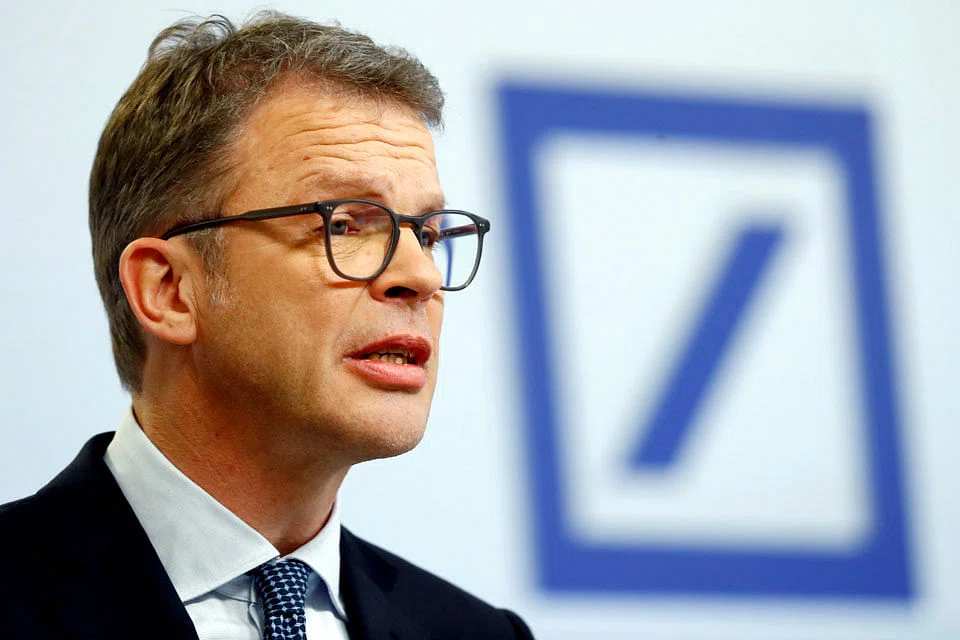
Frankfurt
ON the day before one of the biggest margin calls in history, Deutsche Bank chief Christian Sewing joined an urgent meeting with a not-unfamiliar message: there was a problem, and billions of dollars were at stake.
But as executives on the late-March call briefed him on the bank's exposure to Archegos Capital Management, this time it wasn't all bad news.
Risk managers had been concerned by the family office's rapid growth for some time, and had been collecting additional collateral. And the firm's traders stood ready to quickly offload the slumping assets.
So as Archegos' collapse slammed rivals with more than US$10 billion of losses, Deutsche Bank walked away without a scratch, reporting its highest profit in seven years.
It was enough to stun longtime observers of the firm, which has spent the past decade-and-a-half stumbling from one crisis to the next. The escape added to a growing sense that Mr Sewing may finally be moving Germany's largest bank past its dysfunction of the last decade.
"What they pulled off is quite impressive in the last couple of years," said Matthew Fine, a portfolio manager at Third Avenue Management who started investing in Deutsche Bank shares after Mr Sewing was appointed CEO in 2018. "After several failures and years of incredible underperformance and substantial capital raisings, at some point you really have to rip the band aid off, and Sewing seems to have done that."
Halfway through the CEO's radical four-year restructuring, the perennial sick man of European finance appears to be on the mend. Its shares have more than doubled from a record low, when the pandemic revived old fears whether Germany's largest lender was strong enough to survive another crisis.
Instead of collapsing under bad loans, Deutsche Bank successfully rode a trading wave that's buoyed investment banks globally. After years of gloom, some executives inside the Frankfurt headquarters are now even considering deals as they seek to profit from the recent stumbles of rivals.
To be sure, for a bank that lost money in five of the past six years and whose shares remain 87 per cent below their peak, the bar to success is low and blunders remain an ever-present possibility.
The stock is still trading at one of the steepest discounts to book value among European lenders.
Mr Sewing's efforts have gotten a boost from factors outside his control, such as the global market rally and extensive government guarantees that kept defaults at bay during the pandemic. But the CEO, who had initially planned to focus more on corporate banking and cut back trading even more, was quick to adapt when markets moved against him just weeks after he announced his plan.
At home, he's confronted the reality that in order to make money in an overbanked country with negative interest rates, he needs to raise fees and slash jobs, even at the risk of upsetting clients and unions.
Above all, however, the former risk manager has made progress dealing with internal issues that had undermined his predecessors. He ended the divisional infighting that Mr Sewing once called "Deutsche Bank's disease", and he addressed risk lapses that had caused the bank, over and over again, to shoot itself in the foot.
Dodging bullets
Archegos wasn't the first blowup that Deutsche Bank sidestepped under Mr Sewing. The bank last year avoided taking a potentially damaging financial and reputational hit from the collapse of payments firm Wirecard, having cut its exposure as doubts about the company's business grew.
It also hasn't taken a direct hit from Greensill Capital, the supply-chain finance firm whose demise forced Credit Suisse Group to liquidate a US$10 billion group of funds.
Of all those pitfalls, Archegos had by far the biggest potential to do lasting damage to the green shoots of Mr Sewing's turnaround. Deutsche Bank had joined several other investment banks in dealing with the family office of Bill Hwang.
Many firms had been willing to accept more risk in return for the hefty fees Archegos provided. Credit Suisse, for instance, allowed it to borrow up to 10 times the value of its collateral. The Swiss bank ended up with some US$5.5 billion in losses, the most of any firm.
Deutsche Bank had run up an exposure worth several billions of dollars, according to sources. But it hadn't lent as aggressively and its arrangement with Archegos allowed it to ask for more collateral to back up what looked like an increasingly imbalanced house of cards.
Deutsche Bank had decided two years earlier to exit the business with hedge funds and family offices - known as prime brokerage - and was in the process of transferring its relationships to BNP Paribas. That gave Ashley Wilson, the head of the unit, and risk chief Stuart Lewis even more reason to keep things in check.
The bank, which was conducting daily analyses of Archegos' holdings, had noticed already in February that concentration risk was rising. In early March, it started to request more collateral, the sources said, asking for anonymity. By Wednesday, March 24, when Mr Lewis explained the situation to Mr Sewing in that phone call, he told the CEO that the bank's internal models were pointing to relatively minor potential losses.
When it became clear on Friday that rivals were cutting their lifelines and getting out, Mr Lewis got on a 20-minute call with his team, and the bank decided to liquidate. The firm's traders sold most of the positions that Friday to multiple buyers. The bank used direct sales, aiming to avoid spooking the markets. Within a few days, it recovered all of its money and even had some collateral left.
Biggest legal bill
Navigating minefields without a hit is a new experience at a lender that over the prior decades had developed a reputation for putting quick profits and bonuses before the interests of clients, let alone the broader public.
When the world stepped up scrutiny of the industry in the wake of the 2008 financial crisis, Deutsche Bank ended up footing the biggest legal bill of any European bank, spending more than US$19.4 billion on fines and settlements.
Its lost decade stood out even in a post-crisis period that was tough for many European lenders. Among the 25 biggest banks in the world, it was the only one to have a net loss over the past 10 years, while many rivals racked up more than US$100 billion of profits.
"Reputation is something you build slowly but slips away quickly," said Susanne Homoelle, a professor of banking and finance at the University of Rostock who started her career at Deutsche Bank in the 1980s. Back then, she said, "there was a pride among the staff that the bank was more sophisticated than peers. So much went wrong subsequently in terms of misconduct and compliance issues."
Inside the bank, many still worry that the next accident is just around the corner. Last month, a lawyer representing Citigroup Inc in a case related to its mistaken transfer of US$900 million revealed that another unnamed bank had recently made a similar mistake.
Only three years earlier, Deutsche Bank had erroneously transferred a much bigger sum to an outside account. Now, the first thought for many at the German lender, according to one executive, was: "Was it us?"
Turning around
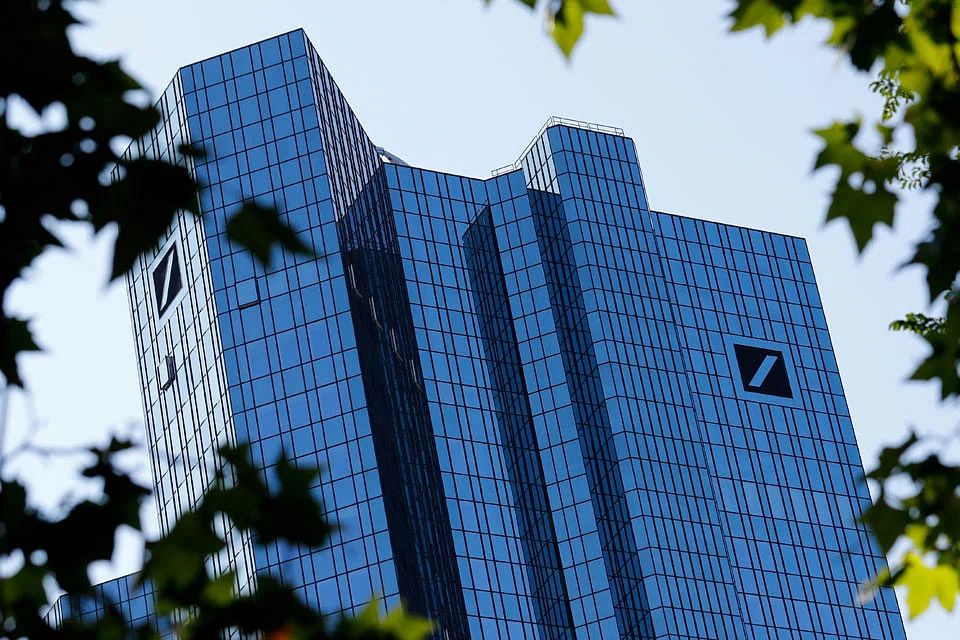
Still, the change is palpable in the twin towers in central Frankfurt that represent the beating heart of Deutsche Bank. An annual survey showed staff morale rising to the highest level in eight years. Bonuses for last year rose 29 per cent, and by almost half for investment bankers, at a time when many rivals had to cut.
Senior executives say doubts about Deutsche Bank's strategy have ceased to be an issue during client meetings. Decision-making has gotten faster as well.
The CEO early in his tenure made it a top priority to rein in the conflicts between the various businesses - and their executives - to combat the internecine warfare that had plagued many of his predecessors.
After inheriting a bank that had unceremoniously dumped former CEO John Cryan and seen open revolt across the management board, Mr Sewing moved quickly to consolidate power. Out were those of questionable loyalty, often replaced by internal confidantes with whom he'd risen through the ranks.
Avoiding self-inflicted distractions has allowed the bank to ride a broad trading rally that's now well into its second year. For three quarters in a row, Deutsche Bank's fixed-income unit has taken back market share from rivals, alleviating concern that the business had been too damaged by years of cutbacks. The investment bank also benefited from a surge in blank-cheque companies, a business where Deutsche Bank had a top position for years.
Challenges ahead
But the trading boom - and its inevitable slowdown - also raises some awkward questions for Mr Sewing's restructuring plan and strategy in the future. At its heart, the original plan envisaged cutting thousands of jobs, scaling back the bank's international ambitions, particularly in investment banking, where the CEO exited equities trading. Instead, Mr Sewing planned to focus on the more stable lending operations, especially the transaction bank servicing big companies. Yet the units at the heart of his growth plans have repeatedly missed their targets after being hit hard by the European Central Bank's negative interest rates, forcing Mr Sewing to rely more on his traders.
Challenges still abound. Analysts remain sceptical that Deutsche Bank can meet its modest profitability target, an 8 per cent return on tangible equity. Legal and regulatory issues continue to crop up. But at least in the markets, Mr Sewing's success in avoiding unforced errors has helped restore some degree of confidence.
Ultimately, Mr Sewing will have to come up with a cure for the ills plaguing German - and, by extension, European - banking. "Deutsche Bank has managed a remarkable turnaround in the past quarters," said Andreas Dombret, a former top official at the German central bank. "Now it's about making sure that is sustainable." BLOOMBERG
Decoding Asia newsletter: your guide to navigating Asia in a new global order. Sign up here to get Decoding Asia newsletter. Delivered to your inbox. Free.
Share with us your feedback on BT's products and services
TRENDING NOW

‘I felt like dying’: Thai Singha beer scion speaks up after disclosure of alleged sexual abuse

Japan’s Asics to spin off popular Onitsuka Tiger sneaker business; shares rise
CDL, Hong Realty trump 3 other bidders with S$542.4 million offer at S$1,865 psf ppr for Peck Hay plot

The returnees: Inside China’s AI talent reversal

