

Digital platform Qifa bets on increase in Russia-China trade and payments
 Add BT as a preferred source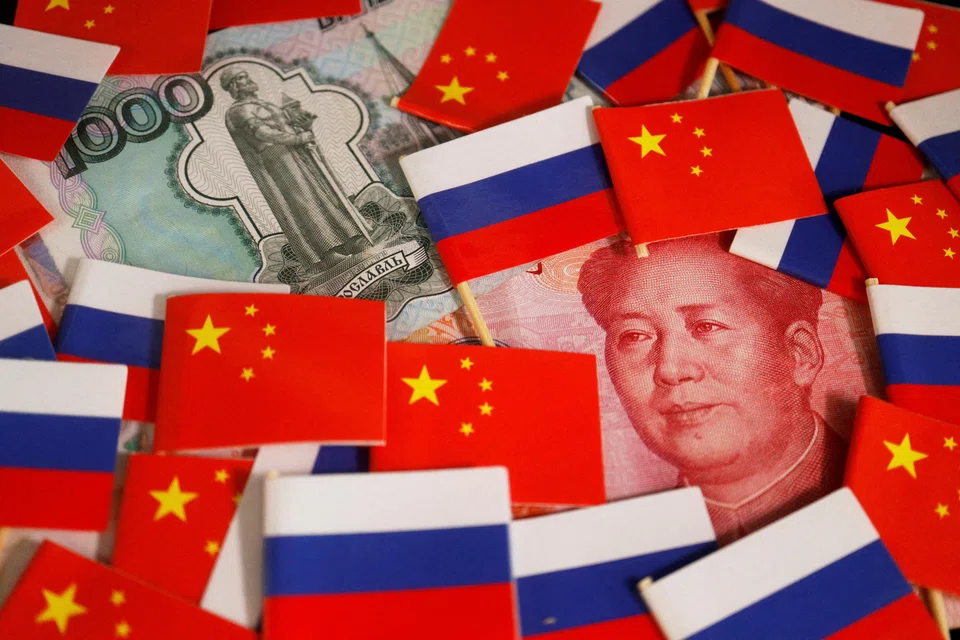
DeeperDive is a beta AI feature. Refer to full articles for the facts.
DIGITAL platform Qifa has expanded into facilitating two-way trade between Russia and China as it seeks to solve payment issues currently stunting the flow of goods and services.
Moscow and Beijing have resorted to complex steps to try to avoid payment delays, including a workaround using small, regional Chinese banks, as the threat of secondary US sanctions on Chinese banks that facilitate trade with Russia deters larger lenders.
Until last year, Qifa’s primary focus was the import of Chinese consumer goods to Russia, but it launched bilateral trade this year, charging commission from buyers in China in yuan, and buyers in Russia in either yuan or roubles, founder and majority shareholder Sun Tianshu said on Tuesday (Jul 16).
The strongest demand is for industrial goods from China – car parts, agricultural machinery, tools and equipment, Tianshu said. Some day, it will branch out to commodities.
“Now the priority is not raw materials, but in the long-term perspective energy products will also be present on our platform.”
Trade between Russia and China ballooned to a record US$240 billion in 2023. Qifa forecasts annual trade exceeding US$350 billion by 2028, with a tenfold increase in market share for B2B digital commerce.
Navigate Asia in
a new global order
Get the insights delivered to your inbox.
Deputy board chairman Kyle Shostak said Qifa used a wide network of financial institutions to ensure smooth payments, particularly as settlement problems have become more acute this year.
“This is due to secondary US and EU sanctions,” Shostak said. “The answer to this is simple – we have been a Chinese company for a long time and we have a huge number of banks in China that have worked with us all this time.
“These are not necessarily key, international Chinese banks. We usually go to banks where are suppliers are, these are regional banks.”
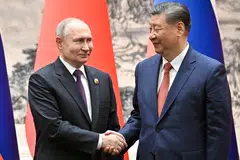
Reuters reported last month that China was authorising small, regional banks that can fly below the US sanctions radar to ensure payment flows with Russia can continue. REUTERS
Decoding Asia newsletter: your guide to navigating Asia in a new global order. Sign up here to get Decoding Asia newsletter. Delivered to your inbox. Free.
Share with us your feedback on BT's products and services
TRENDING NOW
Air India asks Tata, Singapore Airlines for funds after US$2.4 billion loss

Beijing’s calculated silence on the Iran war

China pips the US if Asean is forced to choose, but analysts warn against reading it like a sports result

Richard Eu on how core values, customers keep Singapore’s TCM chain Eu Yan Sang relevant

