

US dollar fragile as investors weigh Iran sanctions, Treasury buybacks
[LONDON] The US dollar held steady on Tuesday (Aug 25), but remained at risk of further declines as investors parsed Washington’s expanded sanctions against Iran and renewed efforts to ease pressure on longer-dated Treasury yields.
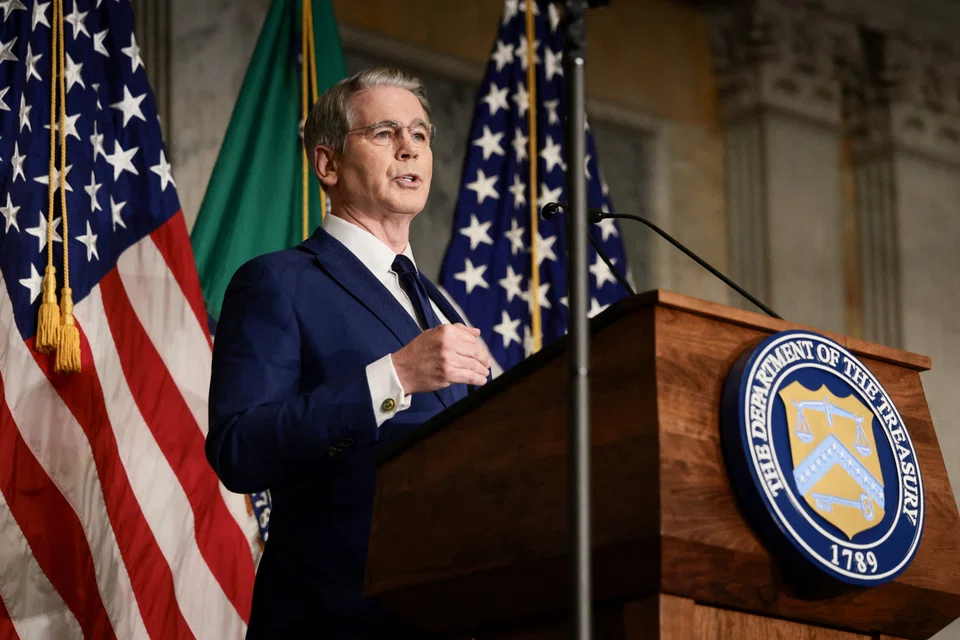
The currency had come under pressure late last week after US Treasury Secretary Scott Bessent unnerved investors by saying the Treasury would double the size of quarterly repurchases of longer-dated bonds, sparking concerns about a shift to a more interventionist strategy to curb the rise in borrowing costs ahead of mid-term elections later this year.
A CNBC report on Monday that the Treasury could use part of its cash balance to buy back longer-dated bonds helped steady long-term yields, although investors see a confluence of factors that could keep the dollar under pressure through the rest of the year.
“Trump wants borrowing costs down. I imagine he appreciates the fact that the Fed can only really control the overnight rates. And so why wouldn’t the Treasury get in there and attempt to push yields at the longer end down?” said David Morrison, a senior market analyst at Trade Nation. Morrison also added that a softer dollar would also work in favour of the administration that wants more US companies to export.
Further, traders have also pared expectations for an imminent interest rate hike by the Federal Reserve, with probabilities for a 25 basis point rise in September now standing at around 40 per cent, down from 67 per cent earlier this month, the CME Group’s FedWatch Tool showed.
The euro was a touch softer at US$1.1663, on track for a second day of decline but after hitting a three-month peak last week. Sterling was a touch stronger at US$1.3635.
Investors also avoided large bets as the expansion of sanctions against Iran unveiled on Monday did not have any mention of major trade partners such as China, although Bessent warned countries to cut business ties with Teheran or risk being forced out of the dollar-based financial system.
Currency traders also processed the implications of the trade dispute between the US and Canada. The Canadian dollar weakened for a second day against its US counterpart, with the US dollar up 0.1 per cent at C$1.3860, having gained 0.6 per cent on Monday to mark biggest daily gain in two months.
Elsewhere, the dollar climbed 0.1 per cent on the Japanese yen to 159.215. The yen has been in something of a holding pattern in recent weeks, having given back some of its intervention gains, but is still well off a multi-decade low of about 164 it hit before Japanese authorities stepped into markets.

Worries about the broader weakness in the dollar aided gains in the cryptocurrency market.
Bitcoin briefly crossed the US$80,000 mark for the first time since mid-May, taking its gains for the month to nearly 30 per cent, while ether edged up and was close to its January high. REUTERS
Decoding Asia newsletter: your guide to navigating Asia in a new global order. Sign up here to get Decoding Asia newsletter. Delivered to your inbox. Free.
Share with us your feedback on BT's products and services
TRENDING NOW

LTA proposes combining car COE categories, adding rebate-surcharge system

StarHub to acquire MyRepublic’s mobile business amid ongoing telco consolidation

DBS, OCBC, UOB rout lops billions off STI as inflation, rate concerns spook investors

Grab CEO’s wife Chloe Tong on life with Anthony Tan and finding her purpose

