

Dollar firms to one-month high as markets mull Fed hike odds
Markets are pricing a nearly 40% chance of a 25-basis-point rate increase on Wednesday
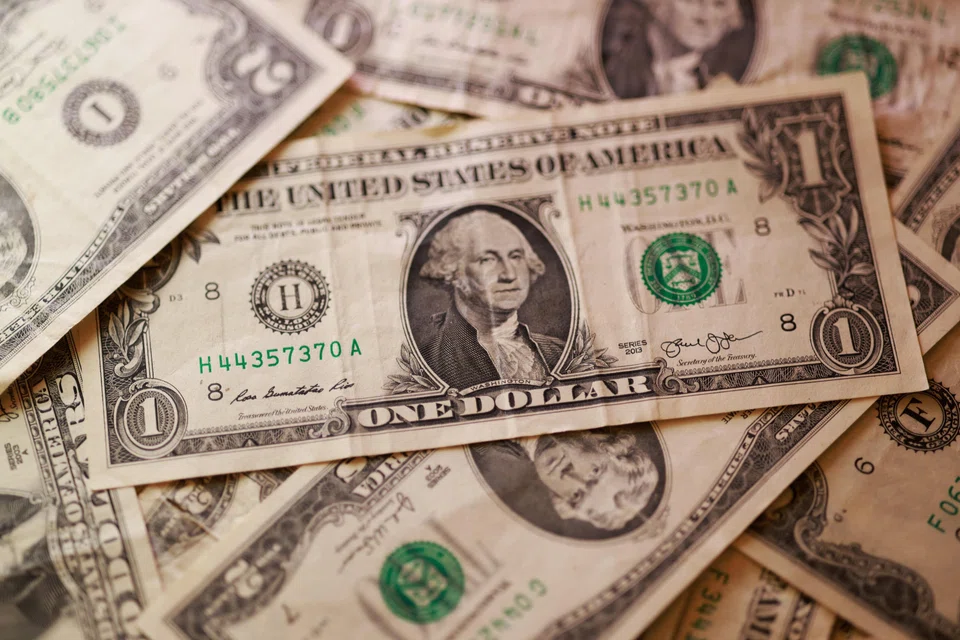
[LONDON] The US dollar steadied near a four-week high on Tuesday (Jul 28) as traders weighed the prospect of a Federal Reserve interest-rate hike this week, even as falling oil prices eased some inflation concerns.
The dollar index, which measures the greenback against a basket of currencies including the yen and the euro, ticked up 0.06 per cent to touch its highest since June 25 at 101.58. The euro was about flat at US$1.1362, while sterling dipped 0.07 per cent to US$1.328. Against the Japanese yen, the dollar rose to 163.915.
The dollar’s resilience reflects a sharp repricing of Fed expectations in recent months. Treasury yields have climbed steadily since April as the US-Iran conflict stoked concerns about inflation and a hawkish debut from Fed Chair Kevin Warsh reinforced expectations of higher interest rates.
While oil prices have retreated after the US paused attacks on Iran and President Donald Trump hailed “good talks” with Iran, yields remain near their multi-month highs.
“The rise in Treasury yields by 20bp across the curve over the past month means financial conditions have tightened and the Fed would be viewed as playing catch up if it decided to pull the trigger,” wrote Kenneth Broux, head of corporate research FX and rates at Societe Generale.
The Fed concludes its two-day policy meeting on Wednesday, with a growing number of major brokerages warning that policymakers could raise rates, given this month’s surge in oil prices.
Markets are pricing a nearly 40 per cent chance of a 25-basis-point rate increase on Wednesday, up from about 20 per cent a week ago, according to LSEG data. Traders see almost a 95 per cent probability of a hike by September.
There was a risk that investors have become too convinced of a near-term rate hike, meaning any dovish outcome could force traders to unwind long-dollar positions, Dominic Bunning, head of G10 FX strategy at Nomura said.
Investors raised long dollar positions while increasing short sterling bets in the week ended July 24, according to Morgan Stanley options pricing data.

Investors will also look to US second-quarter GDP data and the Fed’s preferred inflation gauge, core PCE inflation, this week.
In other major currencies, the Australian dollar weakened 0.4 per cent versus the greenback to US$0.696, as Australia’s central bank chief Michele Bullock said underlying inflation remained too high and a further slowdown in domestic demand may be required to tame prices.
Both Bank of England and Bank of Japan are widely expected to keep interest rates unchanged at their meetings on Thursday and Friday, respectively, and caution against rising inflation.
Traders have been on intervention watch as the yen’s relentless decline drove it to a fresh 40-year low.
The BOJ is expected to keep the prospect of further rate hikes alive to support the currency, though policymakers are likely to remain vague on the timing and pace of any tightening.
“Can they almost coordinate a little bit whereby the BOJ can deliver a slightly more hawkish message and the (Ministry of Finance) comes in, then you get more bang for your buck, effectively? We saw it in July 2024 that was almost the sweet spot for Japan intervention,” Bunning said.
“It can be potentially more futile and that’s the risk they face.”
Tokyo stepped into the market in April and May as the yen breached 160 per dollar, though the moves did little to alter its broader decline.
In a Reuters NEXT Newsmaker interview on Tuesday, Japanese Finance Minister Satsuki Katayama reiterated that Tokyo’s stance of responding to currency moves as needed was unchanged, adding that she believed Washington shared that view.
The yen offered little reaction to news of an earthquake with a magnitude of 7.1 striking Japan’s southern Kumamoto prefecture on Tuesday.
In cryptocurrencies, bitcoin fell 2.3 per cent to US$63,414.16. Ether declined 3.4 per cent to US$1,879.71, the biggest percentage drop in a month. REUTERS
Decoding Asia newsletter: your guide to navigating Asia in a new global order. Sign up here to get Decoding Asia newsletter. Delivered to your inbox. Free.
Share with us your feedback on BT's products and services
TRENDING NOW

Could stablecoins be the future of money?

Vietnam’s northern provinces, not Hanoi or Ho Chi Minh City, are powering near 10% GDP growth

The Assembly Place expands beyond co-living as it targets 10,000 keys by 2030

Once staunchly pro-China, Malaysian Chinese businesses are now distancing themselves from Beijing

