

Dong dips as Hanoi starts daily forex rate setting
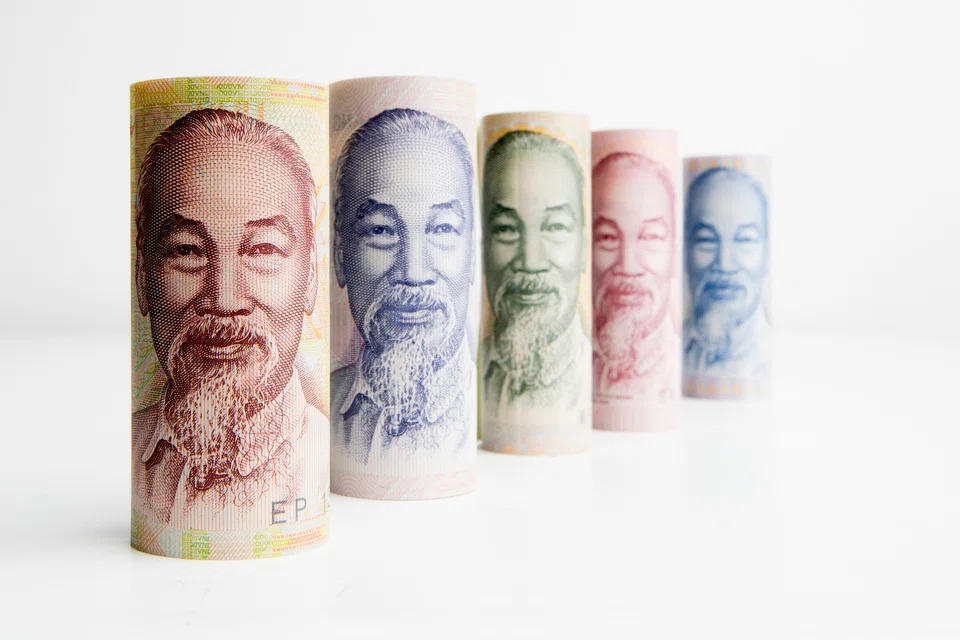
Hanoi
VIETNAM allowed its currency to ease on Monday as it resumed a more flexible foreign exchange policy for interbank dollar/dong transactions, a move that could trigger a gradual devaluation in the local currency.
The State Bank of Vietnam (SBV) set the mid-point rate at 21,896 dong to the US dollar, down from 21,890 dong it had kept unchanged since Aug 12, 2015, when it let the currency ease one per cent.
The SBV said it will set the mid-point rate on a daily basis to allow more flexibility.
"With the new FX methodology, instead of one-off devaluations as seen in the past, we could see the central bank guiding dollar/dong gradually higher over time," ANZ said in a report on Monday.
The dong eased to 22,490/22,520 per US dollar at 0420 GMT on Monday, from 22,480/22,490 on Dec 31.
Vietnam's US$186 billion economy, among South-east Asia's fastest growing economies, is driven by construction and manufacturing, dominated by textiles, footwear and electronics production for brands such as Samsung, Canon, Nike, Mango and Lacoste.
The central bank lowered the mid-point rate three times in 2015, and widened the dollar/dong trading band to +/- 3 per cent of the mid-point to protect exports from a surprise devaluation of the Chinese yuan.
Exports last year grew just 8 per cent, below the 10 per cent growth target on falling global commodities prices including crude oil and coffee.
By the end of 2015, the dong had several times bottomed out as Vietnam faced the first trade deficit since 2012, estimated at US$3.17 billion. The gap is forecast to jump to US$6 billion this year.
ANZ said Vietnam's lower foreign reserves will limit SBV's ability to sell dollar when needed, thus raising "the risk of dong weakness especially in the near term".
It cited the International Monetary Fund's estimate that the country had US$31 billion in foreign reserves as of September 2015, down from a government estimate of US$37 billion at the end of July.
ANZ said it kept unchanged its forecast that the dong would depreciate 4 per cent to 23,450 per US dollar at the end of this year.
The dong fell 4.94 per cent against the US dollar last year on the interbank market, faster than a decline of 1.38 per cent the previous year, based on Reuters data.
In December 2009, the SBV replaced the policy of adjusting the mid-point rate on a daily basis by setting the rate for a longer period. REUTERS






