

Don't shoot the ATM, it's just a distribution tool: banks
MAS says it hasn't uncovered any 'impropriety' by DBS in May 2016 sale of Hyflux securities
Singapore
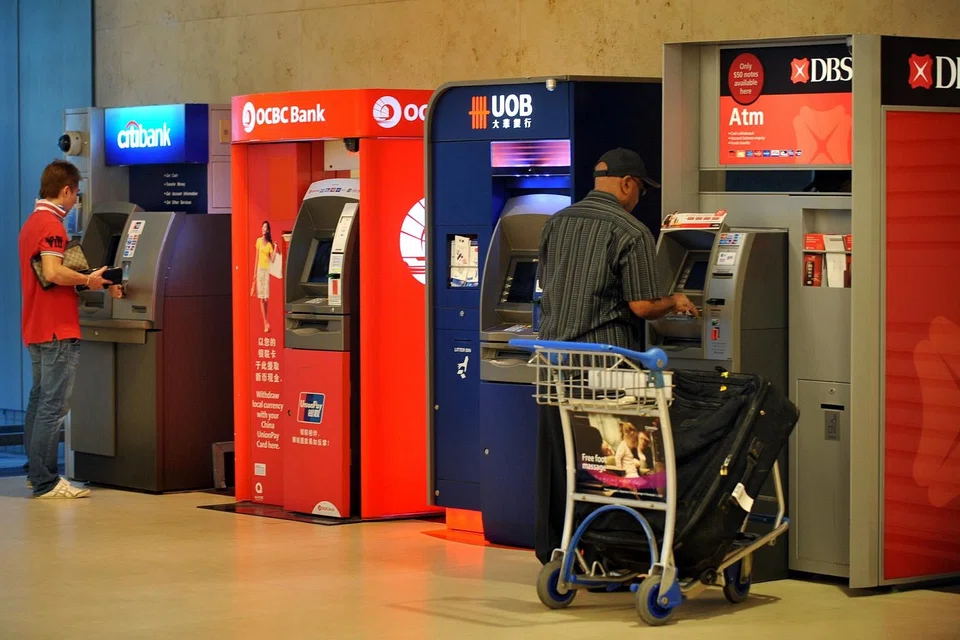
AS RETAIL investors cast about for someone to blame for their Hyflux woes, the ATM (automatic-teller machine) is the latest in the firing line.
But the ubiquitous ATM is just a distribution channel, said bankers. One pointed out that distribution is not the same as a sale. "We have to do proper financial needs analysis if we are selling investment products," she said.
The three local banks - DBS Bank, OCBC Bank and United Overseas Bank - have been offering retail securities such as equity offerings, retail bonds and rights issues via their ATMs since 1993. Retail investors are blaming the ATM's easy access to subscribing for Hyflux perpetual securities for losing their savings following the bankruptcy filing of the water and power company. Some 34,000 retail investors bought S$900 million of Hyflux preference and perpetual securities.
"Automatic-teller machines are commonly used as a self-directed digital channel for retail investors to apply for retail securities," said Koh Ching Ching, OCBC Bank spokeswoman.
"We continually enhance the messages on our ATMs, including making them easier to understand," said a UOB spokeswoman. "We remind our customers to read the offer documents and to be aware of the risks involved before they apply for subscriptions to any share or bond issuances."
Following the introduction of the electronic share application (ESA) facility in October 1993, applications for retail securities like shares could be made via ATMs without the hassle of buying a cashier's order or submitting application forms.
The Monetary Authority of Singapore (MAS) has said that perpetual securities such as those sold by Hyflux are "not complex" products, and thus can be offered at ATMs.
"With any bond taken to market, DBS adheres to all guidelines and regulatory requirements, including processes to comply with regulatory disclosure requirements," a DBS spokeswoman said.
On Monday, MAS also said that it hasn't uncovered any impropriety by DBS Group Holdings Ltd in arranging the sale of securities by troubled Singaporean water and power company Hyflux Ltd in 2016, according to Bloomberg. DBS complied with regulatory requirements as both manager and distributor of the perpetual securities, MAS said in a reply to Bloomberg questions.
Hyflux last week scrapped a pact with its would-be saviour SM Investments Pte Ltd after disputes. The group of Indonesian businessmen agreed last year to rescue Hyflux in return for a majority stake, and the development prolongs the plight of the retail investors who stand to lose almost everything.
"As the issue manager, DBS conducted due diligence checks to ensure that material information relating to Hyflux was highlighted in the offering document," MAS said.
While distributing the bonds via its ATM machines, the bank also reminded investors to read the disclosure documents before making their applications, the regulator added.
The problem is that investors generally do not read offer documents or risk disclaimers, and certainly not when they are about to press the buttons on the ATM for their securities applications.
A potential investor should not invest without acquainting himself with the terms of the bonds and the key risks, which will be set out in painful and laborious detail in the prospectus, said Stefanie Yuen Thio, TSMP Law Corporation, joint managing partner.
"I'm not sure the disclaimer language at the ATM is that significant to an investor making a decision to subscribe. Surely by the time his ATM card has been inserted, he would already have made a judgment call to put money in a security offering," said Ms Thio. "I think the real problem is that while Singapore's securities market has grown in sophistication and complexity, the Singapore retail investor has not kept up.
"And when there's market excitement about a new form of security (such as a "perp"), the retail buyer's fear of missing out propels him to put his money in without being aware of the risks."
A case in point is perpetual securities, which the market loosely terms a "bond", she said. "This can be misleading as there is no assurance when - or if - the principal will be repaid. Investors also pin too much hope on what they consider "too close to Government to fail" companies, thinking that a high profile business that Temasek had previously invested in cannot stumble. Business downturns are par for the corporate course and we cannot rely on the perceived government connection to assure financial salvaging."
Temasek had a stake in Hyflux in the early 2000s as part of an initiative to support small and medium-sized enterprises but it exited by 2006 - well before the company issued its preference and perpetuals securities in the 2010s.
TRENDING NOW

What role can Japan play in Asean’s future?

IOI Properties and CapitaLand Investment closer to acquiring One Raffles Place in joint bid
AI bubble may burst soon amid financing concentration, rising rates: Ray Dalio

OCBC sheds S$8 billion in value as shares close nearly 6% down; analysts cautious on banks

