

ECB more likely to cut rates in June than April, Villeroy says
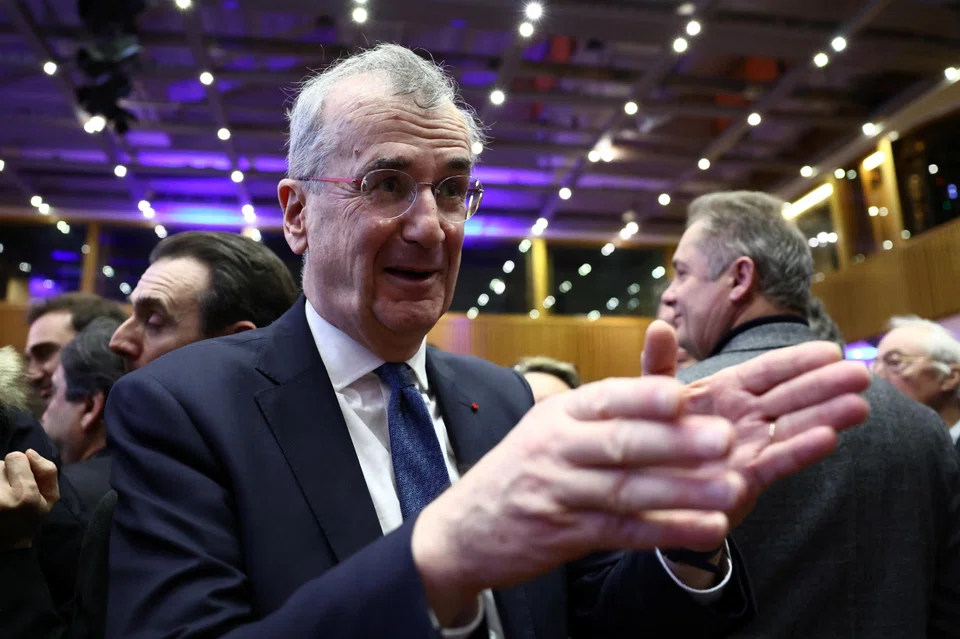
THE European Central Bank (ECB) will lower borrowing costs in the spring, with June more likely than April for a first move, Bank of France (BOF) governor Francois Villeroy de Galhau said.
“We will probably cut rates in spring, and spring in Europe is from April to June 21,” Villeroy said on France Info radio. “It’s perhaps more probable in June – we are very pragmatic and will see depending on the data.”
The ECB has policy decisions scheduled for Apr 11 and Jun 6, with the vast majority of Villeroy’s colleagues indicating the latter meeting will likely see the deposit rate start to be lowered from its current record of 4 per cent.
In a separate blog post on Wednesday (Mar 13), his Latvian colleague – Martins Kazaks – said that if the euro-area economy “roughly follows” the ECB’s forecasts, “then the decision to start reducing interest rates could be made within the next few meetings.”
Their Belgian counterpart Pierre Wunsch was less specific, just acknowledging that policymakers will eventually have to lower rates without being completely sure that inflation is returning to the 2 per cent target.
Villeroy’s comments came as the BOF lowered its 2024 projection for underlying price gains – a measure that excludes food and energy – to 2.4 per cent from 2.8 per cent in December.

“On inflation, victory is really within sight,” Villeroy said.
Kazaks also sounded optimistic, saying that “the dragon of inflation is pinned to the ground, a little more and it will be defeated.” BLOOMBERG
Decoding Asia newsletter: your guide to navigating Asia in a new global order. Sign up here to get Decoding Asia newsletter. Delivered to your inbox. Free.
Share with us your feedback on BT's products and services
TRENDING NOW

Once staunchly pro-China, Malaysian Chinese businesses are now distancing themselves from Beijing

New launch or resale unit? Here’s a guide for homebuyers
The lesser-known prospects in the Asian chipmaking supply chain

Cliff Tan has 7 million followers and a 4-month waitlist. Why won’t he expand his business?

