

ECB signals rates lift-off, eyes bigger move in September
 Add BT as a preferred source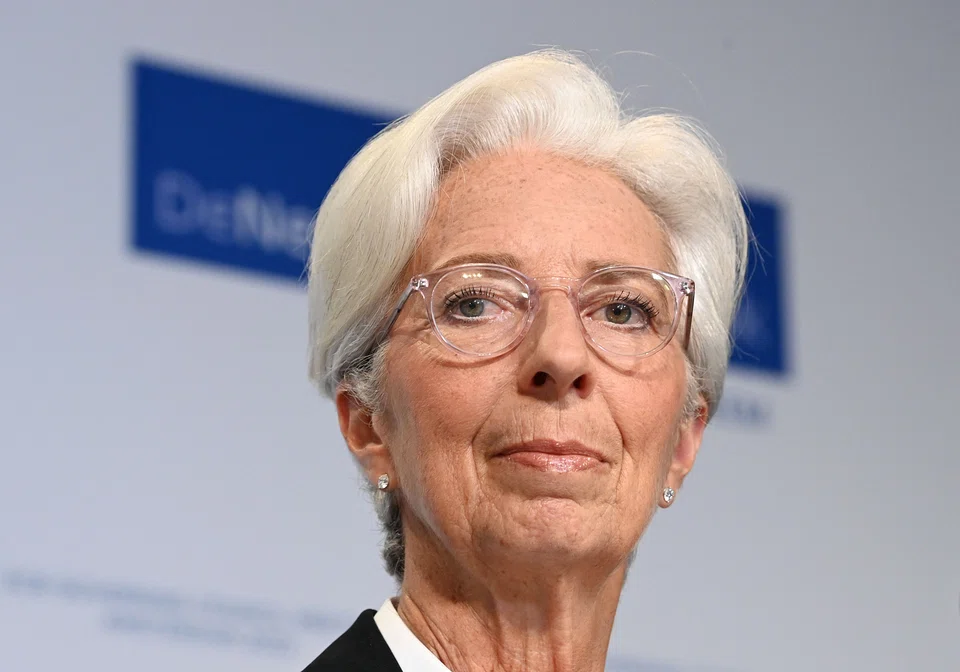
DeeperDive is a beta AI feature. Refer to full articles for the facts.
THE European Central Bank (ECB) ended a long-running stimulus scheme on Thursday (Jun 9) and signalled it will deliver its first interest rate hike since 2011 next month followed by a potentially larger move in September if inflation does not cool down.
With inflation at a record-high 8.1 per cent and still rising, the ECB now fears that price growth is broadening out and could morph into a hard-to-break wage-price spiral, heralding a new era of stubbornly higher prices.
The central bank for the 19 countries that use the euro said it will end bond buys on July 1 and then raise interest rates by 25 basis points later that month. It will hike again in September and may opt for a bigger move – a 50 basis point hike that would be its largest one-off increase since June 2000.
“We will make sure that inflation returns to our 2 per cent target over the medium term,” ECB President Christine Lagarde said during a news conference. “It is not just a step, it is a journey,” she said of the moves signalled on Thursday.
The rapid rise in inflation was driven initially by energy and food prices as economies emerged from Covid-19 lockdowns but Russia’s invasion of Ukraine has accelerated those trends.
The size of rate hikes to curb price growth has been intensely debated by ECB policymakers, with Chief Economist Philip Lane preferring 25-basis-point moves in July and September but others arguing for 50 bps to be considered.
Navigate Asia in
a new global order
Get the insights delivered to your inbox.
Supporting their case, the ECB raised its inflation projections once again, now expecting inflation at 6.8 per cent this year versus a previous forecast for 5.1 per cent. In 2023, it sees inflation at 3.5 per cent and in 2024 at 2.1 per cent, indicating 4 straight years of inflation overshoots.
“The Governing Council anticipates that a gradual but sustained path of further increases in interest rates will be appropriate,” the ECB’s monetary policy statement said. “High inflation is a major challenge for all of us.”
Markets moved to price in 143 basis points of rate hikes by the end of this year following the statement, up from 138 bp earlier, or an increase at every meeting from July, with some of the moves in excess of 25 basis points. They are also anticipating a combined 230 basis points of moves in the deposit rate by the end of 2023, putting the interest rate peak close to 2 per cent.
That left Lagarde, who just months ago said that a rate hike this year was highly unlikely, in a tricky position at her Thursday news conference. Nevertheless she showed little hesitancy, underscoring a number of times how the bank planned to gradually hike its rates at upcoming meetings.
She also vowed not to allow the borrowing costs of former eurozone debt crisis countries to be pushed wildly higher by financial markets again. “We are committed, committed!” Lagarde added.
The ECB’s first rate hike in over a decade will still leave it trailing most of its global peers, including the US Federal Reserve and the Bank of England, which have been raising aggressively and promising even more action.
Unlike the Fed, the ECB also has no plans to reduce its balance sheet with policymakers reaffirming their commitment to keep reinvesting cash maturing from the 5 trillion euros (S$7.4 trillion) worth of public and private debt the ECB holds.
While the start of policy tightening is now set, the end point remains uncertain.
Lagarde has said that rates should move towards the neutral point at which the ECB is neither simulating nor holding back growth. But this level is undefined and unobservable, leaving investors guessing just how far the ECB wants to go. REUTERS
Decoding Asia newsletter: your guide to navigating Asia in a new global order. Sign up here to get Decoding Asia newsletter. Delivered to your inbox. Free.
Share with us your feedback on BT's products and services
TRENDING NOW

Shelving S$5 billion office redevelopment plan proved ‘wise’ as geopolitical risks mount: OCBC chairman

Why where you park your joint venture matters: Lessons from a US$689 million shareholder dispute

China pips the US if Asean is forced to choose, but analysts warn against reading it like a sports result

Singaporeans can now buy record amount of yen per Singdollar

