

ECB’s Lagarde says data will tell if December rate hike needed
Analysts expect inflation to climb further in the coming months
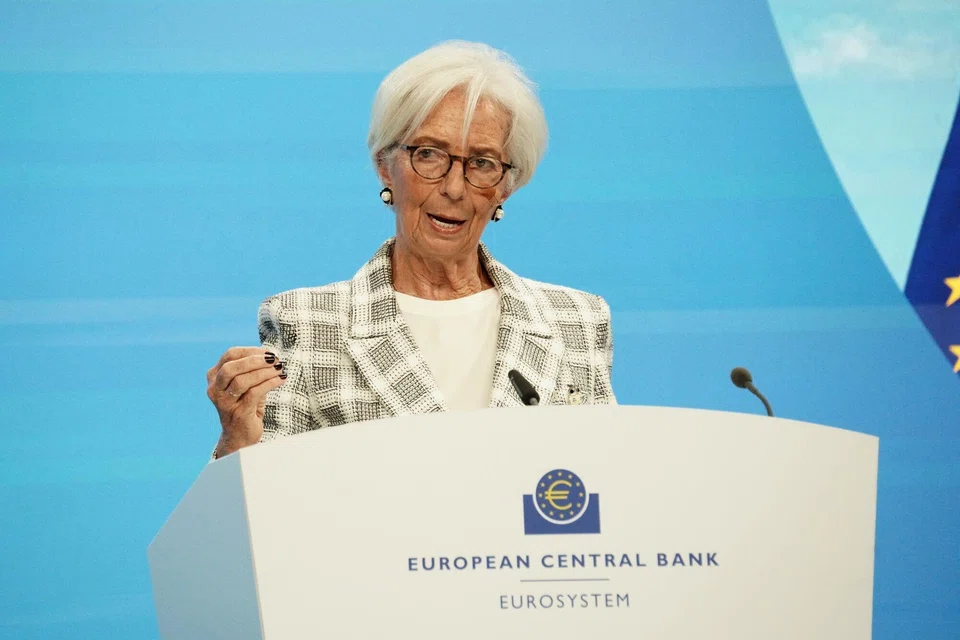
[MILAN] The European Central Bank is looking at indicators to see if an interstate hike will be warranted next month, after it held rates steady in October, the bank’s outgoing President Christine Lagarde said on Thursday (Nov 5).
The ECB last week left its key deposit rate at 2.5 per cent but a long list of policymakers, including the influential heads of the German and Italian central banks, have already signalled another move in December may be likely.
“We will have many indicators between now and December that will really help us determine whether a hike is necessary,” Lagarde said at a financial literacy conference in Milan organised by Italy’s Osservatorio for independent thinking.
Euro zone inflation rose to a three-year high of 4 per cent in October driven by food and energy costs and analysts expect it to climb further in the coming months, firming up the case for a hike.
Helping to guide the ECB‘s decision, the central bank’s staff will publish its economic projections next month.
Lagarde, who has said she will step down on Feb 7, 2027, months ahead of the formal end of her mandate, said that while inflation was running too high in relation to the ECB‘s target of around 2 per cent, it was important to look at the reasons behind the spike.

“What is causing these high numbers? Too high for our target. It’s predominantly energy,” she said.
Energy costs are “bringing growth down and prices up,” Lagarde said, adding that the ECB was paying close attention to the indirect effects of the energy shock triggered by the Iran war.
But the current situation is particularly complicated because of the spreading of artificial intelligence technology, which is fuelling demand for investments and helping to make the euro zone economy more resilient.

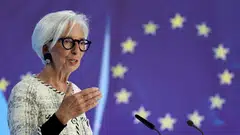
“To disentangle the supply-driven and the demand-driven shock is very difficult, and it requires subtlety so that you do not apply the (interest rate) tool like a hammer,” she said.
“But equally, you have to apply the tools because you don’t want to let inflation expectations run away, and you don’t want to let inflation penetrate throughout the economy and produce second-round effects.” REUTERS
Decoding Asia newsletter: your guide to navigating Asia in a new global order. Sign up here to get Decoding Asia newsletter. Delivered to your inbox. Free.
Share with us your feedback on BT's products and services
TRENDING NOW

From legacy to launch: Francis Yeoh and Yeoh Pei Xien on family unity and YTL’s next‑gen ventures

Could Japan trigger the next global financial crisis?

Wealthy Indonesians snap up government bonds as yields near 8%: OCBC
‘You buy more picks and shovels because you keep hitting gold’: Why AI spending needs to see results

