

Euro bounces back to parity as investor sentiment improves
 Add BT as a preferred source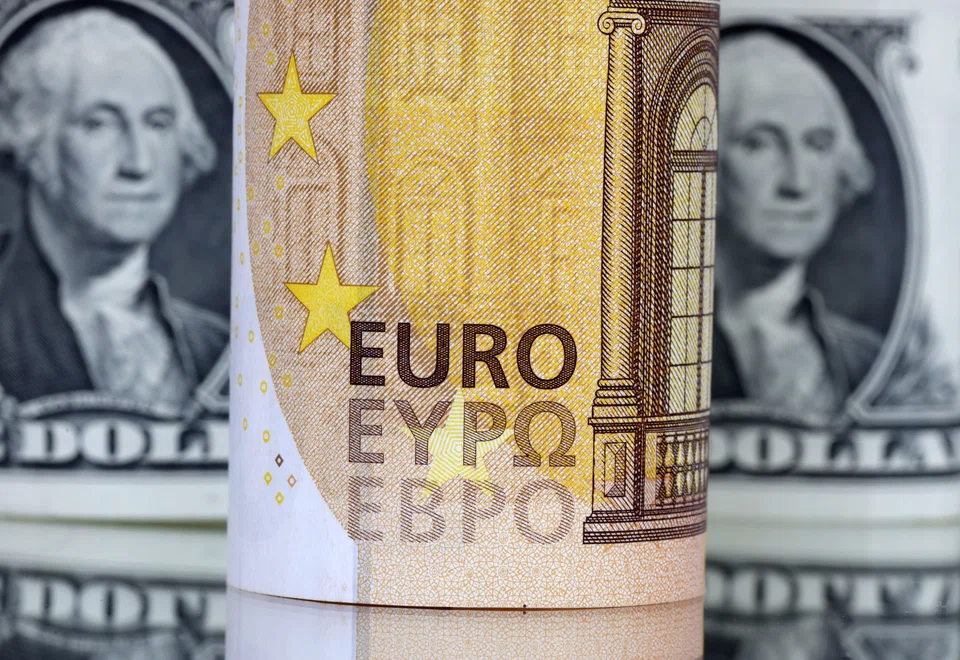
THE euro briefly rebounded back above parity with the US dollar on Thursday (Aug 25) as the US currency’s recent rally ran out of steam and investors waited to see whether Federal Reserve (Fed) chair Jerome Powell would sound a more hawkish tone at a symposium this week.
A more bullish mood across markets also helped the euro, as well as currencies linked to broad investor sentiment such as the Australian dollar, which climbed 1 per cent.
However, after rallying beyond parity in early European trading, by 1045 GMT the single currency was back below it, with sentiment dented by the release of a closely watched index showing business morale in Germany in August had fallen to its lowest since June 2020.
The euro/US dollar’s direction this week has largely been driven by soaring natural gas prices, which are correlated with a weaker euro because of the region’s dependence on gas for its energy needs. That, plus worries about the global economy had sent investors into US dollars earlier this week.
“The main driver of US dollar weakness overnight has been a temporary easing of global growth concerns,” said Lee Hardman, an analyst at MUFG, citing media reports that Chinese authorities are stepping up economic support measures with more planned funding for infrastructure.
Investors have also been bracing for the Fed to double down on its commitment to crushing inflation at its annual gathering in Jackson Hole, Wyoming, where Powell is due to speak.
The US dollar index, which measures the greenback against 6 counterparts, was last down 0.2 per cent at 108.39, but remained not far from its highest since September 2002 at 109.29, touched in mid-July.
The euro had gained as much as 0.5 per cent to US$1.0033 after this week hitting a 20-year low below parity. It was last at US$0.9978, up 0.1 per cent on the session.
“As summer concludes, USD remains historically strong. Fed rate hikes to fight inflation have been USD supportive, particularly relative to the slower pace of the European Central Bank (ECB). We continue to expect the euro broadly in a range roughly around parity,” BofA analysts John Shin and Athanasios Vamvakidis wrote in a research note. They have a year-end target of US$1.05.
“But risks of further Fed action remain high, as well as the growing geopolitical concerns focusing on energy, gas supplies, and Europe in the winter that could mean further downward pressure on the euro,” they added.
The Australian dollar rose 1 per cent to US$0.6972, while the Japanese yen rallied 0.5 per cent and sterling by 0.3 per cent, the latter helped by money markets pricing in a more aggressive pace of Bank of England rate hikes to 4.2 per cent by June next year.
The stronger Aussie dollar was also helped by China’s yuan rebounding from a 2-year low , which was fuelled by firmer-than-expected official guidance, which traders took as a sign that authorities are becoming increasingly uncomfortable with rapid losses in the Chinese currency. REUTERS
Decoding Asia newsletter: your guide to navigating Asia in a new global order. Sign up here to get Decoding Asia newsletter. Delivered to your inbox. Free.
Share with us your feedback on BT's products and services
TRENDING NOW

Jumbo Seafood to close flagship East Coast Seafood Centre outlet on Sep 30

Shanda co-founder sells Tanglin Hill bungalow for S$76 million

Johor property old hand KSL readies family handover amid market boom

Yeo’s, Tiger Beer and now Gardenia – flight of food manufacturing from Singapore might be just as planned

