

Euro jumps as ECB holds unscheduled meeting, US dollar awaits Fed move
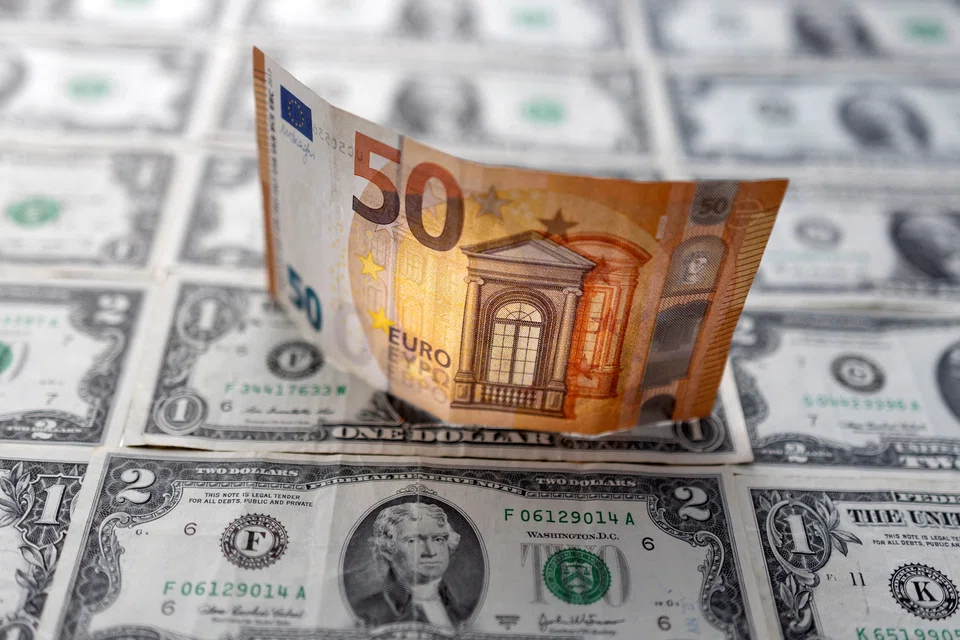
THE euro jumped after the European Central Bank's (ECB) governing council said it would hold an unscheduled meeting on Wednesday (Jun 15) to discuss the recent sell-off in government bond markets, hours ahead of a closely-watched meeting of the US Federal Reserve (Fed).
The European common currency rose as to as high as US$1.0508 following the announcement, which comes after the spread between government bond yields from Germany and more indebted southern nations, particularly Italy, soared to more than 2 year highs.
Italy's 10-year bond yield slid 22 basis points (bps) to 4.0 per cent after the announcement, down from 8-year highs. It was set for its biggest daily fall since Mar 1.
The Italian-German 10-year yield spread tightened by around 20 bps.
The meeting started at 0900 GMT and is likely to be followed by an early afternoon statement, people with direct knowledge said.
"We have a little bit of relief in euro this morning because of the ECB, but, except for that, it is the US dollar that is firmly in control," said Niels Christensen, chief analyst at Nordea.
"We see tighter monetary policy in the euro zone but even tighter in the US and that will be a key factor for the US dollar against the euro."
The stronger euro meant the US dollar index, which measures the greenback against major peers including the single currency, fell 0.5 per cent to 104.77.
The Federal Reserve policy meeting is due to conclude later on Wednesday, and markets are pricing in an 87 per cent chance of an outsized 75 bp interest rate hike as policymakers try to rein in rampant inflation.
Expectations picked up following media reports, first by the Wall Street Journal, that a bigger rate increase was on the cards, after data released last week showed the US consumer price index surged 8.6 per cent in the 12 months to May, the largest year-on-year increase in 4 decades.
The US dollar had already been gaining ground in the past few months thanks to the Fed raising rates ahead of most other major central banks and has been given another leg up in recent weeks as investors seek safe havens, fearing the economic impact of rapidly tightening financial conditions.
But with such a large interest rate increase already expected, the US dollar may struggle to gain further after the Fed's decision.
"Fed chair Jerome Powell will likely want to keep all options open for himself at tonight's press conference and provide little in the way of news," Commerzbank FX and EM analyst Antje Praefcke said in a note.
"That in turn would not constitute any additional fuel for the US dollar bulls as market expectations have already gone a long way."
Higher US rates versus rock bottom Japanese yields have been weighing on the yen, which hit a new 24-year low of 135.60 per US dollar in Asia-Pacific trade.
It recovered in the course of the day amid volatility in government bond markets, to as much as 134.33.
Sterling rebounded to as high as US$1.2097, after slumping to a 15-month trough versus the US dollar at US$1.1934 the previous day.
The Australian dollar, often seen as a proxy for risk appetite, was at US$0.6935, rising 1 per cent from the previous day's 1-month low.
The Aussie is down 7.3 per cent so far this quarter, which would be its worst quarter since the first 3 months of 2020 when the Covid-19 pandemic hit.
Bitcoin, another risk-friendly asset class, was down another 8.5 per cent to US$20,080, its lowest since December 2020, as the fallout from crypto lender Celsius freezing withdrawals continues to shake cryptocurrency markets. REUTERS
Decoding Asia newsletter: your guide to navigating Asia in a new global order. Sign up here to get Decoding Asia newsletter. Delivered to your inbox. Free.
Share with us your feedback on BT's products and services
TRENDING NOW

World’s largest offshore wind platform by Seatrium consortium on track to be completed by 2028

Is stamp collecting enjoying an analogue revival or are its best days over?

GovTech retrenches another 38 staff in second round of layoffs

MBS adjusted property Ebitda falls 20.6% in Q3 with fewer high-roller visits, weaker hold

