

Ex-bond king Bill Gross has something to prove
Now at Janus Capital, he manages less than 1% of the assets he once ran at Pimco
New York
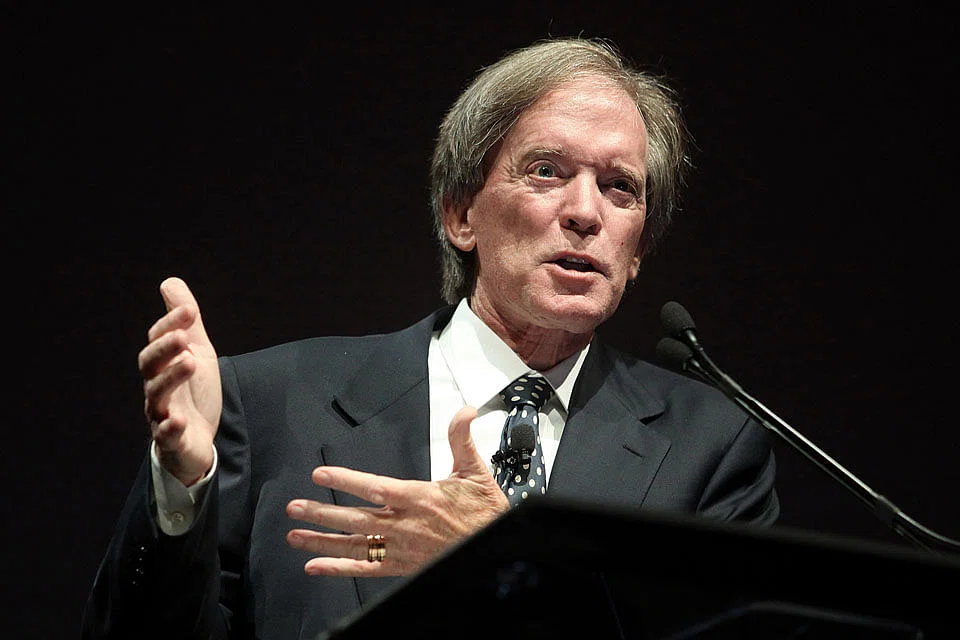
IT'S a question only Bill Gross can answer: Why, after earning a reputation as the greatest bond investor of all time, after building Pacific Investment Management Co into a US$2 trillion colossus, after losing a power struggle with his own colleagues, didn't he just walk away?
Instead, Mr Gross stunned the financial world in September by leaving for Denver-based Janus Capital Group Inc. The former "bond king" now manages less than 1 per cent of the assets he once ran at Pimco, the firm he co-founded in 1971.
"One of the reasons that I'm still doing this is just to prove that, you know, I still got it," Mr Gross, 71, said in an April 29 interview at his office in Newport Beach, California. "You know, like a 38-year-old quarterback that still has an arm and can take us down to the Super Bowl."
Like John Elway's run as quarterback for the Denver Broncos from 1983 to 1998, Mr Gross's tenure as manager of the Pimco Total Return Fund still stands out as exceptional. Since 1987, when he started it, the fund has returned an average of 7.8 per cent a year as at the end of the first quarter, a full point higher than the Barclays US Aggregate Bond Index.
So far, Mr Gross's performance at Janus has been disappointing. The Janus Global Unconstrained Bond Fund he manages is down 0.7 per cent this year, trailing 95 per cent of comparable funds, according to data from research firm Morningstar Inc. From when he took over on Oct 6, the fund declined 1.15 per cent, lagging behind 84 per cent of peers.
"My target is: How much can I outperform the market on a daily basis?" Mr Gross said. "When I go home, I'll look at those numbers and either feel good or bad."
Mr Gross's "unconstrained" strategy allows him to invest across assets, including stocks, to boost returns in a low-interest-rate environment.
Lately, he said he's been betting on disparities among certain stock prices, so-called arbitrage. He also dabbles in foreign markets, like a recent bet against German bunds. He then uses derivatives to add leverage, ideally boosting the fund's returns.
"It's not a long-short, it's not hedged," Mr Gross said, referring to other types of investment strategies. "It's just a different world in which the expectation is you won't lose very much money, but perhaps you can make 4, 5 or 6 per cent."
In his last years at Pimco, Mr Gross battled with his colleagues. Some resented his management style, some objected to his declining returns and grew increasingly alarmed at the pace of withdrawals from the Total Return Fund.
Mr Gross said he has no interest in building a "Pimco II". "It's easier, with US$2 billion, to move money, the liquidity is obviously better," he said in the interview. "And it's less onerous in terms of organisation and decision-making, where you have to build a consensual outlook."
Mr Gross, who became a billionaire building Pimco, could have retired to focus on his philanthropy.
"I didn't like how I left Pimco, and I didn't care for the aspersions that somehow I might have lost my touch," he said. "I don't think I've lost my touch. I'm in this seven days a week, 18 hours a day." BLOOMBERG
TRENDING NOW
32 companies, 6 individuals bag accolades at Singapore Corporate Awards 2026

He built the Vingroup empire. Now South-east Asia’s richest man is handing some key roles to his sons

URA to review guidelines on floor space to give developers more design flexibility: Chee Hong Tat

Chagee, Mixue and Luckin won the market. Sustaining their edge is the harder part

