Fast evolving fintech scene threatens to upend universal banking
Traditional banking model of being all things to all people requires greater consideration than ever, say analysts

Singapore
NEW technologies, changing consumer demands and tougher regulatory requirements have fuelled the rise of financial specialists - banks or fintechs that operate within a narrower segment of the financial services spectrum.
Although the universal banking model is not obsolete, analysts said the banking model of being all things to all people requires greater consideration than ever.
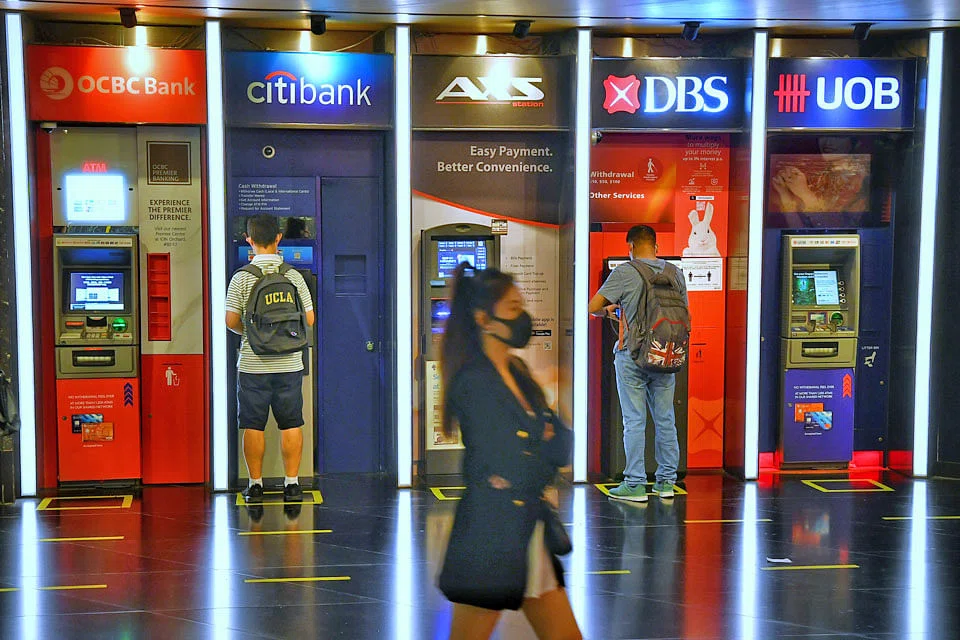
Among the more recent big banks to move away from universal banking is US-based Citigroup.
As part of its global restructuring plan, Citigroup announced last April it would exit its consumer banking business in 13 markets - 10 of them in Asia - to grow its wealth business.
Singapore bank UOB, which has been eyeing opportunities in Asean, has since announced its acquisition of the US bank's retail business in 4 Asean markets, while peer DBS bought Citi's Taiwan retail unit.
Even as it grows its retail presence, however, DBS is trying to carve out a niche by playing up its digital offerings. For instance, the bank launched a digital assets exchange for institutional and accredited investors in December 2020, and plans to expand services to the retail market this year.
Likewise, Siam Commercial Bank, one of Thailand's largest and oldest banks, is undertaking an overhaul to focus on financial technology. It wants to become a regional fintech conglomerate by 2025, backed by a 200-million strong customer base.
A McKinsey analysis of 599 global financial institutions published last September found that 57 per cent of those that gained at least US$5 billion in market capitalisation in the past 16 months have specialised business models focusing primarily on payments, financial market infrastructure, or investment banking.
Specialists accounted for over 70 per cent of the US$1.3 trillion in market cap added by the outperformers, said the report by McKinsey partners Joydeep Sengupta and Peter Stumpner.
Investors are rewarding 2 models in particular: specialists, and universal banks with strong domestic franchises and differentiated digital offerings.
The so-called universal bank is one that offers all services - from commercial banking to investment banking. It takes deposits and offers loans, provides a variety of investment and brokerage services, and handles complex corporate transactions.
In theory, the benefits of this one-stop-shop approach lie in lower costs of financing, greater scale, opportunities for cross-selling, and reduced risk exposure due to diversified operations.
But banks have been rethinking this model since the 2008 financial crisis. Swiss banks UBS and Credit Suisse, for instance, have scaled down their investment bank units to focus on wealth management. Citi appears to be following in their footsteps - at least outside its home market in the United States.
Asset quality issues in the last 15 years prompted a further reassessment of the universal bank approach for global banks, especially in Asia markets, said Harsh Modi, executive director and co-head for Asia (ex Japan) banks research at JPMorgan.
"Banks have started picking and choosing the businesses more closely in the foreign markets. They have started asking questions like, what is the best risk adjusted return that they can make in this market? What kind of cost base will it require? What kind of risks are they taking? Do they have the ability to appropriately manage these risks? These determine whether they want to stay or exit a particular market," Modi said.
These changing business models also reflect the pressures banks face internationally, following the global financial crisis, said Deloitte's South-east Asia regulatory strategy leader Wong Nai Seng. "The capital requirements have gone up; the liquidity and funding requirements have also gone up."
Post-crisis reforms introduced by the Basel Committee on Banking Supervision require banks to maintain certain leverage ratios and capital buffers, and to standardise approaches towards credit and operational risks.
Asset and wealth management in Asia will likely remain an attractive market. Professional services firm PwC expects assets-under-management in the region to hit US$29.6 trillion by 2025, outpacing all other regions and almost doubling from US$15.7 trillion in 2017.
Wong of Deloitte suggested that ageing populations in increasingly affluent Asian countries could also drive demand for wealth management services.
But technological developments could change the nature of how banks approach these markets.
Already, technology has significantly altered the banking landscape by introducing new challengers.
Fintechs and other non-bank brands are increasingly exploring banking because of "meaningful strategic benefits", said an Oliver Wyman report in March 2022.
Non-bank brands are using financial offerings as a point of competitive advantage, to tap new sources of revenue, and to increase engagement by providing customers another way to interact with their companies.
Many such companies do so by embedding banking in their core businesses. The report cited an example of an accounting firm that increased the convenience of reconciling accounts by building a deposit account for small-business customers into its app.
In response, the champions among universal banks are responding by making significant investments in digital capabilities and moving towards "relationship banking".
For instance, Singapore's DBS, OCBC and UOB are investing in artificial intelligence and data analytics to boost hyper-personalised banking experiences, while top executives at the Philippine's UnionBank want to launch a superapp that serves as a one-stop shop for retail consumers' financial needs.
Technology allows for greater economies of scale and lower costs, said Deloitte's Wong.
"With greater understanding of what consumers are looking for, financial institutions can design services in a way that better integrates into the day-to-day transactions and behaviours of individuals," he added.
An astute use of technology is also a way for banks to build an edge.
"What people are realising is that deep specialisation and differentiation with technology can give them a better advantage," said McKinsey senior partner Vinayak HV. "And it can also be more capital-efficient to do one thing and do it really well, instead of trying to do everything. And that is what has led to the rise of specialists."
TRENDING NOW
US Fed hikes rates amid stubborn inflation; signals further tightening in coming months
Quarter of Singtel special discounted shares sold ahead of CPF Board transfer
AirAsia’s funding woes test how far Malaysia will go to protect its budget champion
Singapore’s wealth boom is raising the bar for aspiring private bankers