

Funds waiting to step in as Japan plans to cut guarantees on SME loans
Tokyo
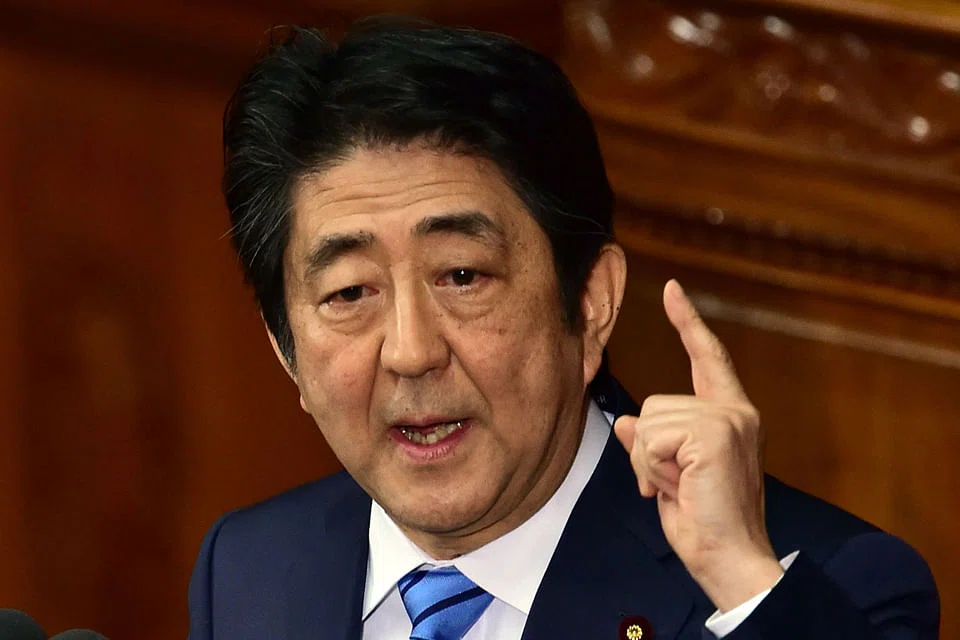
JAPANESE Prime Minister Shinzo Abe's move to make it tougher for struggling companies to borrow from commercial lenders could spell opportunity for turnaround specialists.
Mr Abe's government is considering reducing guarantees of as much as 100 per cent on loans to smaller companies to cut fiscal debt and encourage banks to improve lending practices, according to the economy and trade ministry. As deposit takers avoid the risk of maintaining support for all but the largest indebted, funds such as Topaz Capital and Keystone Partners may step in.
"Banks want companies to raise funds from elsewhere to rebuild their business and then repay loans," said Tomoaki Tsutsumi, a co-chief executive officer at Keystone Partners, a Tokyo-based corporate reconstruction firm that manages a 15.4 billion yen (S$186 million) fund. "We're going to see more cases of companies asking funds for risk money that banks won't lend."
Topaz charges as much as 8 per cent for loans backed by collateral, while Keystone's interest rates are around 10 per cent, at a time when average rates on new loans in Japan are near record lows at 0.92 per cent, according to Bank of Japan data. Bankruptcies increased from a year earlier for the first time in 21/2 years in the final three months of 2015, according to Teikoku Databank.
Japanese private equity funds are also getting involved in turnaround deals. Integral Corp invested nine billion yen in Skymark Airlines last year after the carrier filed for bankruptcy, and New Horizon Capital acquired ceramic retailer Tachikichi Corp for 1.1 billion yen.
Mr Tsutsumi at Keystone estimates that there's about 20 trillion yen to 30 trillion yen in so-called debt requiring caution in Japan, with such borrowers representing potential investment targets. The Financial Services Agency defines the category as loans on which banks have reduced or forgiven interest, debt whose repayment has been delayed, or liabilities of companies whose business performance is weak.
"If banks carry out voluntary liquidation of companies including forgiving debt, that could hurt their capital or worsen their earnings," said Mr Tsutsumi. "Funds are increasingly getting asked to help."
Banks often find it hard to increase risky investments after forgiving a company's debt or carrying out legal liquidation, so funds take over, said Takumi Fukuda, a director at Topaz, which started its first fund in 2014 and oversees seven billion yen.
In one case, Topaz supplied working capital last June to a retailer after the company made a settlement outside of court and its bank declined to lend to it. The retailer had a positive cash flow and collateral, and is now able to borrow again from a local financial institution, said Mr Fukuda, declining to name the firm because of a confidentiality agreement.
The government-sponsored Japan Federation of Credit Guarantee Corporations backs 80 per cent of debt, or 100 per cent in special cases, for small to medium-sized companies to support their funding. In fiscal 2014, the system guaranteed about 11 per cent of the 243.6 trillion yen in outstanding debt to smaller companies, according to economy and trade ministry data.
A non-binding resolution in parliament last year called on the government to review the programme in the interest of encouraging corporate rebuilding and cutting fiscal debt, and Mr Abe said he would push banks to work to improve companies' management and productivity.
The prime minister probably won't put too much pressure on smaller, indebted companies with Upper House elections coming up in the summer, according to Rie Nishihara, an analyst at Mizuho Securities.
"Banks may be becoming stricter about lending to the lowest rung of small and medium-sized companies, and that may be leading to bankruptcies," he said. However, "regional votes are important for the Upper House elections, and policy toward the smaller firms will likely be protective." Bankruptcy cases in Japan increased from a year earlier for the first time in nine months in December, according to data from Tokyo Shoko Research. BLOOMBERG
TRENDING NOW

He built the Vingroup empire. Now South-east Asia’s richest man is handing some key roles to his sons

US dollar falters after Iran’s offer to reopen Hormuz sends oil lower

Temasek’s Wan Chee Foong to helm PIL, Lars Kastrup to be board adviser

Despite the de-dollarisation debate, demand for dollar liquidity in Asia is growing

