

Taking a grab at digital financial services
As more people bank from home, Grab is beefing up mobile-first solutions for its ecosystem of consumers, drivers and merchants
 Add BT as a preferred source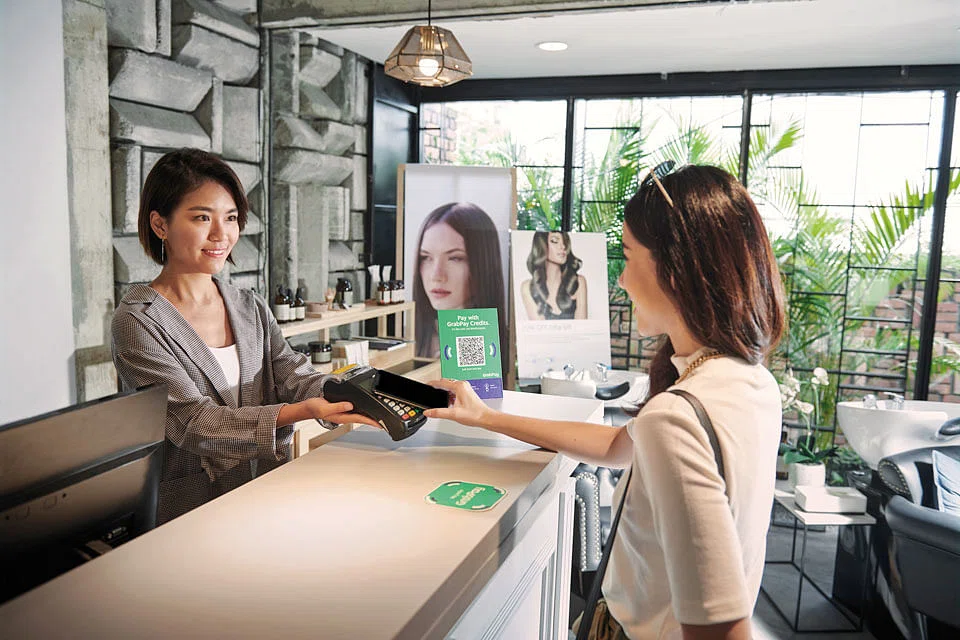

MORE than ever, consumers are now buying insurance policies through their phones, paying for small-ticket items in interest-free instalments, and investing their money on robo platforms. New ways of banking, deeply accelerated by the global pandemic, are here to stay, and regional superapp Grab is doubling down on its financial services offerings in Singapore to meet changing demands.
Its popular GrabPay wallet - launched in 2017 to enable cashless payments for its ride-hailing and delivery services - has grown into a widely adopted payment method even outside of the Grab platform amid the rise of mobile payments.
About 40 per cent of the group's total payment volume in 2020 was transacted via e-commerce sites or online stores, as well as physical stores, with this number expected to rise.
Digital financial products the likes of micro loans, micro insurance and buy now, pay later (BNPL) services have also been launched under Grab's financial services arm set up in 2018.
As at Q2 this year, Grab Financial Group's (GFG) loan disbursements increased 4.1 times year-on-year, while gross written premiums grew 4 times over the same period.
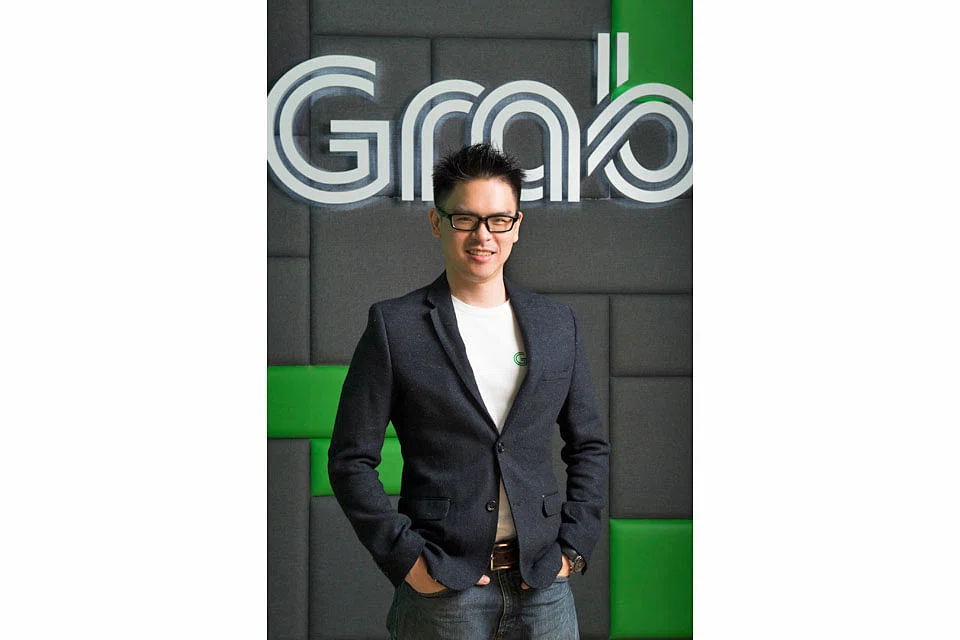
Lim Kell Jay, Singapore head of GFG, observes that traditional ways of banking will evolve. The speed of digitalisation has accelerated amid the pandemic, resulting in more people staying home.
"When you apply for a traditional loan, an insurance plan or an investment, you typically need to sit down with a bank agent. There will be less of that . . . people want to bank from home, on their phones," he notes.
Financial institutions now face the challenge of conducting due diligence virtually and digitising the traditional KYC (Know Your Customer) process. This has given rise to the "fractionalisation of finance", says Lim, as reflected by rising demand for products such as BNPL and micro insurance plans that are arguably easier to gain access to.
"These things will emerge because the more complicated and complex services that traditional banks offer may not apply anymore. It's hard to do that without a human in front of you," he adds.
While financial services are a relatively new foray for Grab, it has a considerable head start among its fintech peers, having built an ecosystem of consumers, driver-partners, and merchant-partners over the years.
With millions of users regionally, GFG is able to gain deeper insights from a richer pool of data to better understand their needs and deliver more tailored and localised solutions.
"The customer base that we have on our platform are not just engaging but also transacting, which is a subtle but important difference. With that, we are able to offer financial services to these customers," says Lim.
He points out that being a company rooted in tech enables GFG to develop more granular risk assessments - especially critical as guardrails for its BNPL and lending services to ensure that consumers do not fall into a debt spiral.
It also has its own fraud detection system to mitigate risks of fraud and protect against anomalous and suspicious transactions. GrabDefence has been successful at keeping fraud loss on Grab's platform under 20 basis points of revenue, far below industry benchmarks. It was recently named Best in Future of Trust at the International Data Corporation's Future Enterprise Awards 2021.
Forging strategic partnerships with both the private and public sector is another key strategy to grow GFG's suite of offerings. "We don't believe in doing this on our own. There are so many things in financial services and we can't be good at everything," says Lim.
To facilitate wider use of GrabPay both online and offline, for example, GFG had inked a deal with Mastercard to launch the GrabPay card that can be used across Mastercard's global network of merchants.
Partnerships with Adyen and Stripe also help accelerate GrabPay as the preferred payment method for online sites outside of Grab's in-app services, while collaborations with Chubb and NTUC Income enable the development of micro insurance policies that are accessible, affordable and simple enough to roll out at scale, says Lim.
Looking ahead, BNPL is one of GFG's key focus area as it grows in popularity among the younger consumers, especially for online shopping.
In Singapore, BNPL payment is expected to rise by over 50 per cent year-on-year to reach US$560.9 million in 2021 with the e-commerce market as a significant growth driver, a recent market report shows.
GFG's own PayLater service enables users to pay for a range of everyday items over four monthly interest-free instalments, or choose to pay in full the next month.
"Because of where we started in payments, it's a very natural step for us to offer PayLater. On top of enabling GrabPay to be widely accepted online, we also want to make payments super flexible," says Lim.
In many ways, BNPL is superior to credit cards, he reckons. Activating such a service is arguably more straightforward than applying for a bank credit card.
"There are no hidden or interest fees incurred to use the service, and this is possible because we charge merchants a fee for each processed transaction in exchange for bringing more sales to them and taking market risks," Lim adds.
To mitigate concerns of overspending and missed payments, only "whitelisted" low-risk Grab users will be eligible to activate PayLater. Users will also be assigned a personalised credit limit based on past payment behaviours and how their instalments are paid back in future.
Failure to make payment will result in a temporary account suspension that costs S$10 to reactivate. There is no interest charged on late payments.
"We're quite conservative in terms of how much we provide our customers because we don't want to encourage any overspending. It's important to ensure that while we grow PayLater, we also put together guardrails because it's bad to go into debt. Not just for the consumer, but also for our company because of our business model," says Lim.
In a time of Covid-19, the launch of PayLater is timely in helping Grab's merchant-partners generate more sales. Many have reported increased basket sizes and check-out rates, says Lim. MegaFurniture and Prism+, for example, have seen a 15 per cent increase in sales.
GFG is also focused on helping more merchants shift online either through partners such as Shopify, or via its own solution such as GrabMerchant Commerce which helps businesses build websites for e-commerce.
Consumers and merchants aside, Lim stresses that Grab's driver-partners are also an important segment with underserved needs.
Being gig workers with no fixed income, some may face difficulty accessing traditional financial services due to various income requirements needed, or may not be able to afford lump sum hefty premiums.
In 2019, GFG launched a pay-per-trip micro insurance plan, in partnership with NTUC Income, to help its driver-partners protect themselves against critical illnesses.
"Every time a driver accepts a ride, he can opt to put in a small sum to build up his insurance protection. Over time, after taking on more rides, his protection safety net will become bigger. This makes insurance accessible for drivers, instead of having to commit a big amount to buy traditional insurance," says Lim.
GFG has also partnered with Hong Leong Bank to offer fast-approval cash loans to driver-partners who may need short-term liquidity.
Lim notes that these individuals are typically unable to access bank loans and some may go to money lenders. "We are making it accessible for this group of people, helping them repay in a more manageable way by deducting from their weekly earnings through their wallets."
Decoding Asia newsletter: your guide to navigating Asia in a new global order. Sign up here to get Decoding Asia newsletter. Delivered to your inbox. Free.
Share with us your feedback on BT's products and services
TRENDING NOW
Tiger Brokers, Moomoo, Longbridge Singapore units ‘financially independent’ amid China crackdown: MAS
Yeo’s, Tiger Beer and now Gardenia – flight of food manufacturing from Singapore might be just as planned

Johor property old hand KSL readies family handover amid market boom

As India and China surge ahead with nuclear energy, all eyes on Asean’s next move

