

Gas crisis sends euro back below parity against US dollar
 Add BT as a preferred source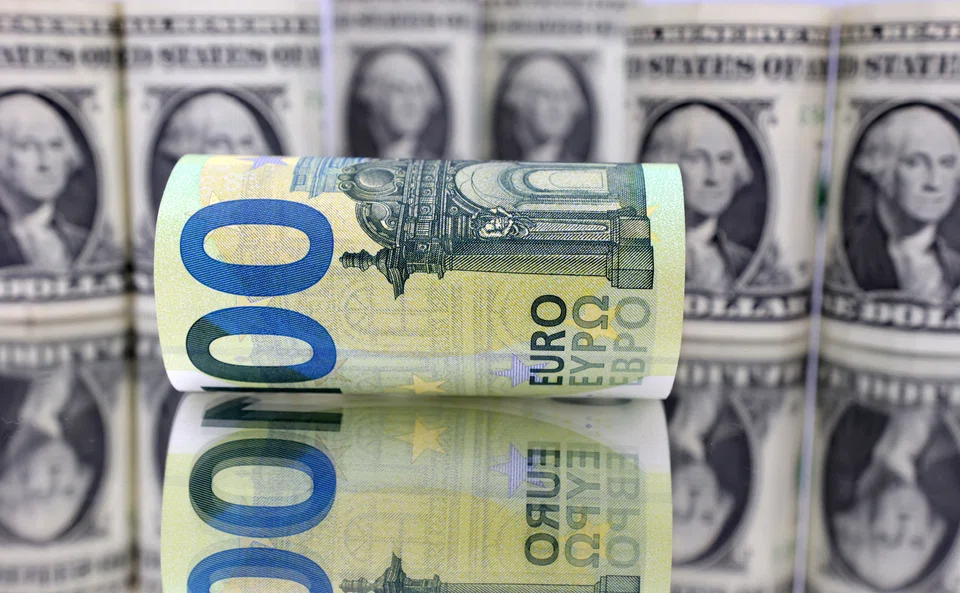
THE euro briefly fell back below parity against a robust US dollar on Monday (Aug 22) and was languishing at 5-week lows, weighed down by concern that a 3-day halt to European gas supplies later this month will exacerbate an energy crisis.
China’s yuan dropped to its lowest in nearly 2 years after the central bank cut key lending rates.
The US dollar index, which measures the greenback against a basket of peers, surged to a mid-July high as Federal Reserve officials reiterated an aggressive monetary tightening stance ahead of the Fed’s Jackson Hole symposium this week.
The euro and sterling bore the brunt of the selling pressure against the US dollar after Russia announced late on Friday a 3-day halt to European gas supplies via the Nord Stream 1 pipeline at the end of this month.
The single currency was last down 0.4 per cent at US$1.0001 after briefly falling to its lowest level since mid-July of US$0.99895 .
Jane Foley, head of FX strategy at Rabobank in London, said she would not be surprised to see the euro falling to US$0.95.
“European gas prices pushed higher again this morning, which draws attention to the recessionary risks facing the eurozone this winter and potentially beyond,” she said.
Chris Turner, global head of markets at ING, said: “The euro’s fair value has been damaged by the energy shock - meaning that euro/US dollar is not especially cheap even at these levels.”
Bundesbank president Joachim Nagel told German newspaper Rheinischen Post that the German economy, among the most exposed to disruptions in Russian gas supply, is “likely” to suffer a recession over the winter if the energy crisis continues to deepen. Sterling meanwhile fell to a new 5-week low of US$1.17875 as the energy crisis highlighted Britain’s cost-of-living crisis.
The US dollar index, which measures the currency against 6 rivals, rose 0.25 per cent to 108.42 after touching its highest since July 15.
It gained 2.33 per cent last week - its biggest weekly rally since April 2020 - amid a chorus of Fed policymakers stressing that more needs to be done to rein in decades-high inflation.
The latest was Richmond Fed president Thomas Barkin on Friday, saying the “urge” among central bankers was towards faster, front-loaded rate increases.
Money markets currently indicate 54.5 per cent odds for another supersized 75 basis-point rate hike at the Fed’s next meeting on Sep 21
Economists in a Reuters poll lean towards a 50 basis-point increase, with recession risks on the rise.
Benchmark 10-year US Treasury yields briefly rose above 3 per cent on Monday for the first time since July 21.
As yields came off their highs, the US dollar edged down against the yen and was a touch lower on the day at 136.81 . Earlier, the US dollar reached its strongest levels against the yen since July 27.
The US dollar also rose as high as 6.8436 yuan in onshore trading for the first time since September 2020, after the People’s Bank of China cut the 1 and 5-year loan prime rates, as widely expected.
That came after it eased other key borrowing benchmarks in a surprise move last week.
Against the offshore yuan, the US dollar hit 6.8645, also the strongest since September 2020. REUTERS
Decoding Asia newsletter: your guide to navigating Asia in a new global order. Sign up here to get Decoding Asia newsletter. Delivered to your inbox. Free.
Share with us your feedback on BT's products and services
TRENDING NOW

Temasek-backed Foundation Healthcare seeks to raise S$242 million in mainboard IPO

Malaysian tycoon Vincent Tan’s sell-downs point to pruning rather than an exit plan
SGX to roll out post-trade custody model, changes to bid mechanics in July, cut board lots in October

New IPO aspirants signal renewed listing activity on SGX

