German banks look beyond lost decade as Merkel era ends
 Add BT as a preferred source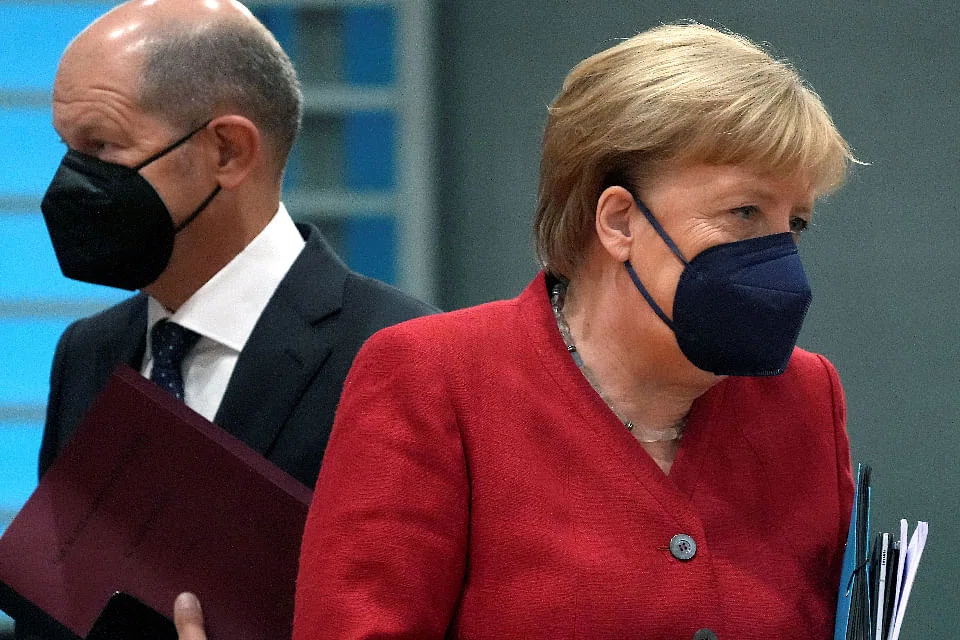
DeeperDive is a beta AI feature. Refer to full articles for the facts.
Frankfurt am Main
TO UNDERSTAND German banks' lost decade, start with a now infamous birthday dinner for then-Deutsche Bank chief Josef Ackermann, held in April 2008 by Chancellor Angela Merkel. The menu was inconspicuous, schnitzel and asparagus along with a US$10 white wine. But the public outcry that followed, after the government was forced to support the industry with bailouts and vouch for savers' deposits, held a key lesson for Dr Merkel early on in her tenure: there's little to gain in German politics from being seen as too close to the country's top bankers.
As her era ends this month, Frankfurt's once-powerful investment banks have been diminished by years of negative interest rates and tighter regulation that Dr Merkel helped drive. How they will emerge from that long decline depends not least on who will take over and whether the next chancellor can complete a key project that has remained unfinished: Europe's banking union.
The frontrunner, Olaf Scholz of the left-leaning Social Democrats, has been an unlikely ally of Germany's large banks as finance minister under Dr Merkel. He brought on a former Goldman Sachs Group executive as adviser and backed merger talks between Deutsche Bank and Commerzbank when both lenders struggled with their turnaround plans. He also started a fresh effort to revive negotiations about a joint European deposit insurance, the missing leg of the bloc's banking union.
But his hands-on approach has yielded few results - in part, say people familiar with the matter, because of a lack of enthusiasm by Dr Merkel, a member of the conservative Christian Democratic Union who has kept lenders at arm's length since being forced to rescue several during the financial crisis. The chancellor championed regulation that prompted institutions to dial back risk and focus on the bread and butter business of lending, but she failed to create a functioning single market for banking services that would have made it easier for Europe's investment banks to compete with Wall Street.
"Merkel and her governments saw the banking sector as a servant to the industrial sector," said Axel Wieandt, a former Deutsche Bank executive who went on to lead Hypo Real Estate Holding after its bailout. "The banking sector is now in better shape in terms of capital and liquidity buffers, but when it comes to competitiveness, German banks haven't caught up."
Navigate Asia in
a new global order
Get the insights delivered to your inbox.
Hypo Real Estate's near-collapse in 2008, along with the worsening credit crisis, forced Dr Merkel to come out with a public statement guaranteeing all savers that their deposits were safe, a key moment that helped shape her resolve to pursue stricter bank rules. Dr Merkel set the tone for Germany's support of international standards for banks to hold more capital with which to absorb losses, as well as the establishment of a European fund for winding down failed lenders.
While Wall Street banks also had to contend with stricter and costlier regulation, firms like JPMorgan Chase & Co and Goldman Sachs Group won market share from Europe's investment banks after the US forcibly recapitalised major lenders in the financial crisis. Under Dr Merkel's stewardship, banks took longer to build up their financial reserves, and they weren't able to consolidate in a meaningful way beyond national deals.
Europe also had a longer hangover because the ensuing sovereign debt crisis, which put a spotlight on the "doom loop" between heavily indebted governments and the banks that held their bonds. In 2012, the region's leaders decided the answer was a banking union that could raise the bar on oversight, jointly handle failed lenders and pool protection for deposits. But that final leg hasn't been completed because of disagreements over how to tackle risks.
"Germany took a pretty half-hearted approach to banking union," said Valeriya Dinger, a professor of economics specialised in banking at the University of Osnabrueck. "Merkel took action in the 2008 crisis, but pretty quickly it became clear that this isn't an industry she has a burning interest in."
Mr Scholz also sought to end a years-long impasse in discussions over European banking integration by saying Germany was ready to consider a form of joint deposit insurance. But the proposal failed to gather much support in Berlin. BLOOMBERG
Decoding Asia newsletter: your guide to navigating Asia in a new global order. Sign up here to get Decoding Asia newsletter. Delivered to your inbox. Free.
Share with us your feedback on BT's products and services