

Healthy competition behind banks' improved performances
Sector's CSISG score rises 4.1% to 72.2 points in 2014 - its highest in the index's eight years
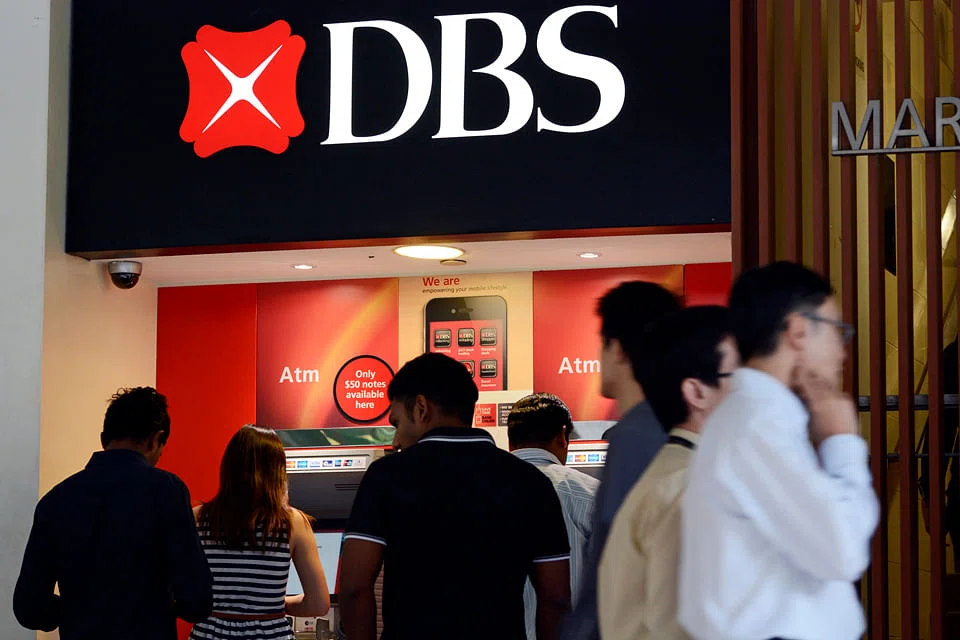
HAVING a range of choices when it comes to where, when and how to bank hasn't always led to happier banking experiences for the Singapore customer. But that choice - which necessarily implies competition for the banks - last year led the banking sector to attain a record level of customer satisfaction.
The banking sector's Customer Satisfaction Index of Singapore (CSISG) score rose 4.1 per cent to 72.2 points in 2014 - its highest in the index's eight years. This also beat the national score of 71.1.
Caroline Lim, director, the Institute of Service Excellence (ISES) at the Singapore Management University, said: "The banks in our local financial sector are constantly trying to outdo one another in performance."
According to her, credit cards are a good example. "The moment one bank introduces an innovative offering, like limousine services and access to airport lounges, rival banks will soon follow with ramped-up offerings and new services. Consumers stand to benefit in these instances," she said.
Customers polled by ISES on the banks they use gave them higher ratings on two out of the three factors that contribute to the overall CSISG satisfaction score. In 2014, compared to 2013, customers were more satisfied with their overall experiences with the banks and felt that their banks were closer to their imagined ideal. The slight drop in banks' ability to meet their expectations - the third factor - was not statistically significant, ISES said.
ISES academic director Marcus Lee sees the improvement in scores as the result of "good, healthy competition".
"We like to think the CSISG spurs the banks, foreign or local, to want to do better for their customers. Between that and the improvements we observe, such as in mobile banking and innovative new products, there is good reason for the banks to improve year-over-year," he said.
Last year's top-ranked bank in terms of customer satisfaction, DBS, also saw a significant 5.4 per cent jump in its score to 75.8.
Jeremy Soo, DBS Bank's head of consumer banking group (Singapore), said that its recent service and innovation initiatives include an SMS queue system in all its branches - which allows customers to get a queue number via SMS before they head down to a branch, as well as an SMS banking service that allows customers to check their account balances of pay credit card bills even without Internet access.
The bank also rolled out a mobile phone wallet, DBS PayLah! in May 2014, which enables customers to send and receive funds from their mobile phone contacts. More than 240,000 have signed up for the service and are making over 60,000 payments each month.
"Our digital channels are increasingly becoming the preferred channel for our customers to transact, engage and buy products and services from us," noted Mr Soo.
DBS now has a million customers using its mobile banking platforms and more than 2.2 million using its Internet banking services, with over one million transactions made each day.
Of course, it is not the only bank in town pursuing a mobile banking strategy to reach customers. OCBC Bank, whose CSISG score rose a slight 0.7 per cent to 71.8 last year, said that in 2014, its base of active mobile banking customers grew 53 per cent and the number of financial transactions on mobile has doubled.
Last month, it announced OCBC OneTouch, which uses Apple's Touch ID technology to allow customers to access their bank balances swiftly via fingerprint recognition - eliminating the need to log in for mobile banking.
"We are continuously looking at ways to use digital technologies to make day-to-day banking more simple, accessible and meaningful for our customers," OCBC Bank's head of E-business Singapore Aditya Gupta said then.
At Citibank Singapore, a focus on resolving customers' concerns swiftly is one factor that may have contributed to the 7.9 per cent jump in its CSISG score to 75.7 - above the banking sector average.
Citibank Singapore's customer franchise director Alice Fok said that the bank's senior management conducts regular reviews and monitors pro-actively how customer complaints are handled. The bank also measures customers' satisfaction after each complaint is resolved, and staff are regularly coached on how to resolve complaints effectively. This gels with ISES' findings - that a complaint handled well could mean even more satisfied customers.
While the CSISG results are reason enough for Singapore's banks to cheer, another report may give them pause. The 2015 World Retail Banking Report, published by Capgemini and Efma, found that banks' efforts to provide better services are falling short of customers' desires and expectations, globally.
Its Customer Experience Index - in its fifth year - fell from 73.5 in 2013 to 72.7 in 2015. Singapore's index also fell to 71.4 in 2015, though it was still the second-highest score in the Asia-Pacific region, after Australia.
The global changes reflect "the influence of a wave of more agile competition, combined with banking touch points that continue to lag customers' heightened expectations", the report said. And so, the work to improve customer experiences and satisfaction carries on.
TRENDING NOW

Indonesia begins cutting natural gas exports to Singapore from Oct 24: reports

Singapore’s central gas buyer affirms Indonesia’s role as ‘important partner’ amid export review warning

KKR founders among investors buying 42% of Peter Lim’s Valencia; club valued at US$1.4 billion

NEA issues notices to 10 Singapore-based companies, including Wilmar and APP, over haze

