

HSBC's Swiss private banking unit settles with US
SEC extracts US$12.5m penalty from the bank, which like Credit Suisse acknowledged wrongdoing
New York
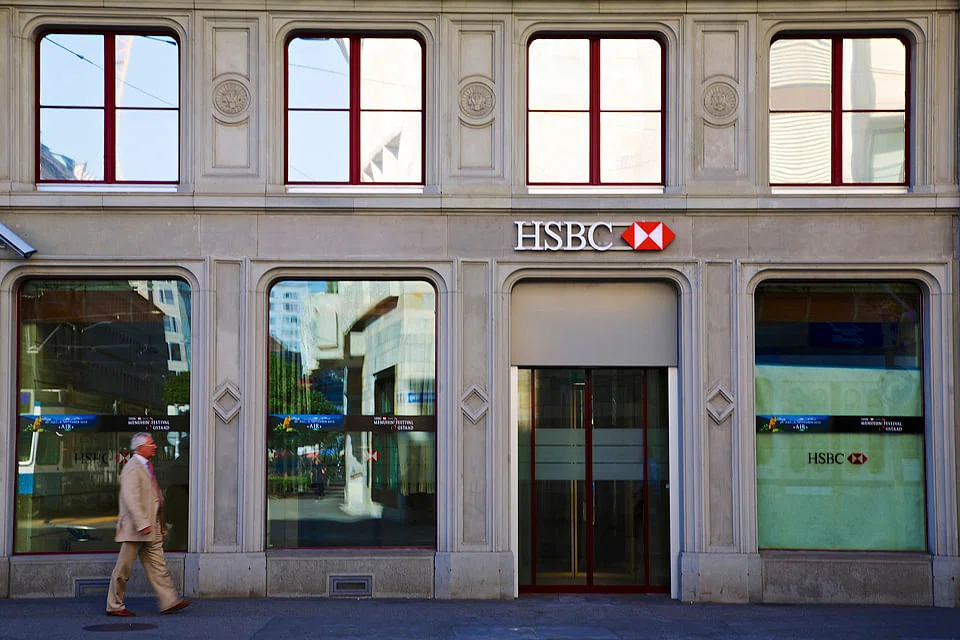
THE United States' crackdown on Swiss bank secrecy gained steam on Tuesday, as HSBC's private banking unit in Switzerland settled an investigation into how it had solicited US clients.
Taking aim at the covert nature of Swiss banking, the Securities and Exchange Commission (SEC) accused HSBC's Swiss unit of violating a cardinal rule of the financial industry: The unit failed to register with the SEC before providing advice to US clients, an omission that allowed it to avoid scrutiny in Washington.
The SEC, which requires banks and other firms that offer investment advice to comply with basic registration rules, extracted a US$12.5 million penalty from the HSBC unit.
The payout is a fraction of the penalty assessed in the SEC's case against Credit Suisse, which paid US$196 million in February to settle similar accusations.
But like Credit Suisse, HSBC acknowledged wrongdoing. Such admissions were rare in SEC cases until last year, when the agency signalled that it would no longer allow companies to automatically neither admit nor deny accusations. With the HSBC settlement, the SEC has now obtained admissions in more than a dozen cases.
The SEC's case against the HSBC unit, which still faces inquiries from other authorities around the globe, serves as the latest rebuke of illegal ties between Swiss banks and US clients.
While the SEC is focused on registration violations, the Justice Department is taking aim at criminal tax-evasion schemes, suspecting that several Swiss banks helped US clients hide their wealth overseas.
"HSBC's Swiss private banking unit illegally conducted advisory or brokerage business with US customers," Andrew Ceresney, the SEC's enforcement director, said in a statement.
"HSBC Private Bank's efforts to prevent registration violations ultimately failed because their compliance initiatives were not effectively implemented or monitored," he said.
Even so, the SEC acknowledged that HSBC's Swiss private banking unit closed or transferred "nearly all" of its US client accounts by the end of 2011. Earlier this year, the bank announced that it was selling the remaining assets in the unit.
"HSBC Private Bank (Suisse) SA is pleased to have reached a settlement with the SEC on this matter," Robert Sherman, a spokesman for HSBC, which is based in London, said in a statement.
The case closes only one chapter in a broader HSBC investigation. The Justice Department, which forced Credit Suisse to plead guilty to criminal tax violations this year, is thought to be investigating the HSBC unit. And in recent weeks, French and Belgian authorities have announced investigations into whether the HSBC unit helped their citizens evade taxes.
The SEC's case dates to 2003, when HSBC's Swiss private banking unit began soliciting clients in the US. Over the next several years, the SEC said, the bank amassed more than 350 such accounts containing up to US$775 million.
HSBC dispatched bankers to the US on at least 40 occasions to pitch clients and dispense investment advice - none of whom were registered with the SEC.
Within months of starting the business in 2003, and concerned about a potential legal fallout, HSBC created a "dedicated North American desk to consolidate US client accounts", according to the SEC. A deadline was set: the end of 2004.
But Swiss bankers clutched to their clients, unwilling to cede them to the North American desk. And internal bank audits over the years continued to find that unregistered bankers were catering to US clients.
In January 2007, according to the SEC, an HSBC executive sent an email to the compliance department, attaching a list of "all relationships which were supposed to be closed two years ago but still remain at the bank".
The executive asked, "In order to reduce our exposure there, may I ask you to remind" the bankers "to finally close these relationships and fast?" It was four more years before the business was fully shut down. NYT
TRENDING NOW
SoftBank’s Son plans US$50 billion Malaysia tech outlay: Anwar Ibrahim
Singapore expects all parties to honour commitments, says PM Wong after Indonesia cuts gas exports

Gas Supply may pursue remedies if contract breached following Indonesia’s export cuts: Tan See Leng

Why the biggest business decision about AI isn’t which model to choose

