

IMF stands by BOJ governor Kuroda’s rock solid easing stance
 Add BT as a preferred source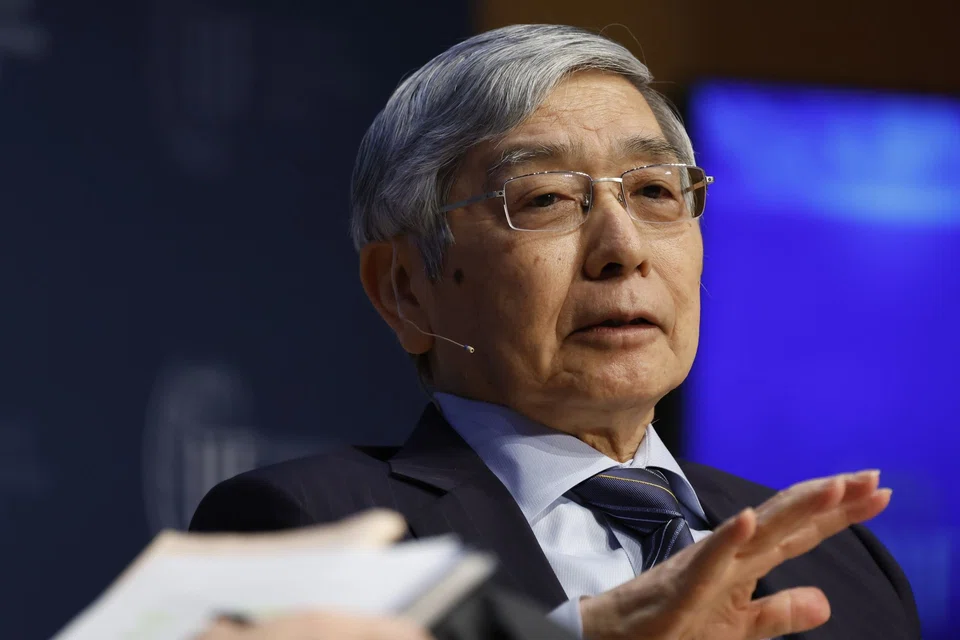
DeeperDive is a beta AI feature. Refer to full articles for the facts.
THE International Monetary Fund (IMF) said that the Bank of Japan (BOJ) shouldn’t even consider policy adjustments to improve the sustainability of its yield curve control right now, as they are likely to be interpreted as a step towards tightening.
“Any change to YCC could be viewed as tightening, no matter what the BOJ tries to communicate, so our view is that it’s not the time to even think about it,” Ranil Salgado, the IMF mission chief to Japan told a group of reporters in Washington DC on Wednesday (Oct 12).
The remarks support governor Haruhiko Kuroda’s firm stance of continuing with easing. Kuroda’s latest message that emphasised his dovish view helped the yen hit a fresh 24-year low on Wednesday. The Japanese currency is trading well below the level that triggered a direct market intervention from the government last month, heightening focus on whether Japan may step into the market again.
Salgado’s comments also come at a time when investors are trying to judge how much more Japan is willing to spend to stop the historic slide in the yen, while simultaneously watching how Kuroda rides out his last months in office.
“In terms of our views on intervention, what we note based on historical experience is the intervention can slow the pace, but it tends to be only for a short period,” Salgado said while declining to comment on whether the IMF supported Japan’s action. It took 12 business days for the yen to slide back below the pre-intervention level after Japan intervened.
The yen touched 146.97 per dollar after Kuroda crystallised his easing commitment yet again in Washington, where he is attending a gathering of Group of 20 (G20) finance chiefs and central bankers. The currency has lost more than one fifth of its value against the dollar this year, the most among major currencies.
Navigate Asia in
a new global order
Get the insights delivered to your inbox.
The recent high global market volatility is a likely topic of discussion at the G20 meeting. Group of Seven finance chiefs said Wednesday they will continue to closely monitor volatility in the markets and reaffirmed their commitment to consult in regard to actions in foreign exchange markets.
Salgado said the yen isn’t quite tracking the fundamentals as much right now compared to earlier in the year, adding that the yen’s weakness isn’t a net negative for the economy.
“We can still say a weak yen is positive overall for Japan’s economy with the important caveats that some parts of the economy are hurt, such as anyone who imports, or any households buying imported goods,” Salgado said, echoing a view Kuroda hinted at earlier Wednesday.

Japanese companies enjoyed the biggest profits since 1954 in the second quarter, although profits declined among small companies, according to government data. Prime Minister Fumio Kishida is urging companies to raise wages, given their profits are being buoyed by the weak yen.
“The Bank of Japan is correct that we need to see wage growth be significantly higher, closer to 3 per cent before the BOJ can say we have hit our target durably,” Salgado said in a separate interview with Bloomberg’s Kathleen Hays Wednesday.
The IMF has advised switching the 10-year yield target to a shorter maturity to enhance its policy sustainability, not for unwinding stimulus, Salgado said. What matters in terms of corporate loans in particular is the yield curve up to five years. Beyond that maturity, it has a greater impact on the financial stability of banks, pension funds and life insurers, he said.
The BOJ will hold its next policy meeting between Oct 27-28. BLOOMBERG
Decoding Asia newsletter: your guide to navigating Asia in a new global order. Sign up here to get Decoding Asia newsletter. Delivered to your inbox. Free.
Share with us your feedback on BT's products and services
TRENDING NOW

Shelving S$5 billion office redevelopment plan proved ‘wise’ as geopolitical risks mount: OCBC chairman

OCBC is said to emerge as lead bidder for HSBC Indonesia assets

Middle East-linked energy supply shocks put Asean Power Grid back in focus

Eurokars Group introduces rental car franchises Enterprise Rent-A-Car, National Car Rental, and Alamo to Singapore

