IMF wades into debate over yuan, warns on risk of trade tensions
It’s lending its voice to a debate over distortions caused by a weaker exchange rate
 Add BT as a preferred source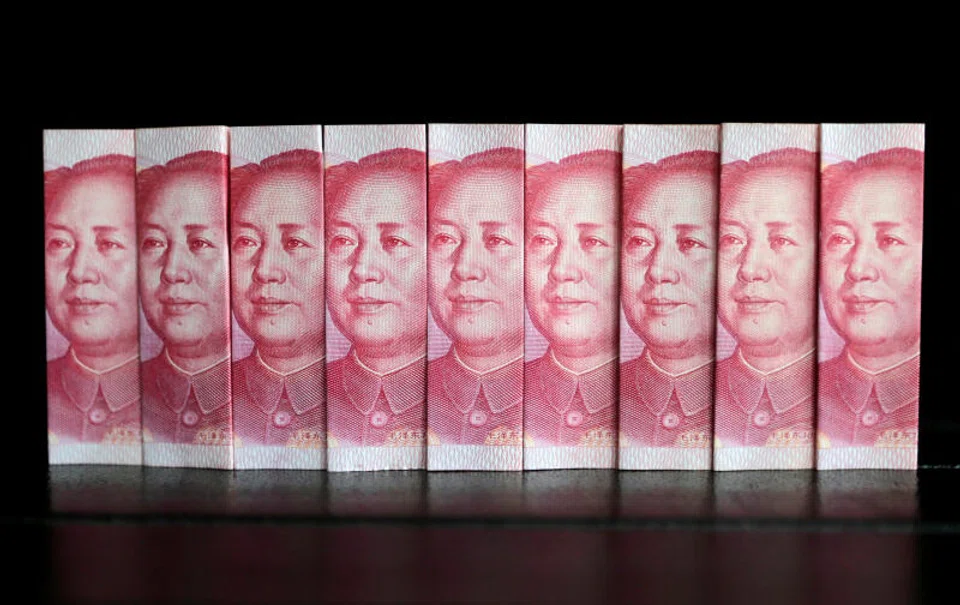
DeeperDive is a beta AI feature. Refer to full articles for the facts.
[BEIJING] The International Monetary Fund linked China’s booming exports and growing trade imbalances in part to a real depreciation of the yuan, lending its voice to a debate over distortions caused by a weaker exchange rate.
Following the conclusion of the IMF’s annual review of China’s economy, fund officials said the country’s low inflation relative to price levels among its trading partners has led to a weaker yuan in real terms. They urged Chinese policymakers to adopt bolder stimulus to boost consumption, which would lift consumer prices, while allowing more exchange rate flexibility.
“As the second-largest economy in the world, China is simply too big to generate much growth from exports,” IMF Managing Director Kristalina Georgieva said at a press briefing in Beijing on Wednesday (Dec 10). “Continuing to depend on export-led growth risks furthering global trade tensions.”
The IMF didn’t explicitly recommend that China should push for the yuan’s appreciation, she said.
China has moved fast in recent years to gain manufacturing dominance, drawing accusations from the likes of Donald Trump over maintaining an undervalued exchange rate that helped it amass trade surpluses.
The IMF appeared to be siding with critics in echoing growing calls abroad and within China for a stronger yuan. The currency’s inflation-adjusted exchange rate fell to the lowest in more than a decade due to persistent falling prices in China, which made its exports more competitive globally.
Navigate Asia in
a new global order
Get the insights delivered to your inbox.
The debate is playing out against the backdrop of China’s goods trade surplus surging to a record of above US$1 trillion in the first 11 months of this year. Countries fearful for the future of their industries are increasingly pushing back against the flood of Chinese exports.
China maintains a “managed float” of the yuan and has a number of tools to influence the exchange rate. Officials have repeatedly said they aim to keep the currency “basically stable,” allowing the yuan to appreciate slightly this year and at times using its daily fixing to discourage rapid moves.
The IMF has in recent years been advising China to increase the flexibility of its exchange rate. A decade ago, the IMF dropped a long-held view that the yuan was undervalued, ahead of the currency’s inclusion in the fund’s Special Drawing Rights basket of reserve currencies.
“What we want to see is a market-based exchange rate that reflects fundamentals,” Georgieva said.
External imbalances are becoming more pronounced for China, according to the IMF, with its current account surplus projected to reach 3.3 per cent of gross domestic product in 2025.
Earlier in 2025, the IMF estimated that the yuan was 8.5 per cent undervalued, based on a current account surplus of 2.3 per cent of GDP last year. The surplus reached 3.4 per cent in the third quarter of this year, the highest since late 2010, according to Bloomberg calculations.
Given the strength of China’s exports and fiscal stimulus deployed by the government, the IMF said it now expects China’s economy to expand 5 per cent in 2025 and 4.5 per cent in 2026 – faster than in its most recent projections from October.
“Boosting demand would reflate the economy, lift inflation and lead to an appreciation of the real exchange rate,” Sonali Jain-Chandra, the IMF’s mission chief for China, said at the briefing. “This will help close internal and external imbalances.” BLOOMBERG
Decoding Asia newsletter: your guide to navigating Asia in a new global order. Sign up here to get Decoding Asia newsletter. Delivered to your inbox. Free.
Share with us your feedback on BT's products and services