Importance of Hong Kong will not diminish: OCBC CEO
Singapore
THE backdrop seemed dismal as protesters turned mobbish at some point amid police clashes, crippling much of international travel into Hong Kong over two days.
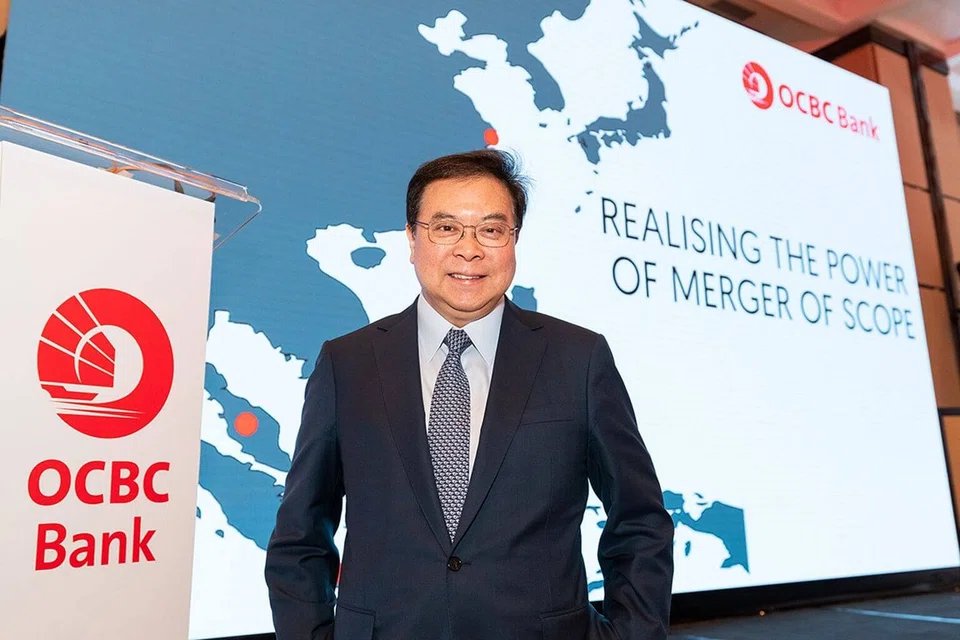
But OCBC's chief executive officer, Samuel Tsien, was an outward picture of calm, hosting analysts and reporters in Hong Kong at a corporate presentation on the results of the bank's Wing Hang integration since the acquisition some five years ago.
The show of confidence reflects his view that Hong Kong is not playing second-fiddle to a Chinese city, and that it remains an important financial centre to tap China's rise as a global powerhouse.
"I don't think China has got the intention of replacing Hong Kong with a Chinese city," Mr Tsien told The Business Times, pointing to the different legal system and deep international knowledge of the financial centre.
The longdrawn period of protests in Hong Kong, which snowballed from fighting a universally unpopular - and since withdrawn - extradition bill, have posed wider questions on whether China will hold the line on its "one country, two systems" position with Hong Kong. But Mr Tsien said he does not think the protests are centred around Hong Kong's fears of displacement, noting that it is in China's interest to preserve Hong Kong as is.
The question is critical for OCBC, with its 2014 Wing Hang acquisition giving it access to several new branches that are mostly in Hong Kong. The aim is to capture more China flows, putting boots on the ground here to suss out the economic activities from this part of the world, said Mr Tsien. Greater China is OCBC's second-largest market, after Singapore.
The stage is set for a 10-15 year journey for China to become an international financial centre, with the "ultimate proof" resting on the internationalisation of the renminbi as a settlement currency, said Mr Tsien, who spent much of his life in Hong Kong.
"After that, it does not necessarily mean that the importance of Hong Kong will diminish because China's economy will be very big at that time. I think there will be room for two financial centres to exist to serve the Chinese economy."
And this comes as China gradually opens up its financial sector to introduce foreign competition to its domestic market, with OCBC waiting on rule changes to say how much more can it raise its 20-per-cent stake - the current regulatory limit - in Bank of Ningbo.
"Bank of Ningbo is a good investment for us," said Mr Tsien. "There has been talk about opening up that 20 per cent to no limit, but we have not seen the details yet. We really need to wait until the details are out before we can make a decision."
Against that gradual liberalisation trend, the wider trade tensions between China and the United States will serve to emphasise China's larger role in the new world order, he added.
"The trade war itself is going to remind China that they have to assume the responsibilities of a global power," Mr Tsien said.
"There will come a day when you (China) have your intellectual property, and you don't want other people to infringe upon that intellectual property. Those are the responsibilities that come along with being a more material economic power now."