

Improved margins should cushion banks’ Q2 earnings from market volatility: analysts

Tan Nai Lun
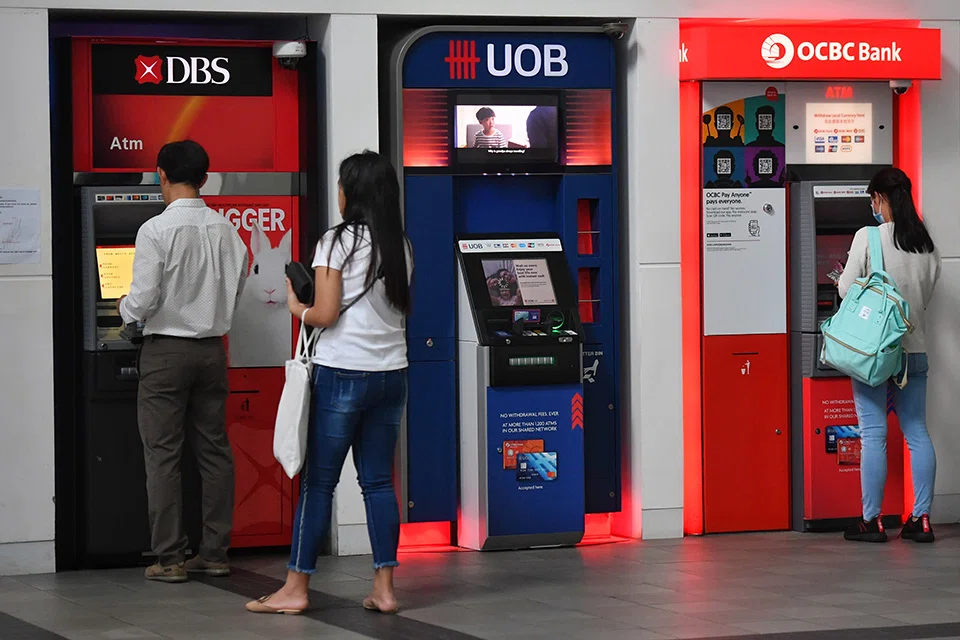
THE big 3 Singapore banks are expected to post stronger net interest margins (NIMs) for the second quarter of 2022, following a series of interest rate hikes by the Federal Reserve to combat inflation.
The strong NIMs will likely help cushion the banks from any drag on earnings brought on by market volatility and macroeconomic downside risks in Q2, analysts said, although recessionary fears may persist in the near term.
The trio of local banks will report their Q2 results in the coming week, with UOB on Jul 29, OCBC on Aug 3 and DBS on Aug 4.
“Balance sheets of large Singapore banks are rate-sensitive and supported by an extensive buffer of low-cost customer deposits,” said Ivan Tan, credit analyst at S&P Global Ratings.
Tan expects a NIM expansion of 5 to 10 basis points for the banks could be “possible in 2022”, with a further 10- to 15-basis-point increase in 2023 after rate hikes are fully priced in.
DBS Group Research, too, flagged the ongoing repricing of loans as something to watch.
“Even as deposits begin to reprice, Singapore banks current account savings account ratios have improved throughout the pandemic, and this will support net interest margin expansion and the banks’ earnings during the financial year 2022,” the research team said.
It sees room for banks to raise their guidance for FY2022 NIMs, given that the US federal funds rate is expected to end at 3.5 per cent for the year.
CGS-CIMB analysts Andrea Choong and Lim Siew Khee, however, said NIMs may be “more pronounced” in the third quarter than in Q2, given the lagged pass-through of the Fed rate hikes in May and June.
As for the asset quality for the 3 banks, most expect it will remain at healthy levels despite the macroeconomic uncertainty – due to the provisions made during the Covid-19 pandemic.
S&P Global Ratings’ Tan said the “controlled release of general provisions built up during the Covid pandemic” could aid earnings.
The banks may also be less inclined to write back excess general provisions amid ongoing macroeconomic uncertainties, according to UOB Kay Hian (UOBKH) analyst Jonathan Koh.
Credit costs are expected to remain at healthy levels for the year. Koh expects costs to remain low for the first half, although they should inch higher in the second half of 2022.
Analysts do expect some growth will be offset by a weaker wealth management segment.
Wealth management income is likely to take a hit from weak market sentiment, caused by persistent inflation, uncertainties from the Fed’s rate hikes and recession risks, said the CGS-CIMB research team.
Nevertheless, other fee income lines such as credit cards should hold up well as travel spending rebounds, while trading income from stronger customer flows should remain steady, it added.
The DBS research team also noted that while investors remain concerned about an overly hawkish Fed and recession risks, it expects inflation will slow ahead.
For DBS, the CGS-CIMB team expects net profit of S$1.7 billion for Q2, up 1 per cent on year, while UOBKH’s Koh forecasts it will moderate by 5 per cent on year to S$1.6 billion.
For OCBC, CGS-CIMB expects a 15 per cent rise in net profit to S$1.3 billion, while Koh forecasts a 2 per cent on-year decline to S$1.1 billion.
As for UOB, CGS-CIMB expects net profit of S$1.1 billion for Q2, up 6 per cent on year, noting that loan growth will likely be slower, since corporate demand remains affected by supply chain disruptions from lockdowns in China.
On Thursday, shares of DBS closed 0.5 per cent higher at S$31.82, OCBC ended up 1 per cent at S$11.71, while UOB rose 0.9 per cent to close at S$28.26.
TRENDING NOW

Grab CEO’s wife Chloe Tong on life with Anthony Tan and finding her purpose

He built the Vingroup empire. Now South-east Asia’s richest man is handing some key roles to his sons

Can Mark Shaw bring Singapore back to Orchard Road and the movies?

Ex-Sembcorp Marine CEO Wong Weng Sun acquitted of charges in Brazil corruption case

