

India rate panel stood pat to avoid erring on Iran war uncertainty, minutes show
The RBI’s inflation target stands at 4%, with a tolerance band of 2% to 6%
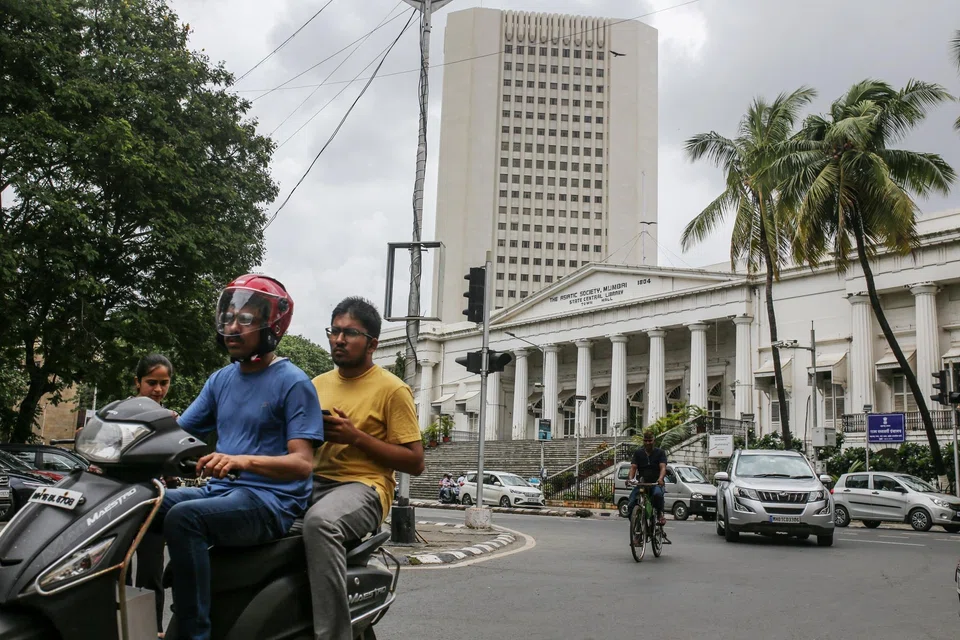
[MUMBAI] India’s rate panel members characterised the Iran war-driven oil price spike as a supply shock and opted to remain on hold to avoid policy mistakes, according to minutes from the April meeting released on Wednesday (Apr 22).
Most panel members said that they would consider raising rates only if higher oil prices feed through to the economy, unsettling inflation expectations. Oil prices have risen nearly 40 per cent since the Iran war broke out in late February, disrupting global supply chains.
“As long as expectations remain anchored, looking through the shock is optimal since any pre-emptive response merely sacrifices output without delivering any significant gain on the inflation front,” Indranil Bhattacharyya, executive director at Reserve Bank of India (RBI), said in the minutes.
“Monetary policy has limited ability to quell the direct effects of a supply-induced inflation shock; it only has operational relevance once second-round effects are apparent,” he said.
The RBI kept its key policy rate unchanged at its meeting earlier this month, and warned of lower growth and higher inflation because of the Middle East crisis.
If the conflict remains unresolved for a long duration, it can make central banks’ task of reining in inflation expectations while minimising growth sacrifice arduous, RBI governor Sanjay Malhotra said in its minutes.
However, the Indian economy is in a better position to withstand shocks than in the past, he said, adding that underlying inflation pressures in the economy remained moderate.
The central bank expects growth to fall to 6.9 per cent in 2026 to 2027 from an estimated 7.6 per cent last year, with inflation seen averaging 4.6 per cent.
The RBI’s inflation target stands at 4 per cent, with a tolerance band of 2 to 6 per cent.

‘Lowest cost’
The RBI also maintained a neutral stance on monetary policy at its meeting, which signals it can move rates in either direction as data evolves.
The rate panel’s external member Saugata Bhattacharya said that the risks of making a policy mistake were higher due to uncertainty from the war, adding that hiking rates in anticipation of higher inflation was as risky as cutting rates in response to fears of lower growth.
The volatility in markets has already “significantly tightened” financial conditions in the economy, he said. This amounts to a “de facto policy tightening”, he said, adding “a status quo at this time is likely to have the lowest cost”.
The rupee has fallen 3 per cent since the war began and the benchmark bond yield has risen 26 basis points.
A majority of the economists had forecast rates staying on hold till at least mid-2027 in a Reuters poll conducted on Mar 27.
External rate panel member Ram Singh, who had earlier voted for an accommodative stance, voted along with the rest of the panel for a neutral stance, saying the many “unknown unknowns” require monetary policy to maintain enough “elbow room”. REUTERS
Decoding Asia newsletter: your guide to navigating Asia in a new global order. Sign up here to get Decoding Asia newsletter. Delivered to your inbox. Free.
Share with us your feedback on BT's products and services
TRENDING NOW

Once staunchly pro-China, Malaysian Chinese businesses are now distancing themselves from Beijing

Grab CEO’s wife Chloe Tong on life with Anthony Tan and finding her purpose

Could stablecoins be the future of money?
ST Engineering opens tech-focused aircraft maintenance facility in Changi; to create over 500 jobs

