Indonesia's central bank sells bonds to absorb excess liquidity
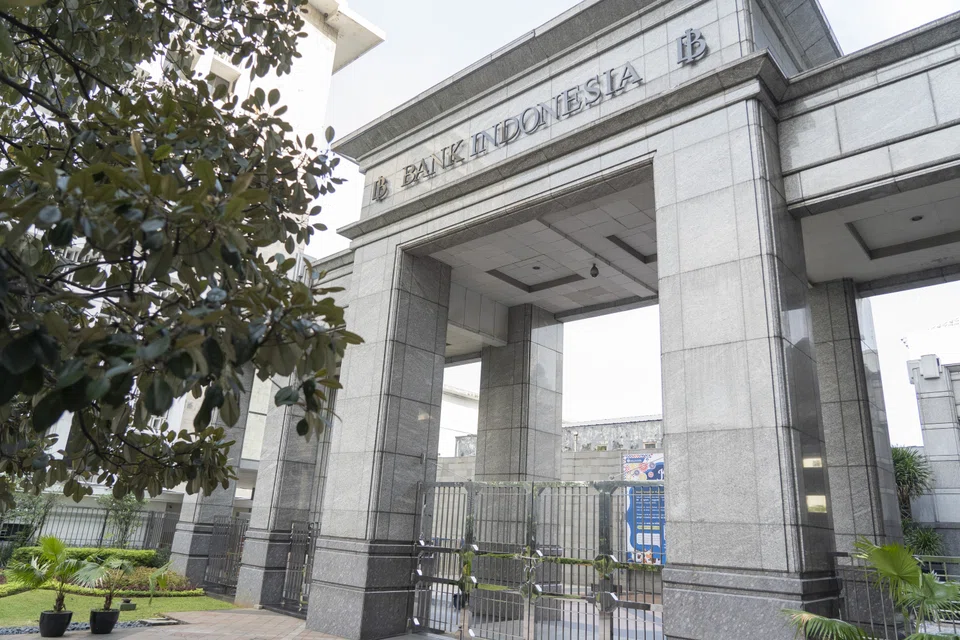
BANK Indonesia (BI) is selling government bond holdings in the secondary market, ratcheting up its efforts to mop up excess liquidity in the financial system.
The central bank sold 390 billion rupiah (S$36.4 million) worth of debt paper in an outright transaction on Monday (Jul 18), according to executive director for monetary management Edi Susianto. More bond sales are planned in the future as needed to support the normalisation of rupiah liquidity, he said.
Bank Indonesia is among the world's interest-rate laggards, alongside the likes of Japan and the euro zone, which have held back on any hikes to help bolster economic growth in the face of rising inflation and weakening currencies.
The bond sales could help buy time for the central bank as it makes a decision regarding its key rate on Thursday. Eighteen of 25 economists polled by Bloomberg still see the rate held at a record-low 3.5 per cent, while the remainder expect a 25 basis point hike.
"The aim is to absorb excess liquidity in the financial market so as to improve supply-demand conditions both on the money market and on the government securities market," Susianto said in a text message. "In the future, BI will continue to monitor the dynamics of liquidity in the financial market in order to maintain effective transmission of monetary policy."
The bond sales mark the first time Bank Indonesia is selling such holdings since taking on an ultra-easy monetary policy during the pandemic, which resulted in 150 basis points of interest-rate cuts and more than 985 trillion rupiah in debt purchases by the end of 2021.
The move was telegraphed by governor Perry Warjiyo in an interview with Bloomberg on Jul 6, where he said that monetary authorities are on course for their exit plan: Increasing the reserve requirement ratio, stabilising the exchange rate to temper imported inflation, and normalising liquidity in the money market.
Expanded government subsidies have helped keep core inflation at 2.63 per cent in June, below the midpoint of the central bank's 2 per cent-4 per cent target range, even as headline inflation climbed to a 5-year high of 4.35 per cent. BLOOMBERG
Decoding Asia newsletter: your guide to navigating Asia in a new global order. Sign up here to get Decoding Asia newsletter. Delivered to your inbox. Free.
Share with us your feedback on BT's products and services