Integrated Shield scheme insurers nursing their results back to health
Prudential is sole player to show profit after two years of losses, thanks to claims-based pricing, while most others cut losses significantly

Singapore
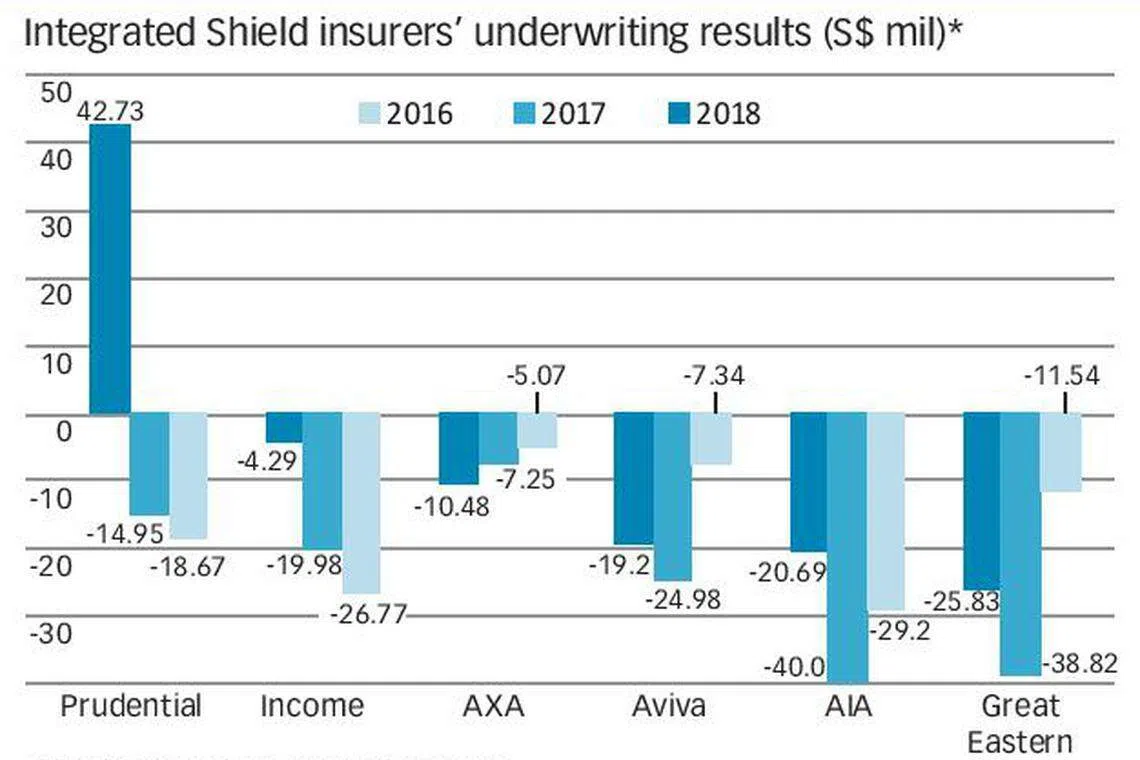
INSURERS in the Integrated Shield scheme (IP) significantly improved their underwriting results in 2018, despite maintaining still-predominantly loss-making health portfolios.
Prudential staged the most dramatic turnaround with an underwriting profit of S$42.7 million, compared to losses in 2017 and 2016. It is the sole insurer in the scheme whose health portfolio bounced back into the black in 2018. It is also the only insurer with a claims-based pricing system for its riders - policyholders who do not claim enjoy a 20 per cent discount on premiums. It did not raise IP premiums last year.
Agnes Choy, Prudential head of group business and medical products, says: "Following several years of underwriting losses, we saw a turnaround in our PruShield portfolio in 2018, driven in part by the stabilisation of claims in our private hospital plans.
"We attribute this to our claims-based pricing approach which rewards our customers who stay healthy with lower premiums and encourages them to use healthcare services more prudently.''
Prudential says more than 80 per cent of PruShield customers do not claim.
Most other insurers managed to significantly reduce their underwriting losses. This is partly due to premium increases last year. Some insurers also rolled out lower priced riders for policyholders who agree to submit their cases to the insurers' panel of doctors or a pre-approval system. AXA Insurance, for instance, notes that claims through its panel were 30 to 40 per cent lower than non-panel claims. Its underwriting result, however, shows a deeper loss. Its managing director Sean Goh says this was due to the impact of a "one-off reinsurance adjustment''.
"If we exclude the adjustment we see similar performance over the past two years. Our ratio of claims to in-force business has also improved.''
New-design riders launched in April this year impose a co-payment of at least 5 per cent, as required by the Health Ministry. Their impact on insurers' results remains to be seen.
The data for this article is extracted from Form 7(a) - long term accident and health insurance - of insurers' returns for 2018, lodged with the Monetary Authority of Singapore.
There are a total of seven insurers offering IP products. The newest entrant, Raffles Health, launched its product last year, and its 2018 numbers were not meaningful.
Dr Jeremy Lim, partner at Oliver Wyman (health and life sciences practice, Asia Pacific), says: "My sense is there are no magic bullets, and it is the sum total of all the measures that are contributory (to 2018 results).
"I wouldn't say the insurers are out of the woods but as an industry, they are establishing systems that will allow for control levers to manage costs better.
"As a matter of public policy, Singapore should focus on value as it's not really how much we spend on healthcare per se, but what outcomes we get. Insurers should thus be careful that cost containment measures do not cause the quality or access to care to deteriorate, or that short-term savings lead to higher costs downstream due to cutbacks in essential preventive health services.''
On whether more premium hikes are imminent, insurers are cautious. Great Eastern says: "We constantly monitor medical advancements and new medical technologies to ensure that our benefits are kept abreast with market changes. At the same time we also regularly monitor our portfolio experience to ensure that our premiums remain affordable and sustainable into the long term.''