

Investors are learning to live with China's credit defaults
 Add BT as a preferred source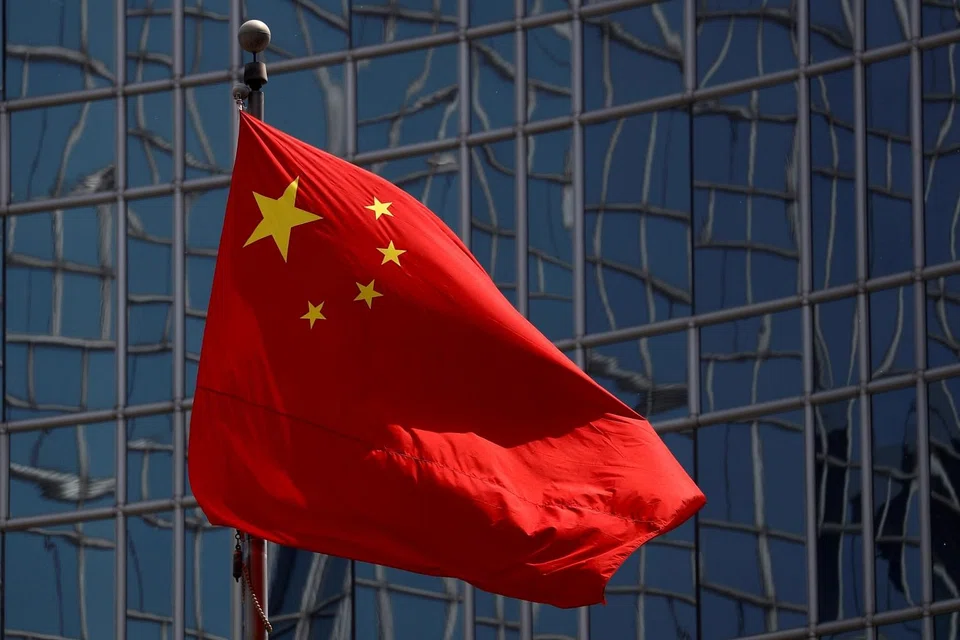
DeeperDive is a beta AI feature. Refer to full articles for the facts.
[NEW YORK] China's authorities are increasingly spreading the message: You should get what you pay for when it comes to corporate bonds.
Beijing is allowing a wave of defaults by state-linked companies in the country's US$15 trillion credit market. Last week, prominent chipmaker Tsinghua Unigroup Co defaulted on US$450 million of dollar debt triggering cross-defaults on another US$2 billion - equivalent to almost two-thirds of the total defaulted debt in China's offshore bond market in 2019.
While this may be bad news for the weakest state-owned enterprises (SOEs), it's an improvement for investors, the credit market and China overall. A more accurate pricing of risk gives buyers of bonds greater transparency in a relatively opaque economy. That would boost the allure of Chinese debt, drawing more inflows, which in turn would help reduce the reliance of the nation's capital markets on the government. State banks are among the biggest buyers of onshore corporate debt.
"For the first time we might have opportunity in the medium term to have a genuine local high-yield market, that's what has been missing for years in China," according to Jean-Charles Sambor, head of emerging markets fixed income at BNP Paribas Asset Management in London. "2021 could be an inflection point" for the introduction of a "genuine credit risk mechanism in China".
Though the November defaults sparked a brief selloff and cancelled sales onshore, Unigroup's default did little to shake the broader offshore junk market, where yields actually dropped. The risk was contained to holders of debt issued by Unigroup, a company that's been missing payments for the better part of a month.
Improving the efficiency of the debt market is becoming a priority for policymakers. They have a tough climb ahead of them. In China, about 96 per cent of onshore credit ratings are the equivalent of investment grade.
Navigate Asia in
a new global order
Get the insights delivered to your inbox.
China's central bank has vowed to improve its oversight of the ratings industry. People's Bank of China (PBOC) deputy governor Pan Gongsheng said sector problems include inflated credit ratings, and these firms need to improve their quality of work, according to a statement on the PBOC's website dated Sunday.
Yet the recent defaults are prompting investors to put a premium on state-owned firms, especially the weakest ones. The average yield on riskier SOE bonds rose to a record 7.36 per cent on Thursday. Even top-rated SOEs are starting to feel some pain; the average yield on their bonds is about 5 per cent. That's up 32 basis points from a year earlier, Bloomberg-compiled data show.
"Between the best and worst provinces and the best and worst SOEs there was a very limited difference in terms of credit risk, and this is changing," Mr Sambor said.
Investors' equanimity doesn't mean Beijing's plan will proceed smoothly. Pockets of pain may emerge around a certain industry or province that may drag down good credit with the bad. Since last month's unexpected default by Henan-based Yongcheng Coal & Electricity Holding Group Co, only one non-financial firm from the province has managed to sell debt.
But the authorities will be on guard to limit any broader impact from defaults, according to Thu Ha Chow, a portfolio manager at Loomis Sayles Investments Asia Pte.
"We do not expect regulators will allow for a disorderly selloff to cause a systemic risk," said Mr Chow, who is looking for buying opportunities among onshore SOEs in the year ahead. "What is important for China's bond market development is for defaults to be resolved in a fast and predictable manner so that companies and investors can appropriately price risk rather than artificially avoid defaults which lead to moral hazard."
BLOOMBERG
Decoding Asia newsletter: your guide to navigating Asia in a new global order. Sign up here to get Decoding Asia newsletter. Delivered to your inbox. Free.
Share with us your feedback on BT's products and services
TRENDING NOW

Shelving S$5 billion office redevelopment plan proved ‘wise’ as geopolitical risks mount: OCBC chairman
OCBC is said to emerge as lead bidder for HSBC Indonesia assets

Middle East-linked energy supply shocks put Asean Power Grid back in focus

Eurokars Group introduces rental car franchises Enterprise Rent-A-Car, National Car Rental, and Alamo to Singapore

