

Jack Ma's botched Ant IPO becomes a boost for state banks
Stocks of Chinese banks rally after Beijing's move to curb rapid rise of fintechs
 Add BT as a preferred source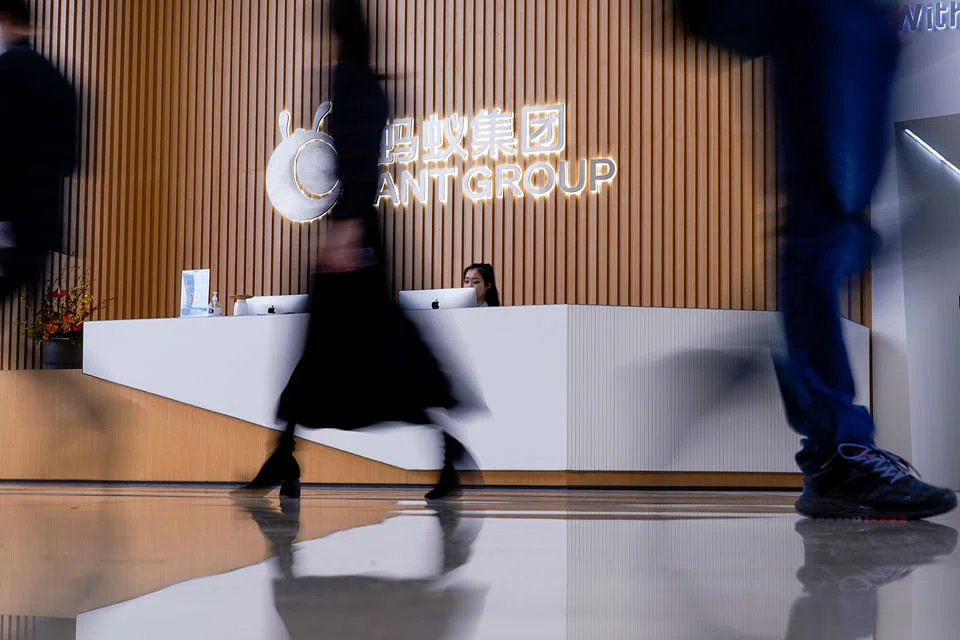
DeeperDive is a beta AI feature. Refer to full articles for the facts.
Hong Kong
CHINA Merchants Bank Co and other state-backed lenders have emerged as the biggest winners from new regulations that derailed Ant Group Co's massive stock listing, as China aims to level the playing field between fintech giants and traditional banks.
Merchants Bank, the retail bank king in China, has soared 18 per cent in Hong Kong this month; its stock rose as much as 3.6 per cent on Tuesday to a record high. Other Chinese lenders also gained, as Alibaba Group Holding Ltd, an affiliate and one-third shareholder of Ant, lost 4 per cent.
Chinese banks rallied after financial regulators last week proposed new rules to curb the rapid growth and leverage at the nation's more than 200 micro-loan lenders, putting a surprise halt to Ant's US$35 billion initial public offering (IPO).
Ant and other fintech giants such as Tencent Holdings Ltd, using big data and cloud computing, have grabbed market share from commercial banks in the lucrative consumer lending space by providing easier access to credit for younger users online, many of whom have little income or credit history.
"The regulations move the dial back in favour of banks," said Sanjay Jain, a Singapore-based head of financials at Aletheia Capital Ltd, Asia's biggest independent investment-research firm. "It seems the regulators are putting brakes on the extent of income that can be disintermediated out of the banking system."
Navigate Asia in
a new global order
Get the insights delivered to your inbox.
Merchants Bank is one of the largest credit card issuers in China with 155 million consumer banking clients at the end of September. It derived about 57 per cent of its net operating income from retail finance last year, among the highest in China. Along with other state-owned lenders such as Industrial & Commercial Bank of China Ltd, it has been battling Ant for customers in everything from payments to lending and wealth management, while leveraging its own digital platforms to acquire new users.
Ant has been winning a lot of the battles. Jack Ma's fintech juggernaut has provided small unsecured loans to about 500 million people over the past year through two micro-lending platforms, Huabei and Jiebei. After getting its start in online payments with Alipay, lending is now the firm's biggest business.
Ant has underwritten about 1.7 trillion yuan (S$348.6 billion) in consumer loans and 422 billion yuan in small-business loans for about 100 banks and other financial institutions, most of which have limited distribution networks. Ant does not work with larger consumer lenders like China Merchants.
Chinese state banks have been pushing for Beijing to curb fintech giants for years, with limited success, so the move last week was a "watershed moment" for the financial regulatory framework, said Daiwa Securities Group Inc.
Under the proposed changes, Ant and other online lenders will have to provide at least 30 per cent of the funding when it offers loans with other banks, up from just 2 per cent currently. Loans to an individual will be capped at 300,000 yuan, or no more than a third of the borrower's average income in the past three years. The regulations raise the bar for Ant and other upstart lenders, forcing them to set aside more capital and assume more risk, just as banks like China Merchants do.
When the Ant IPO comes back to market - likely next year - investors will give it a much smaller valuation, said some analysts. Multiples will be closer to traditional banks, reflecting the new regime that makes Ant more "fin" than "tech." "At the very least, the fizz and the froth around the IPO and the post-listing price should be gone," said Jain. BLOOMBERG
Decoding Asia newsletter: your guide to navigating Asia in a new global order. Sign up here to get Decoding Asia newsletter. Delivered to your inbox. Free.
Share with us your feedback on BT's products and services
TRENDING NOW

Shelving S$5 billion office redevelopment plan proved ‘wise’ as geopolitical risks mount: OCBC chairman

Eurokars Group introduces rental car franchises Enterprise Rent-A-Car, National Car Rental, and Alamo to Singapore

20 photos that show how dramatically Singapore has changed in two decades
Singapore’s key exports up 15.3% in March from electronics surge, exceeding forecasts

