

Janet Yellen gets a chance to shape the Fed, this time from outside
 Add BT as a preferred source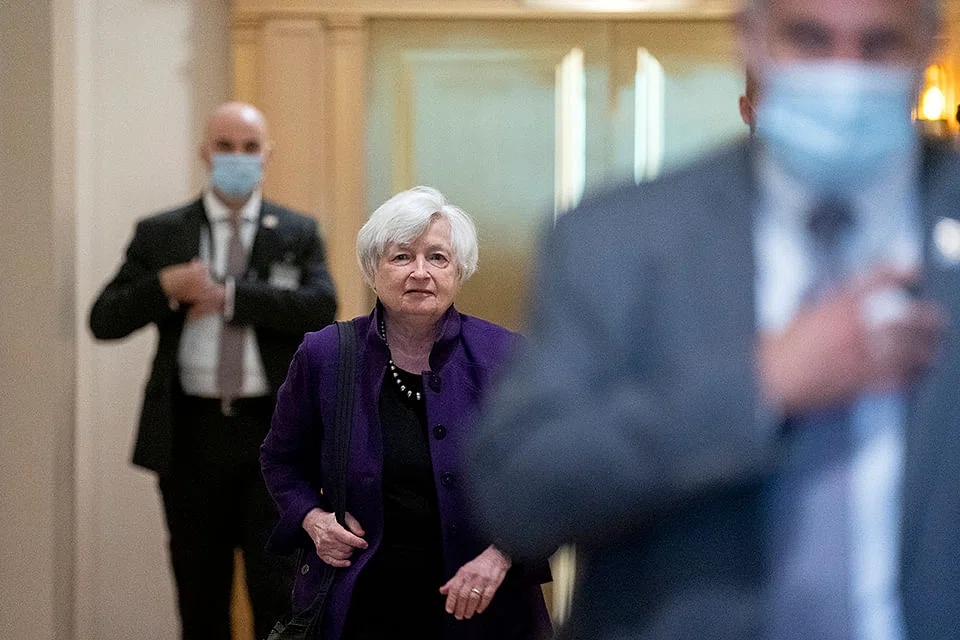
DeeperDive is a beta AI feature. Refer to full articles for the facts.
Washington, DC
JANET Yellen has dedicated most of her professional life to the US Federal Reserve. She served in its highest-ranking roles, including as president of the Federal Reserve Bank of San Francisco, on its Washington-based board and as the central bank's first female chair.
When President Donald Trump decided to replace her in that role in 2017, she was sorely disappointed. Now, as Treasury secretary, Dr Yellen is getting another chance to shape the future of the institution.
She will be a critical voice in deciding who ought to lead the central bank in what some see as a once-in-a-generation opportunity to remake an institution that shepherds the US economy and helps to regulate its largest banks.
Jerome Powell's term as chair, which began in 2018 after Mr Trump picked him to take over for Dr Yellen, ends in February. Slots for the vice chair and the Fed's top bank regulator will also be up for grabs soon, and a position on the Fed's Board of Governors is already vacant.
Assuming officials leave once their leadership terms end, the Biden administration may, in quick succession, be able to appoint four of the Fed's seven board members, powerful policymakers who have constant votes on monetary decisions and exclusive regulatory authorities.
Navigate Asia in
a new global order
Get the insights delivered to your inbox.
Many progressive Democrats are pushing to oust the moderate Powell and replace him with a candidate who is focused on tight financial regulation, climate change and digital money - most likely Lael Brainard, a member of the Fed's board of governors.
Mr Powell's supporters see him as a champion for full employment, and would like him to be retained as a sign that competent leadership is rewarded. It's unclear where Dr Yellen's preferences lie, but it's common knowledge that she was unhappy when Mr Trump broke a tradition of reappointment in her case.
Many who would like to see Mr Powell replaced play down the role she will have in shaping President Joe Biden's decision.
But Treasury secretaries have traditionally been central to the Fed selection process, helping to advise and guide the president toward a choice that will be welcome on both Wall Street and in the Senate, which has to confirm nominees to the Fed board.
Dr Yellen's views will carry significant weight in the deliberations, colouring both who is considered and the ultimate outcome.
Discussions over the pick are also being held among Brian Deese, director of the National Economic Council; Ron Klain, the president's chief of staff; and Cecilia Rouse, chair of the Council of Economic Advisers, according to sources. President Biden will have the final word.
Conversations over who should lead the institution could stretch into October. But speculation over who will win the top jobs is already rampant.
The argument for replacing Mr Powell, a Republican who was appointed as a Fed governor by President Barack Obama, has to do with things other than traditional interest rate policy. Democrats typically say he has done a relatively good job when it comes to guiding the economy using monetary tools. Under Mr Powell's leadership, the Fed parried Mr Trump's pressure campaign to lower rates when the economic backdrop was solid, and it reacted rapidly and effectively to the economic collapse triggered by the pandemic.
The Fed is also credited with averting a financial crisis early last year as key markets seized. Mr Powell's Fed revamped its entire policy framework last year to focus more concertedly on achieving a strong job market that extends its benefits to as many people as possible.
Dr Yellen has repeatedly praised Powell's performance. "He's doing extremely well," she told The New York Times in early 2020, discussing Mr Powell's conduct as he came under attack from the Trump White House.
But Mr Powell has opponents among more progressive groups. He often deferred to the Fed's vice chair - a Trump appointee - for supervision when it came to regulation, regularly voting for tweaks to bank and financial rules that chipped quietly away at post-crisis financial reforms.
He has also been criticised by climate-focused groups for being too slow to elevate the Fed's role in policing environment-related finance.
Regulation and climate are key reasons some Democrats are lining up behind Ms Brainard, the Fed governor and another leading candidate.
Ms Brainard, who also has a good relationship with Dr Yellen, opposed Trump administration efforts to lighten bank oversight by loudly dissenting against a spate of regulatory decisions.
She is seen as a powerful and effective Fed governor, one who played a key role in shaping pandemic response programmes. And while they are closely aligned on monetary policy, she has distinguished herself from Mr Powell by pushing for a bigger role for the Fed on climate issues and a more proactive stance toward developing a digital currency. She also could help to anchor a leadership team that could usher in a fresh era for the Fed, her supporters argue.
Andrew Levin, a former Fed economist, is one of several people who are pushing the idea that the White House appoint Ms Brainard as chair and Sarah Bloom Raskin, a former top Fed and Treasury official, to the central bank's top regulatory job.
Mr Levin, now a professor of economics at Dartmouth, would also favour nominating as vice chair Lisa Cook, a professor from Michigan State University who has researched racial disparities and labour markets and has worked to improve diversity in economics. That group would be diverse, compared with the Fed's typically white and male leadership team.
The Fed has been led by a woman - Dr Yellen - for just four of its nearly 108 years. If appointed vice chair, Ms Cook would be the highest-ranking black woman in its history. "It's a package deal that should work together," Mr Levin said. "This administration wants to send a message that they care about all of the people who are slipping through the cracks."
Those aren't the only names floated for key positions. William Spriggs, chief economist at the AFL-CIO, is also on some lists for the vice chair or a governor.
Progressive groups have been talking to lawmakers, arguing that Mr Powell should be replaced, and key Democrats are sympathetic to some of their arguments. But whether such objections will kill Mr Powell's chances remains to be seen.
Another argument is working in Mr Powell's favour: tradition. When Mr Trump replaced Dr Yellen, he bucked a long-standing practice in which Fed chairs were reappointed if they had done a good job, regardless of their political background. The tradition is in part a nod to the fact that the Fed is meant to be independent of partisan politics. Democrats and their allies were infuriated.
Dr Yellen remains mindful of the tradition. She reacted sadly in 2018 to Mr Trump's decision to replace her, saying during a CBS News interview that she had made it clear she would have stayed on and felt a "sense of disappointment". "It is common for people to be reappointed by presidents of the opposite party," she noted. NYTIMES
Decoding Asia newsletter: your guide to navigating Asia in a new global order. Sign up here to get Decoding Asia newsletter. Delivered to your inbox. Free.
Share with us your feedback on BT's products and services
TRENDING NOW

Air India asks Tata, Singapore Airlines for funds after US$2.4 billion loss

‘Boring’ is the new black: The stars are aligning for a Singapore stock market revival

From 1MDB to ‘corporate mafia’: Is Malaysia facing a new governance test?

South-east Asian markets account for 8.8% of global capital inflows from 2021 to 2024: report

