

Japan to confirm size of yen-buying intervention, eyes on size of war-chest
 Add BT as a preferred source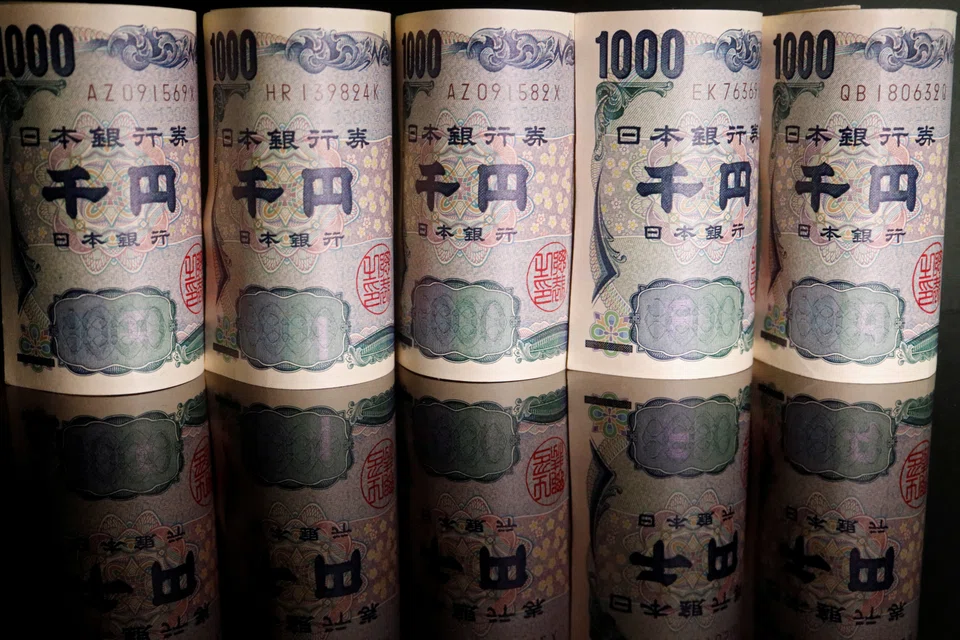
JAPAN’S government will confirm on Friday the amount it spent intervening in the foreign exchange market last week to prop up the yen, which may highlight the hurdles Tokyo could face in making frequent forays into the market to stem sharp falls.
Estimates based on money market brokers showed Tokyo likely spent a record 3.6 trillion yen (S$36 billion) on Sep 22 in its first dollar-selling, yen-buying intervention in 24 years to stem the currency’s sharp weakening.
A final figure will become available when the Ministry of Finance (MOF) releases the total amount it spent for intervention from Aug 30 to Sep 28, at 10.00 am GMT on Friday (Sep 30).
Japan currently holds roughly US$1.3 trillion in reserves, the second biggest after China, of which US$135.5 billion are held in the form of deposits parked with foreign central banks and the Bank for International Settlements (BIS).
The US$135.5 billion in deposits can easily be tapped to finance further dollar-selling, and yen-buying intervention. This means Japan is left with deposits than can finance 4 more interventions of the scale conducted on Sep 22.
“Even if it were to intervene again, Japan likely won’t have to sell US Treasury bills and instead tap this deposit for the time being,” said Izuru Kato, chief economist at Totan Research, a think-tank arm of a major money market broker firm in Tokyo.

If the deposits dry up, Japan would need to dip into its securities holdings sized around US$1.04 trillion.
Of the main types of foreign assets Japan holds, deposits and securities are most liquid and can be converted into cash immediately.
Other forms consisted of gold, reserves at the International Monetary Fund (IMF) reserve and IMF special drawing rights (SDR), though procuring dollar funds from these assets will take time, analysts say. REUTERS
Decoding Asia newsletter: your guide to navigating Asia in a new global order. Sign up here to get Decoding Asia newsletter. Delivered to your inbox. Free.
Share with us your feedback on BT's products and services
TRENDING NOW

Lily Ler to step down as CEO of Mapletree Industrial Trust manager

Jardine C&C selling Singapore, Malaysia dealerships to Indonesia’s Chandra Asri for US$221 million gain

AI infrastructure can lead South-east Asia’s next growth story: UOB

How BYD disrupted Singapore’s car market – and why the strategy is turning on itself

