

Japan confronts rising inequality after Abenomics
 Add BT as a preferred source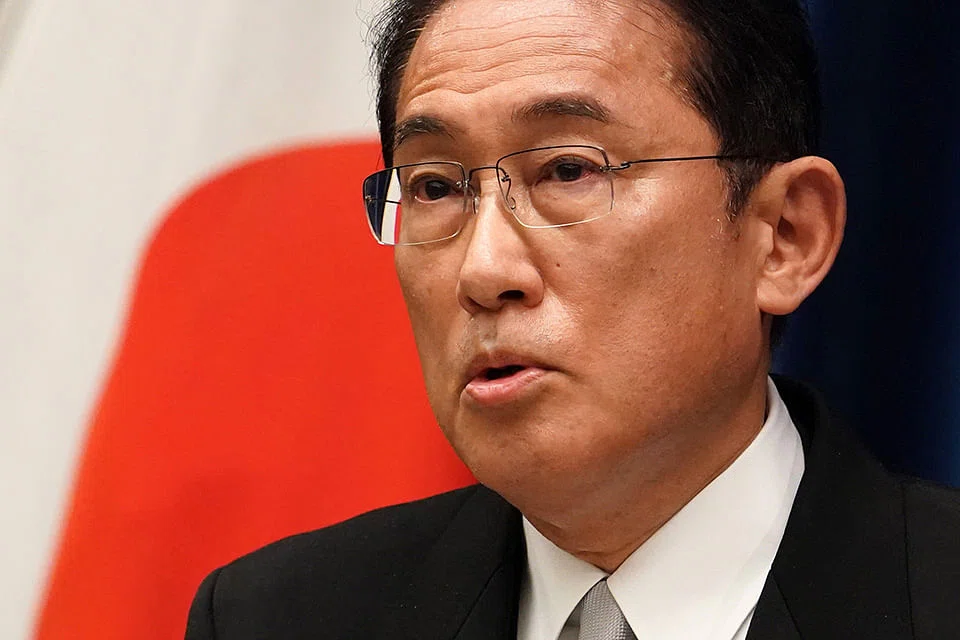
DeeperDive is a beta AI feature. Refer to full articles for the facts.
Tokyo
JAPAN'S stock market has surged and luxury cars are selling fast in Tokyo after eight years of economic stimulus under Abenomics, but that new wealth is concentrated in a small slice of society rather than broadly distributed, data shows.
Fixing that divide has become a priority for the country's new prime minister Fumio Kishida, who promised to tackle income disparity made worse by the pandemic. But he has offered few clues as to how he will do so.
"It's like everyone has become poor," said Masanori Aoki, 62, who owns a small coffee shop in a working-class district in north-east Tokyo. "With Abenomics, the finance minister talked about wealth trickling down. But there was no such thing, was there? Almost nothing," said Aoki, who took a job as a part-time kindergarten bus driver when the Covid-19 pandemic forced him to temporarily shut down his shop.
Abenomics - a dose of huge monetary, fiscal support and a growth strategy that boosted stocks and corporate profits - failed to create wealth to households via higher wages, data shows. Japan's poverty rate is the second-highest among G7 nations and the ninth-highest among countries in the Organisation for Economic Co-operation and Development (OECD), the organisation's 2020 survey found.
Nominal wages rose just 1.2 per cent from 2012 through last year, government data showed. Japanese households' average wealth fell by 3.5 per cent from 2014 to 2019 - but that for the top 10 per cent richest grew, a government survey found.
Navigate Asia in
a new global order
Get the insights delivered to your inbox.
To be sure, inequality is far more pronounced in countries such as the United States and Britain. Japan stood around the middle of 39 countries surveyed by OECD in 2020, based on the Gini coefficient, which gauges inequality.
The situation did improve for some in Japan. Manabu Fujisaki recently splurged on a 7 million yen (S$83,794) Mercedes-Benz after a windfall from investing in cryptocurrencies.
"Abenomics brought us investors huge profits as (central bank) money-pumping pushed up prices of financial securities," said the 34-year-old father of two who plans to build a 200 million yen house in Tokyo next year.
Department store Takashimaya says there is brisk demand for Patek Philippe watches that cost more than 10 million yen, and Baccarat chandeliers worth a few million yen.
Alfa Romeo sold 84 of its speciality models, with a price tag exceeding 20 million yen in late April through early May - making Japan its top-selling market globally.
Sales of other import brands like Ferrari, Jaguar and Maserati also increased, industry data showed. "We're seeing a clear rise in demand for luxury goods among the new-rich," said Takahiro Koike, a manager at the department store Isetan.
Kishida hopes to narrow the wealth disparity by forming a "new type of capitalism" that includes higher wages for public health and medical workers, and tax incentives to firms that raise pay.
But achieving what a wall of money under Abenomics failed to do would be challenging. Already, he has shelved a plan to charge higher taxes on capital gains and dividends.
Shigeto Nagai, an economist at Oxford Economics, said offering short-term tax breaks likely will not convince firms to raise wages, calling instead for reforms in areas such as Japan's rigid labour system. REUTERS
Decoding Asia newsletter: your guide to navigating Asia in a new global order. Sign up here to get Decoding Asia newsletter. Delivered to your inbox. Free.
Share with us your feedback on BT's products and services
TRENDING NOW

Shelving S$5 billion office redevelopment plan proved ‘wise’ as geopolitical risks mount: OCBC chairman

Eurokars Group introduces rental car franchises Enterprise Rent-A-Car, National Car Rental, and Alamo to Singapore

20 photos that show how dramatically Singapore has changed in two decades
Singapore’s key exports up 15.3% in March from electronics surge, exceeding forecasts

