Japan escalates currency warnings as yen hits 20-year low against dollar
 Add BT as a preferred source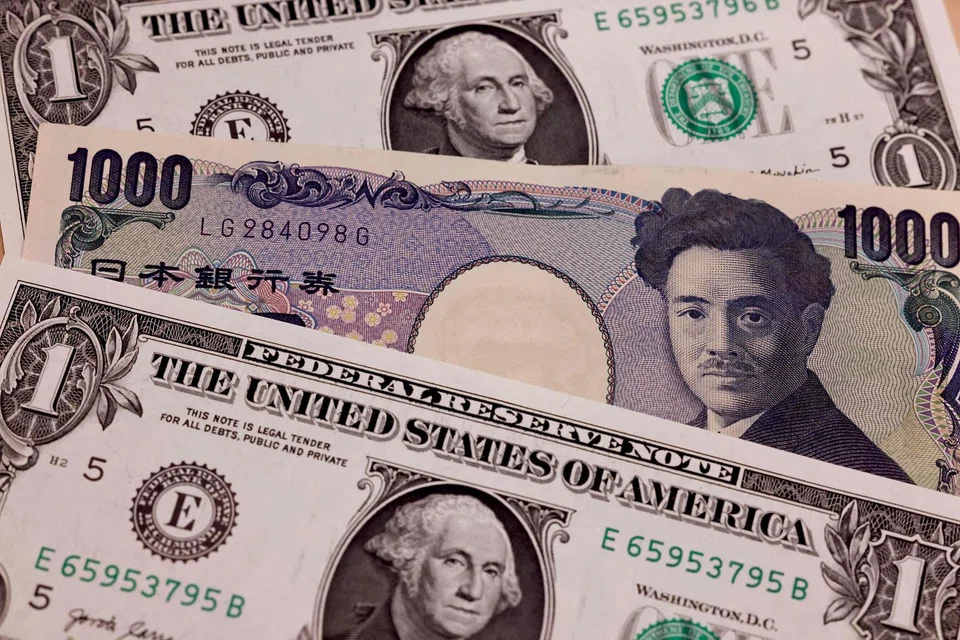
DeeperDive is a beta AI feature. Refer to full articles for the facts.
[TOKYO] Japanese Finance Minister Shunichi Suzuki said on Wednesday that sharp currency moves were "very problematic", escalating his warning against excessive yen declines following the currency's slide to a two-decade low against the dollar.
"Currency stability is important. Sharp currency swings are very problematic. We will carefully and firmly watch how it is going to move from now on," Suzuki told reporters after the yen's fall below 126 to the dollar.
It marked the first break below that level since 2002.
His comments were stronger than his warning earlier on Wednesday that rapid moves in the yen were "undesirable" and that authorities were watching currency moves carefully.
"It was a pretty strong verbal warning," said Makoto Noji, chief forex strategist at SMBC Nikko Securities.
Some investors saw 125 yen to the dollar as a trigger for action in the exchange market - the level known as the "Kuroda line" as Bank of Japan Governor Haruhiko Kuroda had signalled caution when the yen had last reached that mark in 2015.
Navigate Asia in
a new global order
Get the insights delivered to your inbox.
"I think the trigger would be 130 yen to the dollar and if oil prices rise in tandem to break above US$100 per barrel, the BOJ and the Ministry of Finance (MOF) might be forced into a joint action," Noji said.
To stem any sharp yen weakening past 130 yen, the MOF could conduct smoothing operations for currency intervention, while the BOJ may move away from aggressive monetary stimulus, Noji said.
The prospect of fast US interest rate hikes and market expectations that the Bank of Japan will keep rates ultra-low have fuelled the Japanese currency's declines against the dollar.
Japanese policymakers have voiced alarm over the recent yen declines as they inflate the cost of fuel and raw material imports, which are already on the rise due to Russia's invasion of Ukraine.
A weak currency used to give a boost to exports but such effects have been waning lately given a shift of production overseas among Japanese exporters of cars and electronics.
"The government intends to watch closely moves on the foreign exchange market including recent progress in yen's weakness, and their effect on the Japanese economy with a sense of urgency," Chief Cabinet Secretary Hirokazu Matsuno said. REUTERS
Decoding Asia newsletter: your guide to navigating Asia in a new global order. Sign up here to get Decoding Asia newsletter. Delivered to your inbox. Free.
Copyright SPH Media. All rights reserved.