Japan finance minister closely communicating on yen moves with US
 Add BT as a preferred source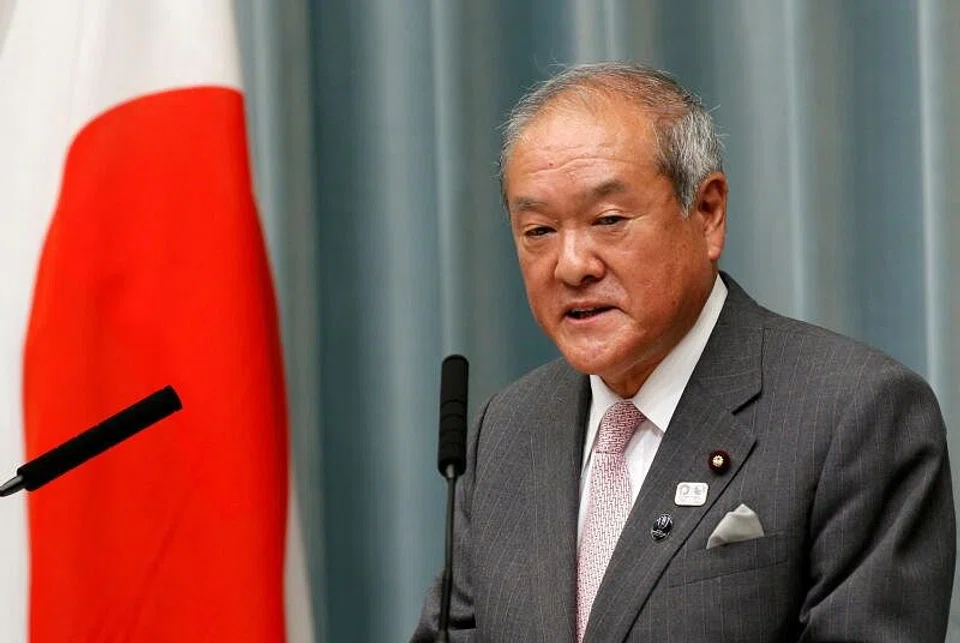
DeeperDive is a beta AI feature. Refer to full articles for the facts.
[TOKYO] Japan will communicate closely with the United States and other countries to respond to currency moves appropriately, Finance Minister Shunichi Suzuki said, as policymakers kept a wary watch on the yen after it slumped to 6-year lows against the dollar.
Speaking to reporters after a cabinet meeting, Suzuki stressed the importance of stable currency moves, saying rapid moves were undesirable.
The Japanese currency broke beyond 125 yen on Monday (Apr 11) due to widening interest rate differentials between Japan and the United States, as bets the US Federal Reserve will accelerate tightening contrasted with the Bank of Japan's commitment to keep in place its ultra-easy monetary settings.
"The government is closely watching currency moves, including the recent yen weakening, and its impact on Japanese economy with a sense of urgency," Suzuki said.
He noted the Group of Seven (G-7) advanced economies have agreed to have exchange rates set by markets, to closely consult on action in the currency market and have acknowledge that excess volatility and disorderly moves can have adverse effects on economic and financial stability.
"Based on the G-7 agreement, we'll respond appropriately while closely communicating with currency authorities of the United States and others," Suzuki said.
Navigate Asia in
a new global order
Get the insights delivered to your inbox.
Despite the verbal jawboning, investors see little chance of immediate action by Japanese currency authorities, especially as long as policymakers maintain that the current yen weakness is good for Japan, said Daisuke Karakama, chief market economist at Mizuho Bank.
Chief Cabinet Secretary Hirokazu Matsuno has occasionally attempted to talk up a weak yen, while Bank of Japan Governor Haruhiko Kuroda hasn't shown any serious concerns about the current downturn in the currency.
A weak yen tends to boost exporters' earnings, while lifting the cost of imports for the resource-deficient Japanese economy, squeezing household incomes and importers' bottom line.
Moreover, over the past decade or so, the benefits to exporters from a weak yen have lessened as many Japanese manufacturers moved overseas to produce goods.
"Japanese authorities are not yet escalating warning against the weak yen," Karakama said, adding that the currency's further descent beyond 130 yen towards 140 yen could be a trigger.
"If that becomes political issues by further fuelling oil and other price hikes, policymakers may be prompted into action."
Ruling party secretary-general Toshimitsu Motegi said on Tuesday that the government will compile measures later this month, by tapping budget reserves to help households and small firms cope with surging oil and broader price hikes as a resurgence of coronavirus cases and the war in Ukraine cloud Japan's outlook. REUTERS
Decoding Asia newsletter: your guide to navigating Asia in a new global order. Sign up here to get Decoding Asia newsletter. Delivered to your inbox. Free.
Share with us your feedback on BT's products and services