Japan's new finance minister touts new capitalism
But on questions around the sales tax, debt and BOJ, Shunichi Suzuki sounds like the official he replaced
 Add BT as a preferred source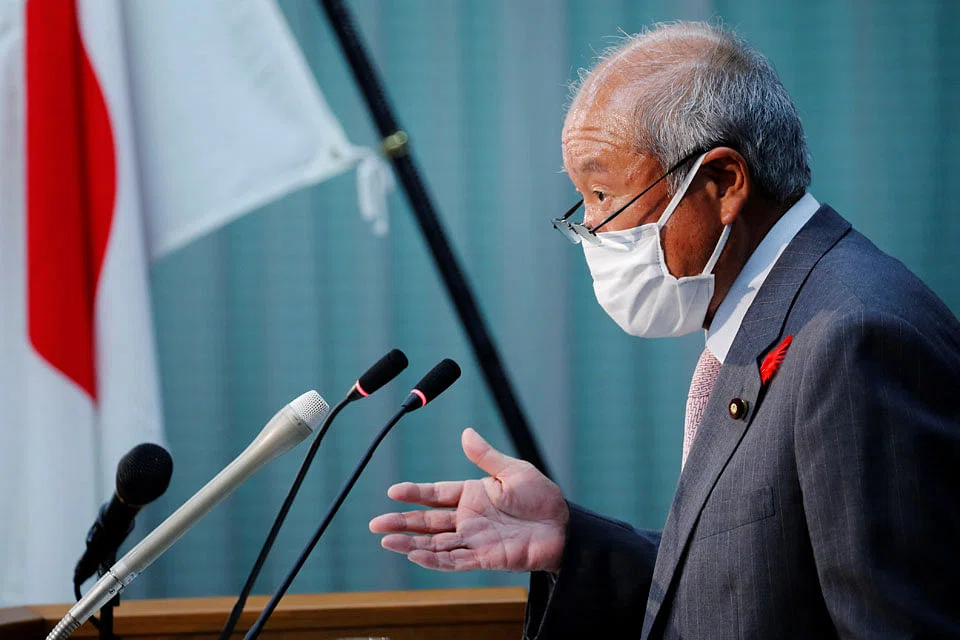
Tokyo
JAPANESE Finance Minister Shunichi Suzuki said the nation's incoming government will seek a new type of capitalism that helps tackle wealth inequality, but on questions around the sales tax, debt and the central bank he sounded like the official he replaced a day earlier.
"I'll be seeking to bring about a new form of capitalism that creates a virtuous cycle of growth and wider wealth distribution," Mr Suzuki said at his inaugural press conference on Tuesday, a day after succeeding long-serving finance chief Taro Aso.
Mr Suzuki's boss, Prime Minister Fumio Kishida, came into office this week dangling the promise of a new type of capitalism that would redistribute wealth. Economists said it's too soon to determine whether the ideas were a re-branding of old policies ahead of national elections this month or something more consequential.
"When the ruling party picked Kishida, they were voting for the status quo," said economist Masamichi Adachi at UBS Securities. "I have my doubts about what they're pitching as new policies."
The Nikkei 225 fell for a seventh straight day amid a global sell-off in technology shares and China Evergrande Group's debt woes, but some investors pointed fingers at the new premier's ideas about redistributing wealth.
The hashtag "Kishida Shock" trended on Twitter as the Nikkei plunged, at one point falling the most since June.
Earlier in the day, the country's new trade minister, who headed the education ministry in the last Cabinet, added to voices putting distance between the Kishida administration and the Abenomics programme that drove Japanese economics for nearly a decade.
"We won't be beholden to Abenomics," Koichi Hagiuda told reporters. "We need to reconfigure our policies so that they not only benefit large corporations, but also small and medium-sized businesses as well."
Mr Suzuki said the Kishida administration was considering tax breaks for companies that raise pay, a benefit that already exists for a small sliver of businesses.
Past governments mainly relied on using the bully pulpit of the prime minister's office to browbeat companies into raising wages, to little avail.
But on the key policy areas, Mr Suzuki's ideas sounded a lot like Abenomics in slightly different language.
He said the administration would focus on bold monetary policy, nimble fiscal policy and a growth strategy, essentially the same outline as the three arrows that former Prime Minister Shinzo Abe prescribed for the economy.
Although the Bank of Japan's (BOJ) bond-buying and aggressive monetary easing have been criticised in some corners as widening the wealth gap because it rewards stock owners so heavily, Mr Suzuki suggested the administration wants the bank to stay the course. He said the Kishida government wants governor Haruhiko Kuroda and his colleagues to continue aiming for their 2 per cent inflation target and to keep deciding policy independently.
Any retreat from the BOJ on easing would be disastrous for Japan's finances, given its enormous debt burden.
On the debt, Mr Suzuki repeated Mr Aso's mantra that Japan is in a severe financial situation and needs to keep the market's trust. He said the government isn't considering changing the sales, which was hiked in 2019. BLOOMBERG
Decoding Asia newsletter: your guide to navigating Asia in a new global order. Sign up here to get Decoding Asia newsletter. Delivered to your inbox. Free.
Share with us your feedback on BT's products and services