JPMorgan gold traders found guilty in Chicago spoofing trial
 Add BT as a preferred source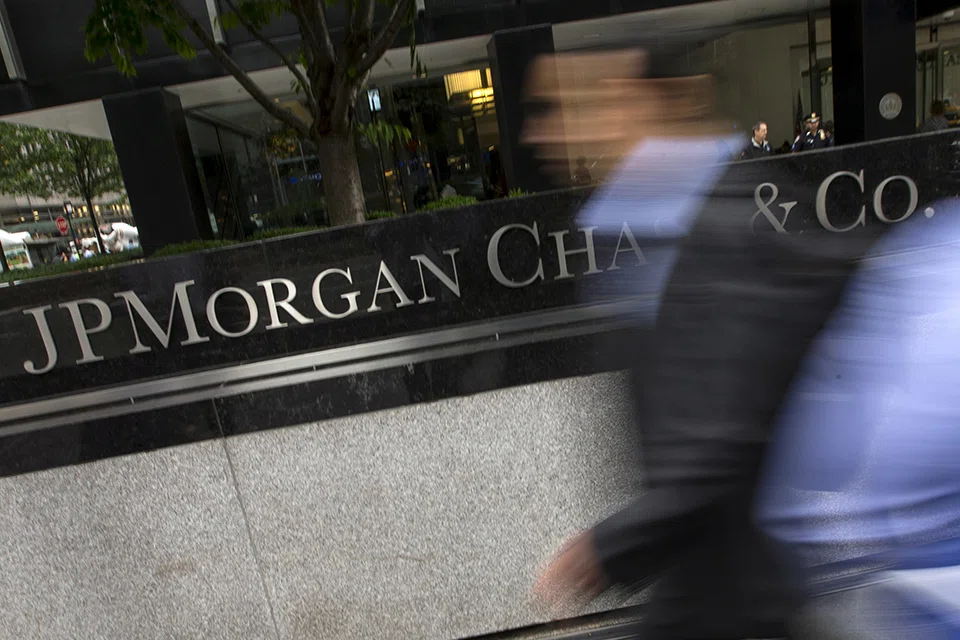
THE former head of the JPMorgan Chase & Co precious-metals business and his top gold trader were convicted in Chicago on charges they manipulated markets for years, handing the US government a win in its long crackdown on bogus "spoofing" orders.
Michael Nowak and Gregg Smith were found guilty on Wednesday (Aug 10) by a federal jury after a 3-week trial and more than 8 days of deliberations. Prosecutors presented evidence that included detailed trading records, chat logs and testimony by former co-workers who "pulled back the curtain" on how Nowak and Smith moved precious-metals prices up and down for profit from 2008 to 2016.
A salesman on the bank's precious-metals desk, Jeffrey Ruffo, was acquitted of charges he participated in the conspiracy.
The case was the biggest yet by the US Justice Department, which alleged the precious-metals business at JPMorgan was run as a criminal enterprise, though the jury acquitted all 3 men of a separate racketeering charge. Nowak, the managing director in charge of the desk, and Smith, its top trader, were convicted of fraud, spoofing, and market manipulation.
"They had the power to move the market, the power to manipulate the worldwide price of gold," prosecutor Avi Perry said during closing arguments.
US district court judge Edmond Chang said Nowak and Smith will be sentenced next year. Each faces decades in prison, though it may be far less. Two Deutsche Bank traders convicted of spoofing in 2020 were each sentenced to a year in prison.
Nowak's lawyer, David Meister, said in an email, "While we are gratified that the jury acquitted Mr Nowak of racketeering and conspiracy, we are extremely disappointed by the jury's verdict on the whole, and will continue to seek to vindicate his rights in court."
Attorneys for Smith and Ruffo didn't respond to messages seeking comment.
JPMorgan, the largest US bank, agreed in 2020 to pay US$920 million to settle Justice Department spoofing allegations against it, by far the biggest fine by any financial institution accused of market manipulation since the financial crisis.

The criminal case against some of the biggest players in the precious-metals markets was closely watched. Spoofing became illegal with the passage of the Dodd-Frank Act in 2010.
"It's something that's been on the minds of many people that were involved in the precious-metals markets in that point in time, and I would say this verdict closes a chapter," said Phil Streible, the chief market strategist at Blue Line Futures. "This kind of thing had been going on for at least 15 years or more with people waiting for justice, and I never thought it would ever get closed."
Dennis Kelleher, co-founder and chief executive officer at Better Markets, an organisation advocating stricter financial regulation, said the verdict "should signal to Wall Street's biggest financial firms and executives that they are not above the law".
The star witnesses at the criminal trial were former co-workers who said they participated in the spoofing activity over years. Traders John Edmonds and Christian Trunz testified about market manipulation by all 3 defendants at JPMorgan, while trader Corey Flaum described similar behaviour when he worked with Smith and Ruffo at Bear Stearns before it was acquired by JPMorgan in 2008.
The JPMorgan case wasn't a complete victory for prosecutors. All 3 defendants were acquitted of violating the Racketeer Influenced and Corrupt Organizations Act, a law more commonly used against gangs or mafias. Jurors didn't agree with prosecutor claims that the JPMorgan precious-metals desk was run as a criminal enterprise. No witnesses or chat logs presented during the trial showed the defendants openly discussing their intent to spoof.
Previous convictions of former precious-metals traders at Deutsche Bank and Bank of America's Merrill Lynch unit involved only spoofing-related crimes.
Racketeering charges also are part of the federal government's case against Bill Hwang, whose Archegos Capital Management collapsed last year and cost banks billions. BLOOMBERG
Decoding Asia newsletter: your guide to navigating Asia in a new global order. Sign up here to get Decoding Asia newsletter. Delivered to your inbox. Free.
Share with us your feedback on BT's products and services