

Large US banks can weather hypothetical downturn, several raise dividends: Fed
The Fed’s ‘stress test’ shows banks stay above minimum requirements despite a 1.6-percentage-point capital drop
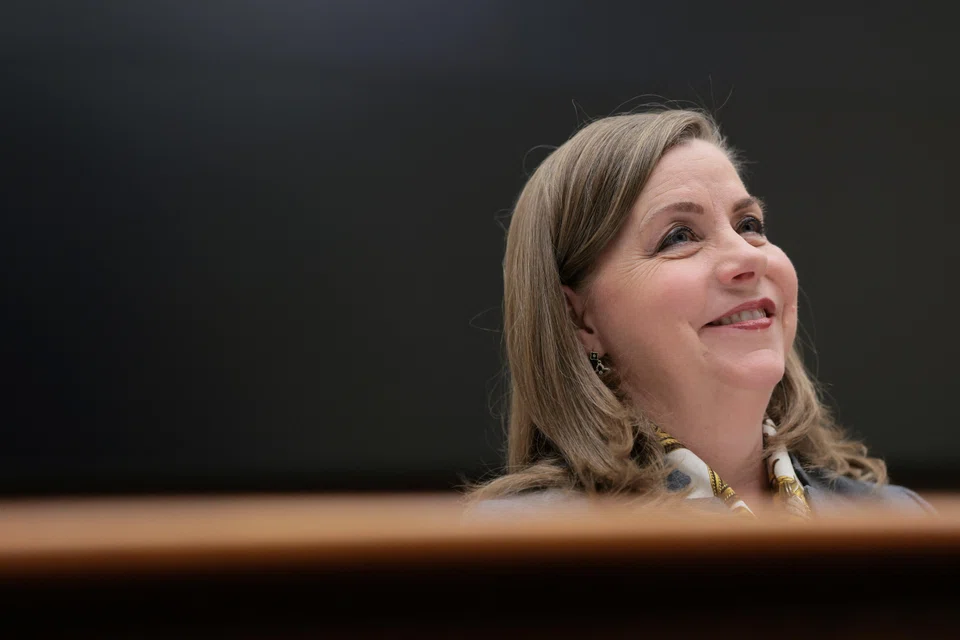
[WASHINGTON] The US Federal Reserve said on Wednesday (Jun 24) that 32 of the nation’s largest banks are well-positioned to weather a severe economic downturn and continue lending.
This comes as firms could absorb over US$700 billion in hypothetical losses, and remain above minimum capital requirements.
The results of the central bank’s annual “stress test” found that large banks’ capital levels fell by 1.6 percentage points but remained above the minimum requirements.
This comes even after weathering a hypothetical global recession in which real estate prices drop by one-third, unemployment spikes to 10 per cent, and financial markets are in turmoil.
Michelle Bowman, Fed vice-chair for supervision, said: “Today’s results underscore the strength of the banking system.”
Several banks said after the stress-test results that they were raising their dividends.
JPMorgan will increase its quarterly common stock dividend to US$1.65 a share in the third quarter, and has authorised a new share buyback programme.
Goldman Sachs said that it will increase its common dividend from US$4.50 to US$5 a share beginning in July, a 25 per cent increase from last year.
Morgan Stanley increased its dividend by 15 per cent to US$1.15 a share, and reauthorised a US$20 billion share buyback programme. State Street will increase its dividend by 10 per cent.


Wells Fargo said it intends to increase its third-quarter dividend by 11 per cent to US$0.50 a share.
Under the test scenario, banks registered roughly US$200 billion in credit card losses, US$160 billion in losses from commercial and industrial loans, and US$75 billion in losses from commercial real estate.
Capital fell due to higher loan losses, as well as lower projected unrealised gains, but increased because of higher interest income from smaller hypothetical declines in interest rates.
Banks’ aggregate high-quality capital ratio dipped from 12.8 per cent to a low of 11.2 per cent during the exam. First Citizens recorded the lowest stress ratio of 6.7 per cent, while Charles Schwab posted the highest ratio of 32.2 per cent.
Capital buffers remain the same
The results are less dramatic than in prior years. The Fed said in February it would not use this year’s results to update each firm’s stress capital buffer, which is an added layer of capital large firms must hold that fluctuates based on how well they perform on the test.
The central bank reaffirmed that plan on Wednesday, saying it planned to next update that buffer following the 2027 test, after officials have solicited feedback and revamped their stress-testing models and scenarios.
The central bank is reworking its stress-testing process, in response to years of criticism from the banking industry that the exams are opaque and subjective.
Bankers are waiting for regulators to implement several new capital rules favoured by the industry, most notably the Basel proposal on risk-based capital under consideration.
Those changes could unlock billions of dollars in additional capital for banks to return to investors or deploy within their businesses.
“The industry is in good shape with capital, as all the names have excess capital relative to the implied pro forma target capital ratios and requirements, as the industry continues to be in a position to take advantage of de-regulatory momentum,” wrote KBW analysts in a note previewing the stress tests. REUTERS
Decoding Asia newsletter: your guide to navigating Asia in a new global order. Sign up here to get Decoding Asia newsletter. Delivered to your inbox. Free.
Share with us your feedback on BT's products and services
TRENDING NOW

DBS, OCBC, UOB rout lops billions off STI as inflation, rate concerns spook investors

Grab CEO’s wife Chloe Tong on life with Anthony Tan and finding her purpose

OCBC sheds S$8 billion in value as shares close nearly 6% down; analysts cautious on banks

Deal between tycoon friends sparks scrutiny of Philippine power sector

