LCH forges ahead with Asia expansion, shifts regional head to Singapore
The global group sees rise in clearing demand, with Phase 5 of the global uncleared margin rules - designed to curb systemic risk - coming into effect in September

Singapore
LCH Ltd, the world's largest clearer of interest rate and foreign exchange (FX) swaps that is majority owned by the London Stock Exchange Group (LSEG), is shifting its Asia-Pacific expansion gear up a notch, with the appointment of a new regional head in Singapore.
The senior management of LCH told The Business Times that the European group is working with various central banks in the region to support the migration to new reference rates, and will launch new products with a distinct Asian flavour to capture the rising demand for risk management and capital efficiencies.
Kate Birchall, global head of sales at LCH, says the group is seeing rising demand for clearing over-the-counter (OTC) derivatives as Phase 5 of a G20 mandate to push more OTC trades through clearing houses to curb systemic risks kicks in come September. A clearing house stands between two parties in a deal, guaranteeing the trade in the event of a default.
Ms Birchall said: "Over the next 12 months, we look forward to announcing further expansion of what we can offer that has an Asian flavour and that is in direct response to the requests of our Asian customers."
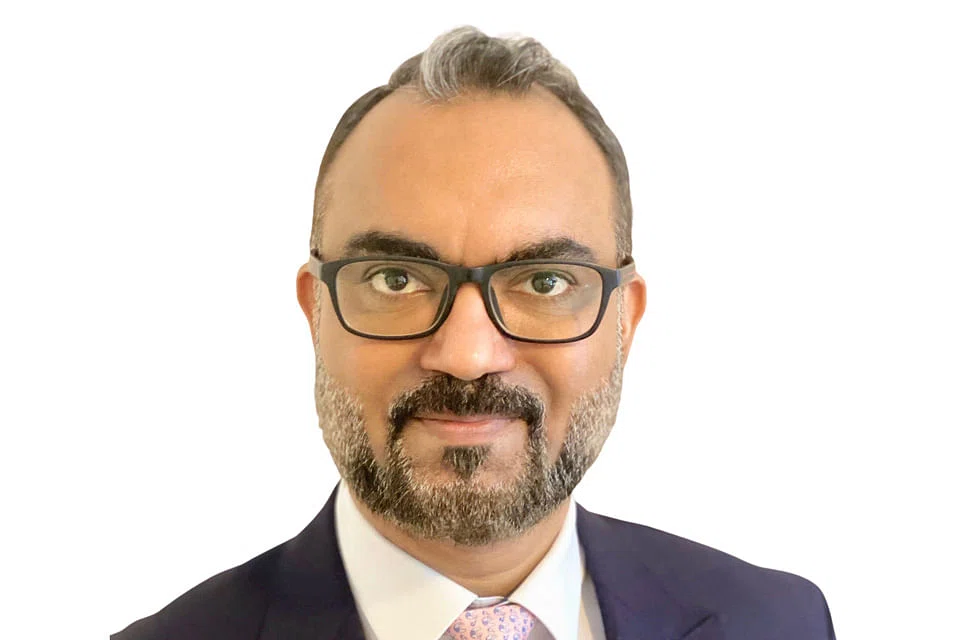
LCH has named ex-Citi banker Rohit Verma as its head of the Asia-Pacific, effective July 26. Based in Singapore, he will oversee its business in te Asia-Pacific, including the clearing house's operations in Singapore, Sydney and Tokyo. Mr Verma, who has 20 years' experience in derivatives and risk management, held a number of senior roles at Citi's futures, OTC clearing and foreign exchange (FX) prime brokerage business; he was most recently the bank's Asia-Pacific head of OTC Clearing and FX Prime Brokerage.
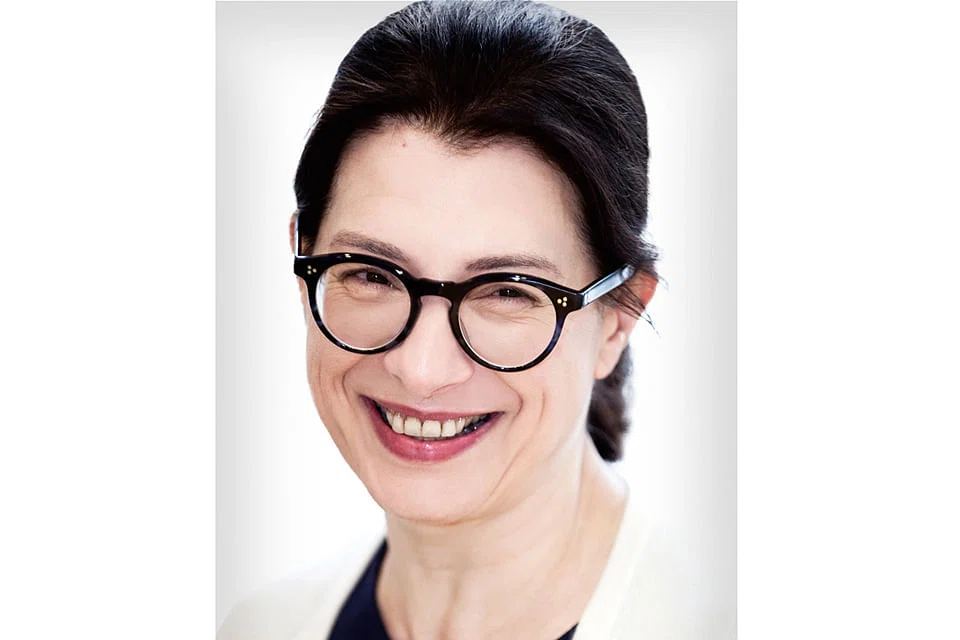
LCH's London-based chief executive officer, Isabelle Girolami, said: "With an increased presence in Singapore, we hope to strengthen relationships with market participants in the region, supporting their risk management and driving efficiencies through clearing.
"As part of LSEG, LCH will benefit from the group's strong presence in Singapore and we look forward to continuing to grow our business there and across the Asia-Pacific region."
Refinitiv, the data and analytics giant LSEG courted for almost two years before completing the US$27 billion deal early this year, also has operations in Singapore.
While LCH does not break down revenues by region, Ms Girolami named Asia as a key region of growth for LCH.
She said: "We offer market participants access to a global, multi-currency clearing service, enabling enhanced risk management as well as a number of capital and operational efficiencies. In Singapore specifically, we are planning to accept Singapore dollar (SGD) as collateral."
LCH has been busy working with banks and regulators in the region to provide alternative reference rates as the global financial services industry prepares for an overhaul of key inter-bank interest rates used as reference rates in financial contracts. These changes are expected to result in the end of the London Interbank Offered Rate (Libor) - a benchmark for over US$350 trillion in financial contracts worldwide - by the end of this year, as well as the cessation of the USD Libor by mid-2023.
LCH achieved a major milestone in Asia last year when it became the first clearing house to offer the clearing of Singapore dollar swaps benchmarked to the Singapore Overnight Rate Average (Sora). Sora will replace the Singapore interbank offered rate (Sibor), which will disappear by the end of 2024.
Ms Birchall said: "That sort of cooperation and partnership is something we very much want to continue throughout the region." She added that LCH is also working in other jurisdictions to help out with benchmark reform, albeit at different speeds.
LCH is also positioning itself to be there for clients as they grapple with new initial margin rules.
Phase 5 of the uncleared margin rules (UMR) - which affects banks, asset managers, hedge funds and pension funds - is scheduled to take effect in September. These firms are subject to a mandatory exchange of Initial Margin (IM) with their counterparties for their bilateral OTC agreements over the US$50 billion IM threshold per counterpart.
The UMR was set in motion at the G20 meeting in 2009, following the global financial crisis. It requires firms using OTC derivatives to post margin on transactions. Phases 1 to 4 covered firms with US$750 billion plus in notional value.
DBS is the only Singaporean bank to have to post initial margin on trades in the city-state, but the expectations are for more banks to follow suit. The three local banks clear their trades indirectly with other banks, but with their cleared volumes increasing, they are said to be eyeing potential direct membership of LCH.
To make membership of LCH more attractive, the clearing house will start accepting Singapore-dollar denominated bonds as collateral by the end of the year.
Ms Birchall said: "We have had to work very closely with Singapore regulators and local market participants to offer this. Increasing the number of currencies we can accept in terms of initial margin is an important component of global offering and reflects our increased focus on Asia currencies down the track."
Mr Verma said the next wave of incremental clearing from the region will be driven primarily by market participants seeking margin and capital efficiencies.
"We work with our members and clients to understand their challenges and one of them is the ability to post collateral. Regional clients are natural holders of Singapore dollar and government bonds, so adding these as eligible collateral are material steps forward. We remain committed to enhancing efficiencies for the market while maintaining strong risk management."
Ms Girolami said the UMR rules will require many banks and asset managers to post margin against their uncleared derivatives trades.
"As a result, we are seeing a lot of interest in our ForexClear service, which offers risk management of FX derivatives. By using ForexClear, many firms are able to achieve margin savings as well as benefit from operational and capital efficiencies from clearing."
ForexClear is LCH's forex derivatives clearing service.
Recently, Seoul-headquartered Hana Bank became the first South Korean bank to have its foreign exchange (forex) forwards cleared through LCH's ForexClear.
Worldwide, LCH's SwapClear processed US$1.1 quadrillion in notional, from a record 6.4 million trades in 2020, up from US$1,229 trillion in 2019. ForexClear cleared US$19.1 trillion, up from US$18.2 trillion in notional cleared during 2019.
Decoding Asia newsletter: your guide to navigating Asia in a new global order. Sign up here to get Decoding Asia newsletter. Delivered to your inbox. Free.
Copyright SPH Media. All rights reserved.