Lured by bull market, South Koreans take out record loans, piling up debt
 Add BT as a preferred source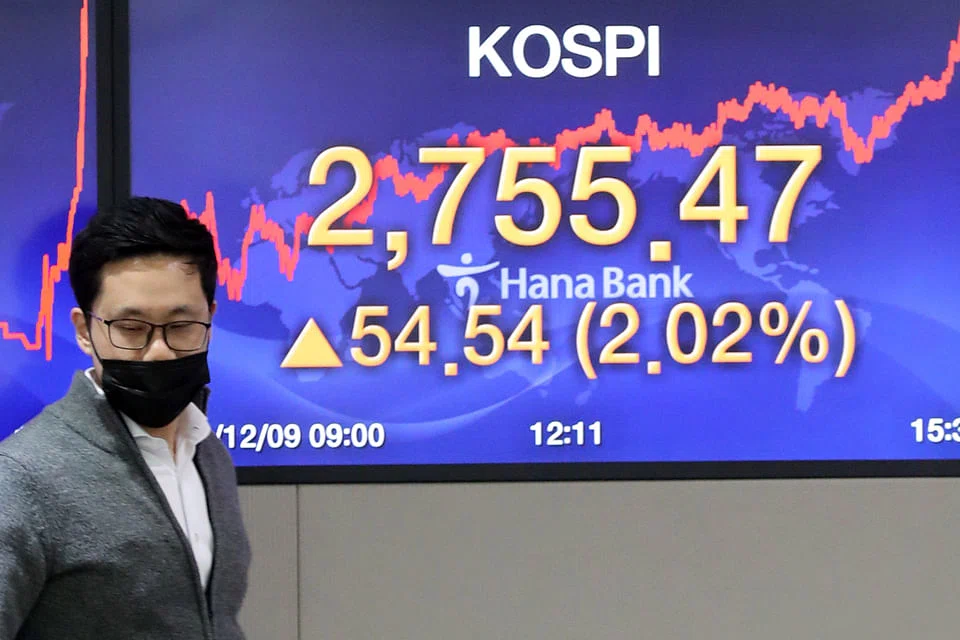
DeeperDive is a beta AI feature. Refer to full articles for the facts.
Seoul
SOUTH Korean household borrowing from banks and brokerages grew at record pace in November fuelled by retail investors borrowing to buy stocks in a bull market that stands 90 per cent higher than lows struck in March.
Bank lending to households for mortgages, stocks and living expenses in November was up by 13.6 trillion won (S$16.74 billion) from October, in another big monthly rise that added to record levels of household debt despite fresh curbs on loans introduced by regulators last month.
As at Monday, brokerages also had 18.5 trillion won out on loan for share purchases by retail investors, Korea Financial Investment Association data shows. The benchmark index for the Seoul bourse closed at a record high on Monday for the fifth straight session.
"It's quite stupid not to ride this rally; you won't need a single dollar to buy stocks if you can open an overdraft account," said James Lee, a 30-year-old office worker in Seoul. "You can just draw debt on your existing debt."
James regards himself as "bittoo" success story, using the Korean term for borrowing to invest. On top of a 100 million won overdraft account, he got an equity loan of 100 million won on his already-mortgaged Gwangmyung apartment in the west of Seoul. He says the "best debt" he took on was an additional 50 million won account receivable loan, raised by collateralising his shares in Samsung Electronics and other blue chips.
Navigate Asia in
a new global order
Get the insights delivered to your inbox.
James' story is playing out across Asia's fourth largest economy as retail investors - using savings, overdrafts, and other loans beside loans specifically taken for share buying - have purchased a record net 60 trillion won of local shares this year.
Abundant liquidity is sparked by record-low interest rates and stimulus at home, after the Bank of Korea slashed its policy interest rate by 75 basis points this year to 0.5 per cent.
It's a dangerous strategy especially if interest rates were to rise again or if asset prices fall, and one that's drawing closer scrutiny from regulators, says Lee Sang-jae, chief economist at Eugene Investment & Securities. "This year, the warning light for the household debt bomb went from yellow to red. It's time for some serious warning from the government, before we hear about insolvency filings and bankruptcies and it hits growth," said the economist.
South Korea's household debt-to-GDP level stood at 100.6 per cent in the third quarter, the second highest after Lebanon in the list of 34 countries the Institute of International Finance studied and exceeding the size of the economy for the first time.
Vice-Finance Minister Kim Yong-beom on Tuesday said it's time to "be wary of increasing volatilities in the asset market", in remarks made to government officials. REUTERS
Decoding Asia newsletter: your guide to navigating Asia in a new global order. Sign up here to get Decoding Asia newsletter. Delivered to your inbox. Free.
Share with us your feedback on BT's products and services