

Malaysia's central bank holds key rate at 2.75%
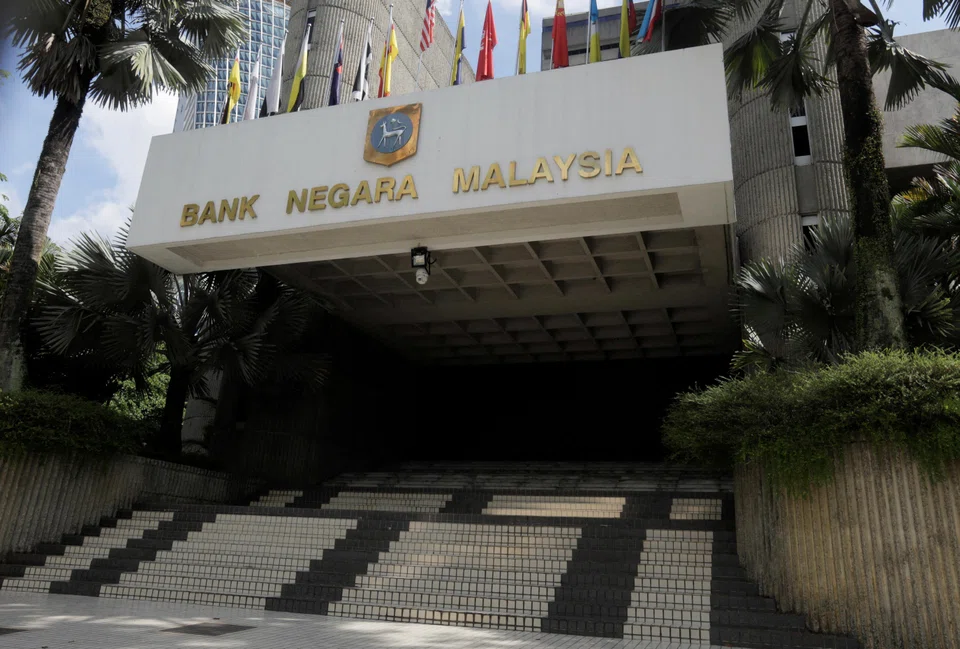
[KUALA LUMPUR] Malaysia’s central bank kept its benchmark interest rate unchanged at its first policy review of 2026 on Thursday (Jan 22), citing steady economic growth, modest inflation, and a positive outlook for the year.
Bank Negara Malaysia (BNM) kept its overnight policy rate (OPR) at 2.75 per cent, as had been predicted by all 30 economists surveyed in a Reuters poll.
The central bank last lowered its main policy rate in July 2025 in a preemptive move after US President Donald Trump imposed steep tariffs on most trading partners.
Since then, trade-related uncertainty has eased and the tariff rate on Malaysia has been reduced from 25 per cent to 19 per cent, broadly in line with other Asian peers.
“For 2026, while the impact of tariffs could weigh on global growth, the outlook remains resilient, supported by sustained domestic demand, moderating inflation, robust tech investments, and supportive fiscal and monetary policies,” BNM said in a statement.
The central bank said the current key interest rate level was “appropriate and supportive of the economy amid price stability”.
Malaysia’s economy expanded 5.7 per cent in the final quarter of 2025, accelerating from the 5.2 per cent growth recorded in the previous quarter, preliminary government data showed last week. That brought 2025 full-year growth to 4.9 per cent, just below the 5.1 per cent expansion recorded in 2024 and surpassing official projections of between 4 per cent and 4.8 per cent, the data showed.
Official data has not yet been finalised, but BNM said economic growth in 2025 was expected to be at the upper end of the forecast range, with momentum expected to continue this year. The government and central bank expect the economy to grow between 4 per cent and 4.5 per cent this year, amid lingering uncertainties about the impact of US tariffs.
Inflation has remained moderate with the consumer price index rising 1.6 per cent in December from a year earlier, accelerating slightly from a 1.4 per cent increase the previous month.

Headline and core inflation averaged 1.4 per cent and 2.0 per cent, respectively, in 2025, the central bank said. Core inflation does not include volatile food prices or items where the government sets the price.
“For 2026, headline inflation is expected to remain moderate amid the continued easing in global cost conditions,” it said, adding that core inflation this year will remain stable.
Twenty-four of the 28 economists surveyed in the Reuters poll before Thursday’s decision expected no change in the policy rate in 2026. Two saw rates ending the year 25 basis points lower than the current 2.75 per cent, while two forecast a quarter-point hike to 3.00 per cent.
Capital Economics said it expects rates to remain unchanged throughout the year, as strong growth and subdued inflation mean there is little urgency for the central bank to act.
“Moreover, further rate cuts could place downward pressure on the currency, which has appreciated by more than 10 per cent against the US dollar over the past year,” the group’s senior Asia economist, Gareth Leather, said in a note.
The ringgit was steady after the rate decision and was last trading flat against the US dollar. REUTERS
Decoding Asia newsletter: your guide to navigating Asia in a new global order. Sign up here to get Decoding Asia newsletter. Delivered to your inbox. Free.
Share with us your feedback on BT's products and services
TRENDING NOW

DBS, OCBC, UOB rout lops billions off STI as inflation, rate concerns spook investors

Grab CEO’s wife Chloe Tong on life with Anthony Tan and finding her purpose

OCBC sheds S$8 billion in value as shares close nearly 6% down; analysts cautious on banks

Deal between tycoon friends sparks scrutiny of Philippine power sector

