

Market on high alert for yen intervention after Takaichi warning
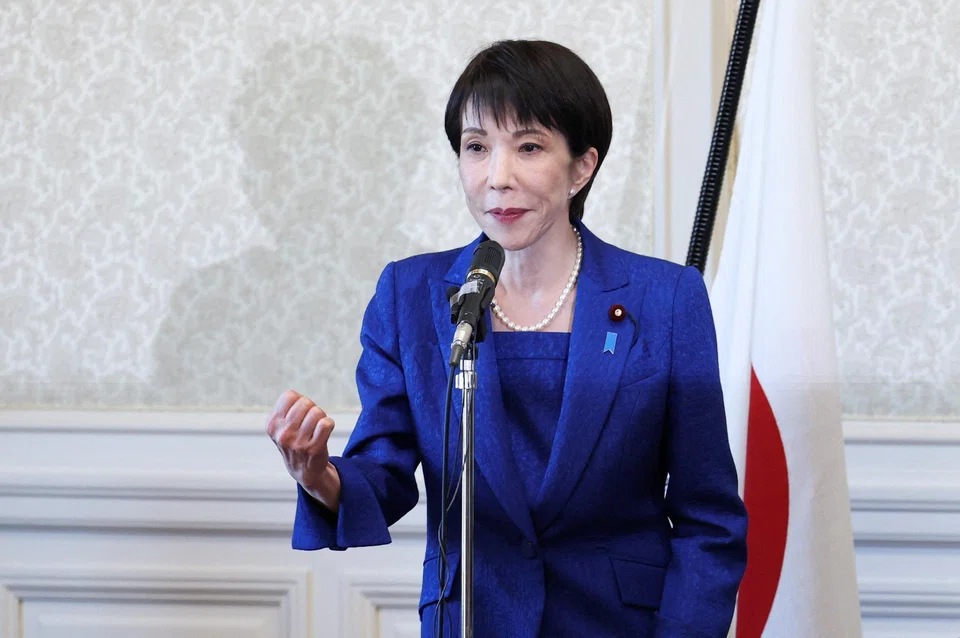
TRADERS will start the week on heightened alert of Japan government intervention to halt the yen’s recent slide – possibly with rare US assistance – as Prime Minister Sanae Takaichi warned of action on abnormal moves.
Speculation of intervention is building after traders reported during the US trading session on Jan 23 that the Federal Reserve Bank of New York had contacted financial institutions to ask about the yen’s exchange rate.
Japan’s top currency official had declined to comment earlier that day on whether a rate check was conducted on its end.
“Rate checks are typically the last warning before such action takes place,” said Michael Brown, senior research strategist at Pepperstone Group, referring to intervention. “The Takaichi administration appears to have a much, much lower tolerance for speculative FX moves than (its) predecessors.”
Reports of the rate check are likely to make the market leery of trying to weaken Japan’s currency further, squeezing yen short positions, which have seen the biggest increase in over a decade.
The yen swung wildly in the final trading hours of last week, reversing a slide toward levels last seen in 2024 before gaining as much as 1.75 per cent to 155.63 against the US dollar. It was the biggest one-day rally since August 2025.
“It is not for me as a prime minister to comment on matters that should be determined by the market, but we will take all necessary measures to address speculative and highly abnormal movements,” Takaichi said during a television debate among party leaders on Jan 25.
She did not specify which market her remarks were referring to. Government officials have recently warned on both bond yields and the yen. Yields on bonds with the longest maturities had surged to records in the early part of last week before retreating.
“Given the comments from Takaichi, traders should be very wary in the Monday (Jan 26) open,” said Nick Twidale, chief analyst at AT Global Markets in Sydney. Japan’s currency may trade near 155 against the US dollar at the start of the week, he said.


The reversal in the yen’s slide started after Bank of Japan governor Kazuo Ueda ended his post-policy decision press conference on Jan 23. A few hours later, Atsushi Mimura, the finance ministry’s top official in charge of the yen, declined to comment on whether the government stepped in to support the currency.
Gains in the yen quickened through the US session, with Wall Street seeing the rate checks as potentially laying the ground for Japan to intervene to prop up the yen, perhaps even with the US government joining in.
“The market definitely wants to be short yen, but it will be very cautious given this jawboning – and if we see the US side has been involved with potential rate checks, the impact could be very significant too, not just for the yen, but for global markets,” Twidale said.
For some traders, concerted action from both Japan and the US holds echoes of the Plaza Accord, a 1985 agreement between several of the world’s largest economies that effectively devalued the greenback. Discussion about a policy response to fixing economic imbalances driven by “persistent dollar overvaluation” came up over a year ago.
The US has intervened in currency markets only on three separate occasions since 1996, according to the New York Fed’s website, most recently selling the yen alongside other Group of Seven nations to help stabilise trading after the 2011 earthquake in Japan.
“Japan can’t fix the yen without risking domestic stress or global spillovers so the idea of coordination, a Plaza Accord II type of outcome, suddenly isn’t crazy to some,” said Anthony Doyle, chief investment strategist at Pinnacle Investment Management. “When the US Treasury starts making calls, it’s usually a sign this has moved past a normal FX story.”
The Japanese government spent almost US$100 billion on yen-buying to prop up the currency in 2024. On each of the four occasions the yen’s exchange rate was around 160 per US dollar, setting that level as a rough marker for where action might take place again.
“Ultimately, if this is a genuine attempt to anchor USD/JPY, Tokyo must follow through with actual intervention,” said Homin Lee, a senior macro strategist at Lombard Odier. He added that both Japan and the US stepping into the market would be “an unusually overt display of bilateral coordination”.
Lee said 160 is “a simple, round number that cuts through noisy political headlines” to many Japanese voters and market commentators, who are “certain to treat it as a sort of major crisis indicator ahead of the lower house snap election in February”.
Japan is gearing up a for a surprise election on Feb 8, with Takaichi’s promise to cut taxes on food sending shockwaves through the Japanese debt market in the past days. The 40-year rate rocketed past 4 per cent to a fresh high since its debut in 2007 and a first for any maturity of the nation’s sovereign debt in more than three decades.
“Intervention only delays, but not reverses the yen depreciation trend in the current macro set-up where there is focus on increased fiscal spending,” said Rong Ren Goh, a fixed-income portfolio manager at Eastspring Investments. BLOOMBERG
Decoding Asia newsletter: your guide to navigating Asia in a new global order. Sign up here to get Decoding Asia newsletter. Delivered to your inbox. Free.
Share with us your feedback on BT's products and services
TRENDING NOW

Green fuels, autonomous ships: How Singapore is future-proofing its shipping industry

US trade chief to consider trade deal tariff caps in excess capacity probe

Grab CEO’s wife Chloe Tong on life with Anthony Tan and finding her purpose

Deal between tycoon friends sparks scrutiny of Philippine power sector

