

MAS proposes guidelines to manage environmental risk
Singapore
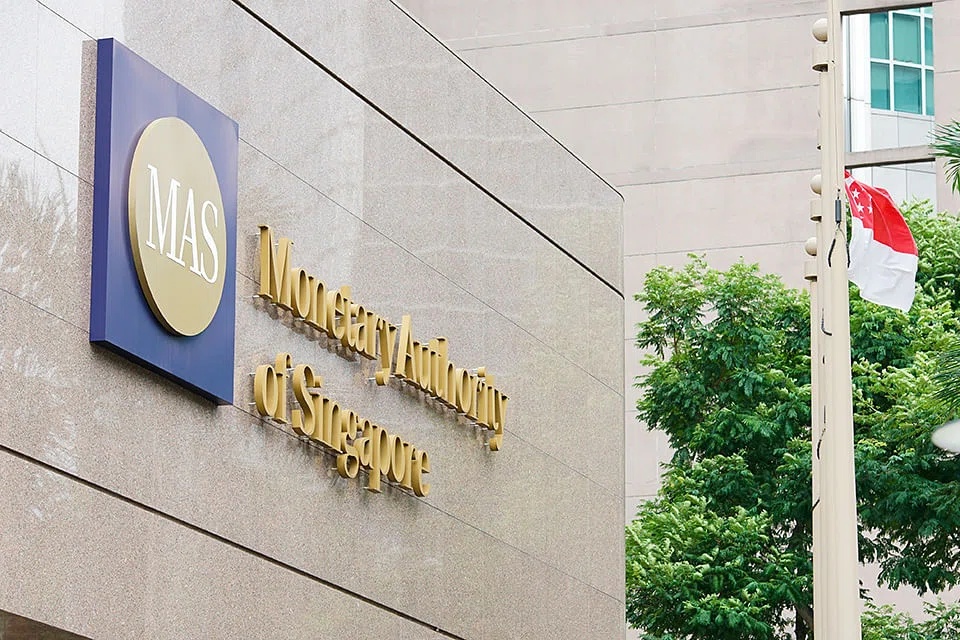
BUSINESSES which do not manage their environmental risk adequately could find themselves facing higher borrowing costs or limits on their loans down the road, if the proposed guidelines released by the Monetary Authority of Singapore (MAS) on Thursday are implemented.
Boards and senior management of financial institutions (FIs) are also expected to incorporate environmental considerations into their strategies, business plans and product offerings, said MAS.
These guidelines are part of a set of three consultation papers issued by the authority on environmental risk management for banks, insurers and asset managers, in efforts to shape Singapore into a global centre for green finance.
Co-created with FIs and industry associations, these guidelines set out MAS' supervisory expectations for FIs in their governance, risk management and disclosure of environmental risk.
In its guidelines for banks, MAS said that the responsibilities of the board include approving an environmental risk-management framework and policies, and setting clear roles and responsibilities for the board and senior management.
MAS also proposed that the board ensures that environmental risk, where material, is addressed in the bank's risk-appetite framework, so that environmental risk exposures beyond the bank's risk appetite can be promptly recognised and addressed.
Senior management will be responsible for developing an environmental risk-management framework and policies, regularly reviewing their effectiveness, and allocating adequate resources to manage environmental risk.
Where environmental risk is deemed material to a bank, the bank should designate a member of senior management or a committee to oversee environmental risk, said MAS.
"This would promote clarity in accountability over environmental risk management, to ensure that such issues are reviewed at a sufficiently senior level."
Banks should develop a risk-management framework, and put in place "robust policies and processes" to manage both the financial and reputational impact of environmental risk. As such, banks should identify, assess, mitigate and monitor material environmental risk at both a customer and portfolio level, said MAS.
At the customer level, MAS proposed that banks undertake an environmental risk assessment of each customer as part of its assessment process for credit facilities or capital markets transactions, particularly for sectors with higher environmental risk.
For transactions with higher environmental risk, MAS proposed that the bank undertake enhanced due diligence, and escalate to an internal committee or appointed individual for approval where applicable. Such processes are intended to bring about a greater level of scrutiny and accountability on such transactions.
The bank should also engage each customer that poses higher risk, to improve its environmental risk profile, and support its transition towards sustainable business practices, according to MAS.
In the case of customers who fail to manage their environmental risk adequately, the guidelines proposed a range of "mitigating options" for banks; these include reflecting the cost of the additional risk in the loan pricing, applying limits on the loan exposure, and re-assessing the customer relationship.
At the portfolio level, MAS proposed that banks develop tools and metrics to monitor and assess their exposures to environmental risk, and take appropriate mitigating measures to manage significant risk in their portfolios, said MAS.
MAS also proposed that banks disclose - at least annually - their approach to managing environmental risk and the potential impact of material environmental risk on the bank, which includes quantitative metrics.
Banks should take reference from international reporting frameworks, including the Financial Stability Board's Task Force on Climate-related Financial Disclosures, to guide their environmental risk disclosures, said MAS.
Ong Chong Tee, MAS deputy managing director, said: "Even as FIs, regulators and policy-makers grapple with Covid-19 and its impact, it is crucial to keep our focus on environmental issues as they pose clear challenges for our economies and financial systems."
Mikkel Larsen, chief sustainability officer, DBS Bank, said that the move signifies MAS' "unwavering commitment for Singapore to become a leading force on sustainability".
"Not only do these guidelines address climate change - which is perhaps the most existential threat of our time - more importantly they address the broader issue of environmental risk," added Mr Larsen, who is co-chair of the working group on the development of the environmental risk management guidelines.
Meanwhile, Frankie Phua, head of Group Risk Management, United Overseas Bank, said that the bank has been "sharpening" its focus on sustainability in its day-to-day decision-making.
"As part of our sustainability strategy, we are also committed to adopting and to promoting climate-resilient practices, as well as to providing sustainable solutions, to support our customers in their transition to a lower-carbon economy," he noted.
As for Chng Bee Leng, head of Group Risk Policy, Group Risk Management, OCBC Bank, she pointed out that tackling environmental and climate change requires "collective efforts".
"This will help to guide banks in holistically managing the various risks related to the environment."
The public consultation papers are available on MAS' website. Interested parties are invited to submit their comments on the proposed guidelines by Aug 7, 2020.
TRENDING NOW

Things to know about DBS’ incoming chairman Anthony Lim
DBS eyes prime brokerage business as Q3 profit falls 5% on weaker trading income

Royal Group and Sunset Hospitality abandon plans to open Casa Mett hotel off Orchard Road

George Yeo adds 100,000 Wilmar shares at S$2.97 apiece, taking stake to over 1 million shares

