MAS working closely with Sias to find it a viable funding model
Singapore
THE Monetary Authority of Singapore (MAS) is "working closely" with the Securities Investors' Association (Singapore), or Sias, to find a sustainable funding model for the retail investor advocacy group to ensure its credibility with investors.
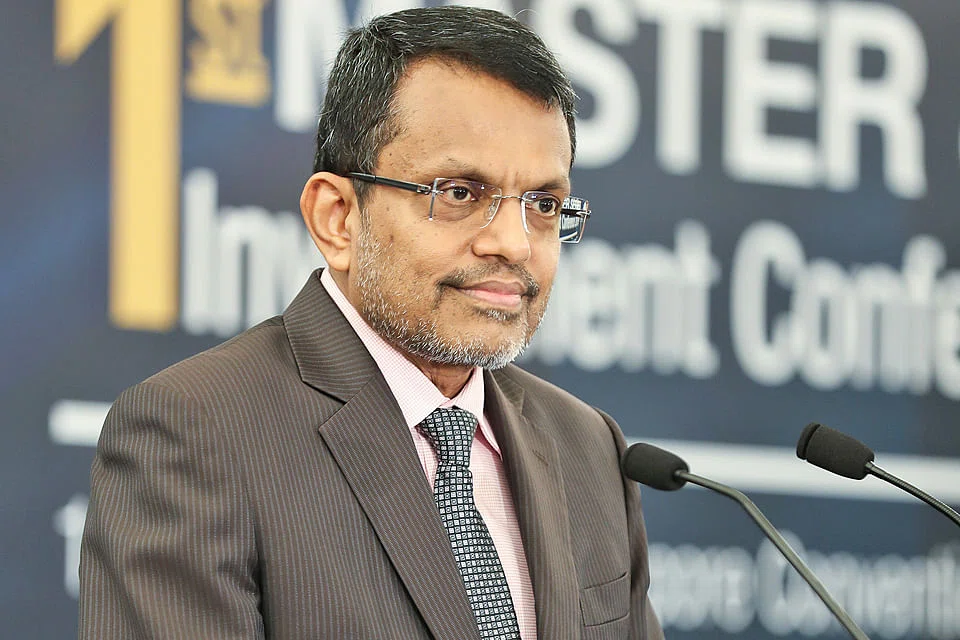
Sias' retail investor advocacy and education will be important going forward, said MAS managing director Ravi Menon, as Singaporeans grow in financial sophistication and take to investing in an increasingly complex and challenging landscape.
Mr Menon's comments, made at Sias' inaugural Master Series Investment Conference on Thursday, come a month after Sias' 20th anniversary celebrations, when Sias chief patron Dr Tony Tan Keng Yam said that Sias needed a new funding model.
Unlike its regular retail investor programmes, the Master Series conference was pitched at more sophisticated investors, such as high net worth individuals, accredited investors and family office clients.
In a series of talks and panels under the theme "The Future of Investing", invited speakers spoke about the changing investment landscape and considered how the more sophisticated, involved investors might engage Sias more actively.
"Investors cannot ignore the implications of climate change," Mr Menon said.
Climate change can directly impair asset value in the short and long term.
Attempts to meet climate mitigation goals will also mean policy change and technological advances that will indirectly impact investments, he said.
He challenged investors to lead a "healthy, balanced, and fulfilling investment life".
Beyond the "cold calculation of climate-related risks and returns," many investors want to leave future generations a "habitable, green, and pleasant" planet, he said.
Mats Isaksson, the Organisation for Economic Co-operation and Development (OECD) head of corporate governance, believes there is an increasing need for active investors.
"I think investors will do society a great favour if they complement their indexing with some active investment," he said in a panel on the future of investing.
"That's sort of an insurance policy going forward so that we don't have a very limited set of companies that are listed.
"If everybody is just investing in the average, and in the same things, that's actually increasing the risk at the macro level of the economy."
Mr Isaksson said concerns that ownership is too dispersed for managers to be effectively controlled is empirically unfounded today.
According to the OECD, the three largest shareholders in 99 per cent of listed companies worldwide hold more than 10 per cent of capital. In almost half of the companies surveyed, three of their shareholders held more than 50 per cent of capital.
"We can get rid of the myth that all listed companies are completely atomised in terms of ownership structure," he said in his address. "There are owners out there, and we should regulate corporate governance with that in mind."
Some panellists were optimistic about technology galvanising non-institutional investors too.
"Minority shareholders today have a voice in a myriad of investing communities," said DBS institutional banking group head Tan Su Shan. "Management has to pay attention ... or they will be called to account."
Other panellists were more sceptical about the likelihood and feasibility of individual investors utilising technology for investments.
Mr Menon said a number of investment opportunities are exiting public markets entirely.
In 2018, the value of listed US companies going private exceeded that of private firms going public, he said.
Closer to home, Asia-Pacific private equity and venture capital assets under management hit nearly US$900 billion last year, reflecting a compounded annual growth rate of 22 per cent for the last five years.
"An allocation to investments in private markets is becoming more common - and necessary - for a well-diversified portfolio aiming for decent returns," said Mr Menon.