Maybank lifts ROE target to 13-14% by 2030 in new five-year strategy ahead of Q4 earnings
It will invest RM10 billion in its technology, data and AI strategy over the next five years

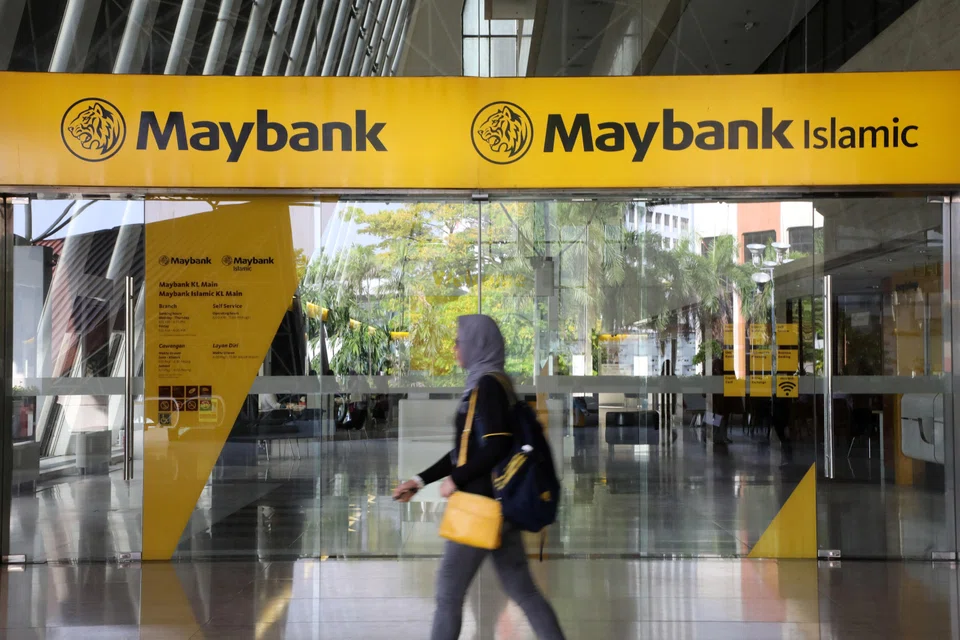
[SINGAPORE] Malaysian lender Maybank on Tuesday (Jan 20) unveiled a new five-year plan outlining a strategic roadmap until 2030.
The plan, Roar 30, aims to deliver stronger and sustainable growth with a target return on equity (ROE) of 13 to 14 per cent by 2030, the Bursa-listed lender said. Its other key targets include aims to deliver a net interest margin of above 2.05 per cent, a cost-to-income ratio of not more than 47 per cent and a current and savings accounts (Casa) ratio of over 41 per cent. The Casa ratio is a key measure of low-cost funding.
The new five-year plan follows the completion of M25+, the refined iteration of Maybank’s previous corporate strategy rolled out in 2021, under which the bank had a target ROE of 11 to 12 per cent.
Its ROE has trended upwards over the past five years, from 9.8 per cent in 2021 to 11.5 per cent for the 9M FY2025.
The plan is built around three strategic pillars of humanising financial services, scaling businesses and strengthening foundations to future-proof the bank.
It will play an integral role in driving the bank’s capabilities and performance beyond 2030, said Khairussaleh Ramli, president and group chief executive officer of Maybank.
“Following the completion of M25+, the new five-year strategy reinforces Maybank’s purpose, with a focus on delivering shareholder value through continued improvement in ROE,” he noted.
Furthermore, the plan will “supercharge” growth by building Maybank’s businesses at scale, as the lender capitalises on Asean’s rising significance, he added.
While Maybank’s home markets of Malaysia, Indonesia and Singapore are key drivers of growth and profitability, plans to enhance connectivity across its broader regional network are on the horizon.


“Beyond our home markets, we will connect our regional footprint via a coherent network strategy to support our clients wherever they go,” he explained.
In its latest financials announced in November, Maybank posted a 3.3 per cent year on year growth to its net profit, which rose to RM2.62 billion (S$828 million), for the third quarter ended Sep 30, 2025.
This came as net fund-based income grew 2.5 per cent on the year to RM5.01 billion, with loans up 2.7 per cent at RM681.7 billion.
The bank’s net interest income grew 5.1 per cent on the year to RM3.3 billion. Its net interest margin dropped one basis point to 2.02 per cent, but rose two basis points from the prior quarter due to proactive liquidity and funding costs management.
Maybank is due to announce fourth-quarter earnings on Feb 26.
Three-pillar strategy
The first pillar of the five-year plan focuses on humanising financial services and covers three primary objectives of delivering exceptional customer experiences, impacting society positively and driving the real economy.
Against a backdrop of trade and investment inflows entering Asean and rising global demand for Islamic finance, Maybank will capitalise on the region’s rising prominence and large addressable market to execute its second pillar.
This pillar is centred on growing four of Maybank’s businesses at scale – the businesses of global Islamic finance, regional wealth management, regional transactions and payments bank as well as regional corporate and investment banking.
The third pillar to future-proof the bank aims to strengthen Maybank’s foundation by focusing on core areas. This includes cultivating an enviable workforce, culture, and organisation; harnessing the full potential of technology, data, and artificial intelligence; and optimising productivity and capital allocation for performance.
Under this pillar, Maybank plans to invest RM10 billion in technology, data and AI strategy over the next five years. The investment aims to strengthen and scale long-term growth beyond 2030 by modernising core banking capabilities and adopting cloud and AI architecture to enhance resilience.
AmBank Research on Wednesday maintained its “hold” call on Maybank with a target price of RM10.80. It referred to the “ambitious” goals of the five-year Roar 30 and said that the ROE target will “hinge on external macro support”.
Notably, Maybank’s peer, Malaysian bank CIMB, aims to hit a near-term ROE target of 12 to 13 per cent by 2027. By 2030, it is targeting a top-quartile ROE – defined as the weighted average ROE of peer banks in CIMB’s core markets – which stood at around 13 per cent as at April 2025.
As for Singapore banks, DBS has an ROE target of 15 to 17 per cent for the next three to five years, which the bank’s CEO Tan Su Shan in March 2025 expressed confidence about hitting. UOB aims to achieve a 14 per cent ROE, according to its 2024 annual report.
“The announced RM10 billion tech spend came as a surprise and could limit dividend upside. That said, current organic 6 per cent yield remains attractive. For a similar large-cap banking exposure, we prefer CIMB for (a) better risk-reward profile,” the AmBank Research note said.
Decoding Asia newsletter: your guide to navigating Asia in a new global order. Sign up here to get Decoding Asia newsletter. Delivered to your inbox. Free.
Copyright SPH Media. All rights reserved.