Mnuchin, Fed officials downplay risks of stock rout as sell-off spreads
The US Treasury Secretary calls it a "correction", and that the economy is still strong
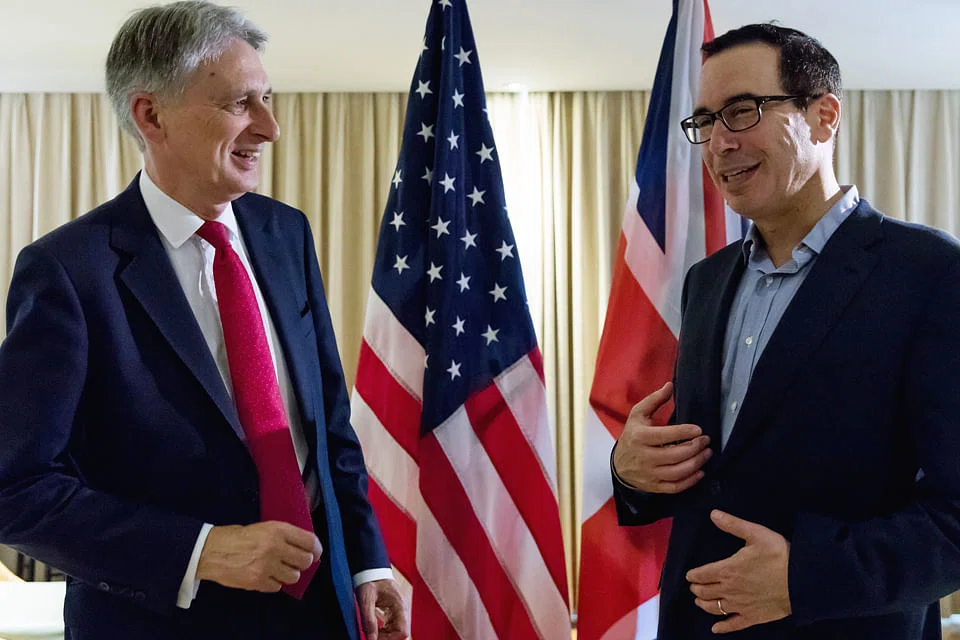
Washington
GLOBAL finance chiefs played down the economic risks posed by the biggest US stock sell-off since February, with many describing the decline as a long-awaited correction.
"The fundamentals of the US economy continue to be extremely strong, I think that's why the stock market has performed as well as it has," US Treasury Secretary Steven Mnuchin told Bloomberg News at the IMF's annual meeting in Bali, Indonesia.
"The fact that there's somewhat of a correction given how much the market has gone up is not particularly surprising," said Mr Mnuchin, whose calm response was echoed by Federal Reserve officials and other international policymakers as the fall in US equities extended to Asia on Thursday.
Even so, the market tumble may capture the tone of the Bali talks, where policymakers are increasingly focused on the risks to global growth amid escalating trade tensions and the Fed's embrace of higher interest rates. The fund this week cut its global forecast for the first time in two years and said growth may have plateaued, citing escalating trade tensions and growing stress in emerging markets, which have been struggling with higher borrowing costs and capital outflows as US rates rise.
IMF managing director Christine Lagarde also cautioned against reading too much into the sell-off. "There are ups and downs, and I think it's fair to observe that the US equity markets and stock markets in general have been extremely high," she said on Thursday. "We are facing a bit of an unprecedented situation," said Ms Lagarde, pointing to growing protectionism and tightening monetary policy in the US. "It's the combination of the two that's probably showing in some of the tensions" in markets, she said.
However she added that the IMF isn't seeing evidence of "contagion" from emerging markets whose currencies have fallen sharply. The stock sell-off rolled through Asia on Thursday, with benchmarks from Tokyo to Hong Kong seeing declines above 3 per cent. The dollar weakened and some emerging-market currencies came under pressure.
Mr Mnuchin said the correction doesn't reflect a wider systemic problem. "Markets are not efficient and markets move in both directions and at times they overshoot in both directions," he said.
Federal Reserve officials also sounded relaxed with Atlanta Fed President Raphael Bostic and Charles Evans, the Chicago Fed president, on Wednesday downplaying the economic effects of the market decline.
"I won't let a stock market moving on its own reshape my view of the economy," Mr Bostic said. Mr Evans said he wasn't aware of "anything happening in the last couple of weeks that alter my basic take that financial stability conditions are reasonably moderate, and that we're in reasonable shape at the moment". As markets tumble, President Donald Trump laid the blame at the feet of the Fed, which raised rates again last month. Mr Trump on Wednesday called the tightening a mistake and accused the Fed of "going loco".
But it's "inevitable" to expect central banks to be tightening monetary policy at a time when their economies are doing well, said Ms Lagarde. "It's clearly a necessary development for markets that are now showing much improved growth, inflation that is picking up and reaching its threshold, and unemployment that is extremely low." Concerns about higher rates have roiled the US Treasury market, where yields have risen to multi-year highs. Ten-year yields reached 3.26 per cent on Tuesday, a level last seen in 2011. Money markets are cutting back predictions for how much the Fed will raise interest rates over the next year, fully pricing in only two rate increases by the end of next year and around 80 per cent of a third, after having priced in more than three hikes on Tuesday.
Investors should also expect more episodes of volatility such as the recent surge in yield on the 10-year Treasury, Tobias Adrian, head of the IMF's monetary and capital-markets department, said in an interview in Bali. BLOOMBERG
READ MORE: