

Singapore banks beat earnings estimates in Q3 as rate hikes boost margins

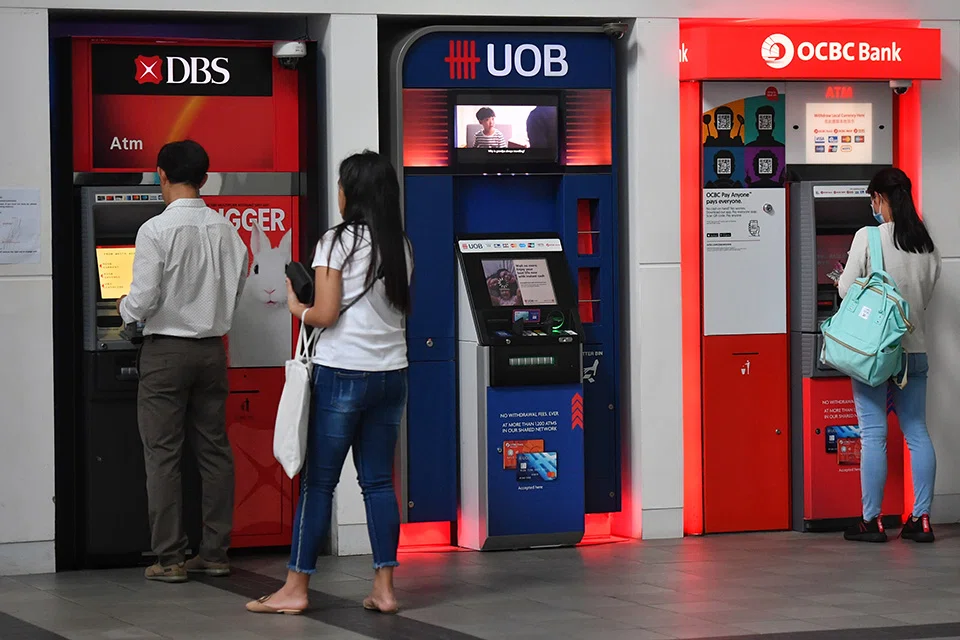
SINGAPORE banks posted robust earnings in the third quarter of 2022, with several record figures, as the lenders continued to benefit from interest rate hikes.
But top executives of the local banking trio warned of a slowdown in Asia, even as rate hikes will likely continue to support net interest margins (NIMs). Analysts, meanwhile, warned that credit costs are set to rise amid recession risks, with downside risks to the banks’ asset quality going forward.
All three local banks beat analysts’ earnings estimates for the quarter ended September.
UOB reported a 34 per cent increase in quarterly net profit to S$1.4 billion. This was driven by record net interest income, which rose 39 per cent to S$2.2 billion.
DBS posted a 32 per cent rise in net profit to a record S$2.24 billion, amid higher NIMs, healthy loan momentum and stable fee income.
OCBC’s net profit rose 31 per cent to S$1.6 billion, and its net interest income gained 44 per cent to cross the S$2 billion mark for the first time. The bank has also seen the strongest margin expansion among its peers for two straight quarters.
The positive numbers prompted several upgrades and hikes in target prices.
RHB upgraded its call on UOB to a “buy” from “neutral”, and raised its target price to S$31.40 from S$29.30. Maybank’s Thilan Wickramasinghe also raised his target price on UOB, to S$33.77 from S$32.28.
For DBS, RHB raised its target price to S$41.10 from S$37.60, while Maybank’s Wickramasinghe raised his to S$42.69 from S$42.18.
But there remain risks in the quarters ahead. CGS-CIMB’s Andrea Choong and Lim Siew Khee lowered their target price on UOB to S$34.80 from S$35.60, as they factored in 2023 estimates and a higher risk-free rate.
UOB’s chief financial officer Lee Wai Fai flagged that the bank’s cost of funding is rising as savers move their money out of current and savings accounts – which pay less interest – and into fixed deposits.
However, he expects that this trend will slow as the pace of interest rate hikes will likely moderate. RHB’s research team also noted that UOB had made a tactical move to accumulate fixed deposits earlier in the rate upcycle, which should help sustain its NIMs.
OCBC’s chief executive Helen Wong said the high-NIM environment could potentially hold for the next year, though deposit and funding costs will pick up in tandem with rate hikes.
Weaker macroeconomic and market sentiments have already weighed on the fee incomes of the three banks.
A report by Fitch Ratings noted that commission and fee income remained soft as loan-related fees moderated, while wealth-management fees were muted in light of market sentiment. It added that this trend is unlikely to change in the near term.
UOB’s wealth fees remained soft amid subdued market sentiment, while loan-related fees for the quarter moderated from a high base in Q2.
DBS’s loan momentum was supported by non-trade corporate and housing loans, but CEO Piyush Gupta noted that it “has been hard to hold the credit spread in the trade book” with rates on the rise.
OCBC’s non-interest income for Q3 slipped 4 per cent, largely due to a decline in wealth management fees amid risk-off investment sentiments globally.
The Fitch Ratings team expects more tepid loan growth next year, due to slowing gross domestic product growth across most of South-east Asia and higher interest rates. The lenders’ asset-quality will likely also worsen in 2023, given the time lag before rising rates affect repayment ability.
But the team added: “Domestic unemployment remains low, and the banks have sizeable general provisions that were booked during the Covid-19 pandemic to act as a buffer.”
Executives at all three banks sounded cautiously optimistic about their resilience. UOB CEO Wee Ee Cheong expects Asean economies will slow but skirt a recession in the coming months, and sees UOB benefiting from fund flows into the region amid political risks elsewhere.
DBS’s Gupta expects the lender can post a “solid year” in 2023, even though the tail-risk scenario of high rates and high inflation will likely play out next year, with inflation remaining sticky and the United States Federal Reserve continuing its rate hikes.
As for OCBC’s Wong, she expects Asia will be more resilient amid recession risks in the US and Europe.
On Friday (Nov 4), shares of UOB closed at S$28.40, DBS closed at S$34.47 and OCBC closed at S$12.04. Over the week, UOB shares were up 5 per cent, DBS was up 2 per cent, and OCBC gained 0.4 per cent.
TRENDING NOW

Grab CEO’s wife Chloe Tong on life with Anthony Tan and finding her purpose

Brokers maintain ‘buy’ on CDL despite investor reservations over strategic review

Deal between tycoon friends sparks scrutiny of Philippine power sector

Hwa Seng Builder, two China companies win S$1.2 billion Tuas Road Viaduct phase two contracts

