

How to stop personal debt from snowballing
One charity scheme nudges debtors into 'savings mode' more quickly to stop the spiral

Singapore
AS relief schemes put in place to cushion the pandemic's financial blow start to expire, debt balances are likely to go up in the coming months. Already, figures from the Credit Bureau Singapore show personal debt rising, with the average personal loans and overdraft balances for those under 30 up by about 23 per cent in the first quarter of this year.
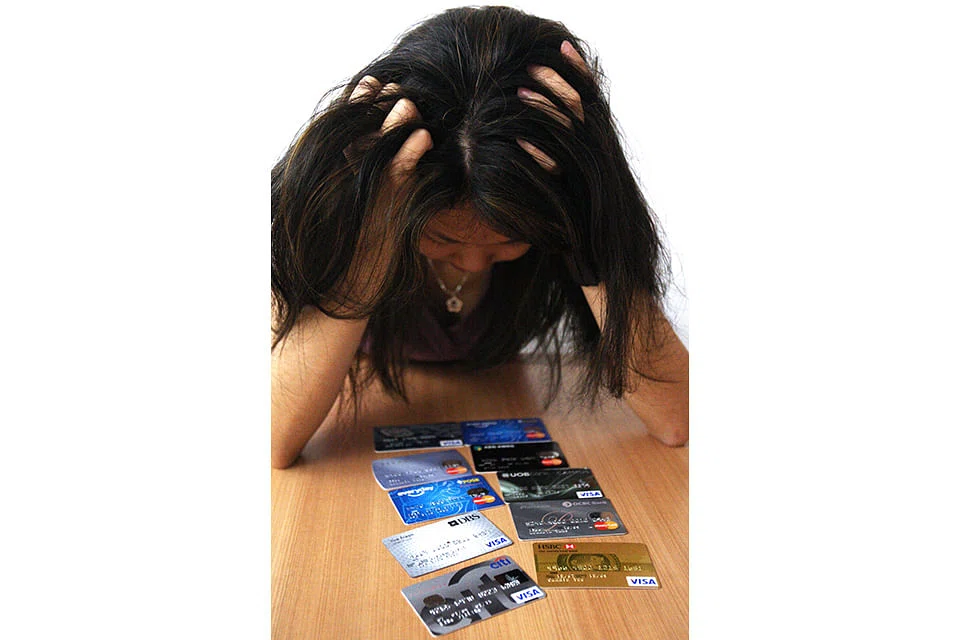
Accumulated debt can be difficult to pay off, especially as the balances mushroom with interest - sometimes even snowballing for decades, according to first-hand accounts The Business Times has heard.
What makes a sustainable debt reduction strategy? One novel poverty alleviation programme by the Methodist Welfare Services (MWS) in Singapore targeted at low-income families may offer some helpful principles.
The MWS's Family Development Programme (FDP) began as a pilot in 2013 to help chronically indebted families increase their net worth either by matching their savings and thus building up their assets, or by matching their payment of chronic debt.
For every dollar that a client contributes towards repaying his or her family's debt, the non-profit organisation will match with S$2 directly paid to creditors, such as the Housing and Development Board, utilities service providers and telecommunications providers.
The matched amount is capped at S$200 a month. Clients who clear their debts within the period of assistance may then move on to savings matching. This means whatever they manage to squirrel away each month will be matched and doubled by the MWS.
The FDP was formalised in 2016 and has supported over 500 families. The MWS relies entirely on donations to keep it going. Although the programme is targeted at low-income families in the lowest 10th percentile, it holds some instructive principles for debt management across the board.
Arrest the problem early
Unlike other debt relief programmes, the FDP extends aid to the poor before they fall into chronic debt or have exhausted all their finances, said FDP manager Annie Goh. This prevents the debtors from spiralling into anxiety, easing their emotional capacity to plan for the future.
"This difference is important because research has shown that chronic poverty and having multiple debt accounts tax a person's mental bandwidth, hurting the person's ability to think clearly, make meaningful decisions or long-term plans, and hinders success in life. This is also often associated with mental health problems such as severe anxiety and depression, which in turn exacerbate the inability to manage debts."
Two individuals who had previously spiralled into debt woes highlighted the emotional toll of ratcheting debts. They sought help from Credit Counselling Singapore.
"It was torturous when you have the banks hounding you, non-stop, to ask for payment," said Lydia (not her real name), who is in her mid-30's and works in the healthcare sector. "At some point, it became very scary and I didn't want to answer any calls at all. When you see a phone call, you'd feel agitated and you really don't know what to do."
Lydia draws a gross monthly salary of about S$5,300, and accumulated debt of about S$114,000 due to an "expensive lifestyle", she told BT.
Wayne (not his real name), a 50-year-old civil servant, said: "It was a very stressful time, I couldn't sleep at night because I'm thinking about where the money would be coming from, how I'm going to put food on the table."
He fell into debt after consistently overspending on his credit cards and gambling at the casinos. At the peak, he owed around eight banks some S$250,000.
The FDP's 1:2 matching ratio gives families on the programme an emotional boost to clear their debt and start saving at a quicker rate.
"Putting these families more quickly into the savings mode helps cushion them from negative economic shocks (and) reduces anxiety, which helps them think more calmly and make longer-term meaningful plans such as their children's education or home ownership," Ms Goh said.
Make a plan
Debts will be more easily managed if they are consolidated into one main account. Credit Counselling Singapore's general manager Tan Huey Min suggested terminating some credit facilities where applicable.
"It is generally easier to manage one to two credit card accounts as compared to having to manage half a dozen credit card accounts. Besides, having fewer credit facilities could help prevent one from incurring excessive debts."
Debtors should establish a target time to pay down their debt, with specific timelines and concrete steps to achieve that. Ms Tan gave an example: "For instance, to pay down my outstanding debt of S$5,000 within 12 months, I need to stop using my credit card and make at least S$420 payment per month before the due date. This means I have to wake up on time to take the MRT/bus to work instead of taking a taxi, reduce restaurant dining to alternate weeks, limit drinking branded coffees to twice a week, etc."
A good debt relief programme should also include an "end state" on which financial assistance will cease.
"This will avoid learned helplessness, and cultivate independence in financial management. For MWS FDP, the goal is for the family to accumulate savings of S$10,000, after which they will 'graduate' and leave the programme so that other eligible families may come on board," Ms Goh said.
Aim for behavioural change
Besides financial assistance, the programme involves counselling, casework and financial literacy training.
"Unlike most financial assistance schemes that disburse one-time cash assistance for a limited period of time, MWS FDP works on a longer time frame. The longer time frame gives families more time to make behavourial changes that will contribute towards clearing debt or forming the habit to save," said Ms Goh.
"The programme should demand discipline and commitment to clearing agreed sums at regular intervals," she said.
Both Lydia and Wayne, who sought help with Credit Counselling Singapore, attested to the importance of discipline and commitment to change, in preventing themselves from falling into debt again.
CCS counsellors helped work out a repayment schedule and negotiate with the banks to bring down the interest rates, Wayne said, on condition that debtors stick with the repayment schedule. "Otherwise, the banks will take back the offer," he said.
He added: "Now, I don't own any credit cards and I don't see a need to get one unless I go overseas frequently. Otherwise, I can make do with just a debit card. My advice for others would be to spend within your means as far as possible, and don't go to the integrated resorts."
- The Money Playbook is a personal finance column that discusses how to take charge of your financial well-being.






