

MoneyOwl eyes financial planning for Singapore's middle class
Singapore
SINGAPORE'S rising mass affluence is a key market for financial services players looking to gain more ground at the retail level.
More so, as the pursuit of wealthy individuals has left some needs of the middle class segment unaddressed - a gap that financial advisory and NTUC social enterprise MoneyOwl is looking to fill.
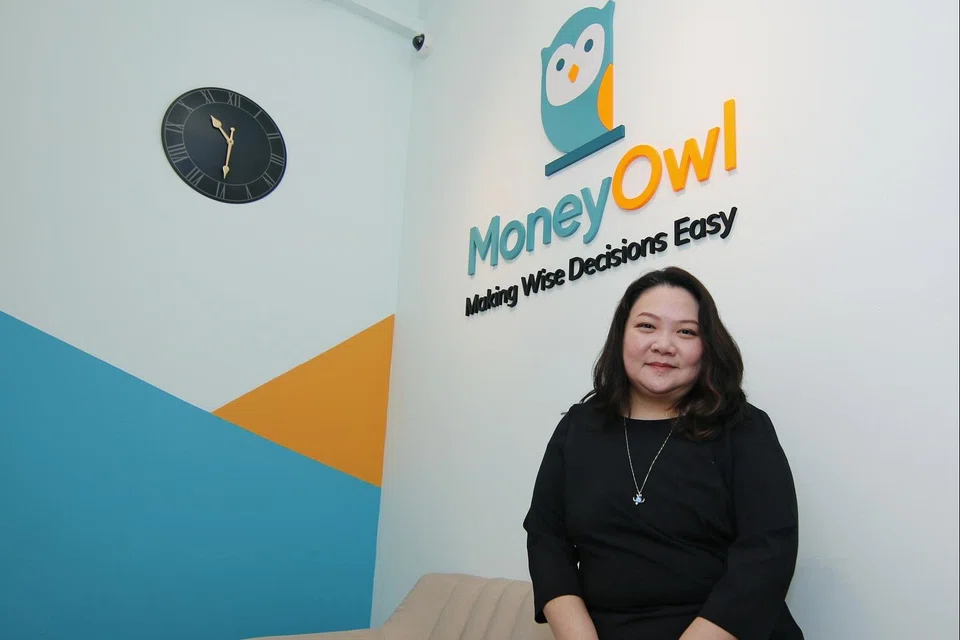
"Our business is very much focused on helping ordinary working families. We saw an underserved need for comprehensive, competent and conflict-free advice, especially in the mass market," MoneyOwl chief Chuin Ting Weber told The Business Times.
The firm offers four services - financial planning, insurance, investment and wills - but its key focus is in growing the financial planning advisory business.
For a fee of S$99, individuals get a two-hour consultation with a MoneyOwl financial adviser (FA) and access to an online financial planning platform and a personalised report.
Given the firm's Singapore focus, a large part of the planning process incorporates national schemes such as CPF Life, said Mrs Weber.
Over 2,000 people, mostly in their 40s and 50s, have signed up for this service since its launch in early 2020.
To further reach the working class, the firm looks to tap NTUC's union network of over 800,000 members, with a target to onboard 60,000 of them in the next two years. NTUC members get a heavily discounted rate of S$24.75 for MoneyOwl's financial planning service.
"Many (customers) come forward because they're confused about the many products that are out there. They also often come with some baggage... having been offered free financial planning services but unsure if they can trust the adviser.
"Some have a lot of investments and insurance policies but don't really know how to put them all together. So that's what we're trying to do, to help people see the whole picture," said Mrs Weber.
As MoneyOwl is not tied to banks and other product providers, or backed by venture capital, it is in a more "conflict-free" position to offer objective advice. Its FAs are also salaried and not commission-based.
"Some people still look at some of those free financial advisory sessions as a 'sweet wrapper' for selling their products," said Mrs Weber.
MoneyOwl has been profitable in the last two financial years; it declined to disclose more details.
In today's digital age, a growing number of online financial planning tools that help users manage money independently has raised questions about the demand for in-person services. Almost all major banks here have comprehensive financial planning features embedded in their mobile banking apps. Retirement calculators are also widely available online.
Last December, the national launch of SGFinDex has further enabled individuals to consolidate their financial data across banks and public agencies for a more holistic view of their finances.
Mrs Weber remains unfazed, noting that technology is still a means to an end. "We see good advantages in technology, but technology by itself has limitations. It's great for calculations and simulations but it lacks human empathy... talking about life goals. Some of these things you can't calculate."
MoneyOwl positions itself as a "bionic" financial adviser, leveraging tech where needed while still maintaining strong human interaction.
"We are trying to find that right balance between scaling sustainably and, at the same time, knowing that human touch is of value to our clients," said Mrs Weber.
As retail investing grows, MoneyOwl has its own robo-advisory platform to complement the financial planning service. Last August, it reduced the annual advisory fees and absorbed its third-party platform fees to make investing more accessible to the middle class.
The firm has a strict fund selection process; for now, investors can only choose from five portfolios comprising funds from Dimensional Fund Advisors that are "tried and tested" and not based on forecasting the market, said Mrs Weber. She added that Dimensional funds "trust markets and don't gamble (with) investors' money". Their strategies align with MoneyOwl's philosophy of staying invested in broadly diversified markets to capture long-term returns.
Though this investment stance limits the type of funds that can be offered, variety is not the aim of the game as MoneyOwl does not see itself as a standalone robo player.
It is, for now, more focused on incorporating CPF investment schemes. "Some people may want to use their CPF ordinary accounts for investing and this is where we can help. Everyone should look at their CPF holistically," said Mrs Weber.






