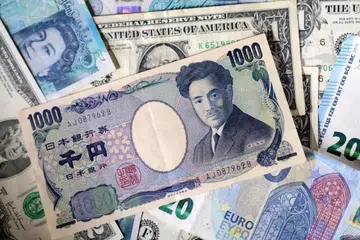
Most Asian currencies slip on limited impact from Turkish lira plunge
 Add BT as a preferred source
DeeperDive is a beta AI feature. Refer to full articles for the facts.
Bengaluru
MOST emerging Asian currencies edged lower on Monday, as risk appetite was sapped by a slump in Turkey's lira after President Tayyip Erdogan sacked the country's hawkish central bank governor.
However, the impact of the tumbling lira was muted as analysts flagged a limited contagion effect in the region.
Turkey's lira recovered partially to 7.8 against the US dollar, after sliding 15 per cent to near its all-time low in early trade in reaction to the president's shock weekend decision to replace central bank governor Naci Agbal with a former ruling party lawmaker and critic of tight monetary policy.
The Indonesian rupiah and the Thai baht weakened 0.2 per cent against the US dollar, while the Philippine peso and Malaysian ringgit dropped 0.1 per cent each.
"What is happening in Turkey is very country-specific and doesn't really have any direct bearing on Asia," said Khoon Goh, head of Asia research at ANZ Banking Group.
Navigate Asia in
a new global order
Get the insights delivered to your inbox.
Citi Research analysts pointed that the last lira slide in value between August and early November last year was not accompanied by a generalised emerging forex sell-off.
Bucking the trend, South Korean won strengthened slightly after preliminary data showed the country's exports during the first 20 days of March jumped 12.5 per cent from a year earlier.
Investors were awaiting central bank meetings in the region later in the week. Unlike other emerging economies such as Russia and Turkey, which have already embarked on a monetary tightening cycle, Asian central banks have stood pat on rates. Last week, Indonesia and Taiwan kept their key interest rates steady. Central banks in the Philippines and Thailand are expected to leave rates unchanged at meetings this week.
"Coming out of the worst recession since at least the asian financial crisis, we don't think Asian central banks will be in a hurry to withdraw monetary policy support", Deutsche Bank analysts wrote in a note. Expectations of a stronger yuan and continued external surpluses should limit the weakness in Asian currencies, Deutsche Bank added, allowing the timing of rate hikes in Asia to be motivated by local growth and inflation concerns.
Safe-haven currencies such as the Japanese yen and the US dollar strengthened, pointing towards a "risk-off" environment.
A spike in Covid-19 cases in the Philippines and India remained a cause of concern, weighing their shares down 0.6 per cent and 0.5 per cent respectively. India reported its biggest daily jump in cases in four months on Sunday, while the Philippines is set to expand tighter Covid-19 rules and restrict travel to battle a renewed surge in infections. REUTERS
Decoding Asia newsletter: your guide to navigating Asia in a new global order. Sign up here to get Decoding Asia newsletter. Delivered to your inbox. Free.
Share with us your feedback on BT's products and services