

MUFG to make foray into Indian real estate, expand forex derivatives
The bank has been scaling up in India, with its investment in Shriram Finance marking a big move

[MUMBAI] Mitsubishi UFJ Financial Group (MUFG) will start lending to real estate firms in India and expand its foreign exchange derivatives business in the country’s low-tax hub, as it seeks to deepen its presence in the world’s fastest-growing major economy.
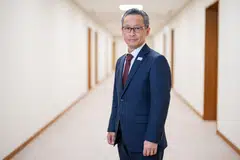
Japan’s biggest bank is setting up a team which will start operations this financial year, said Shashank Joshi, MUFG India’s deputy CEO. The push comes as it broadens its India franchise after completing a US$4.4 billion stake purchase in Shriram Finance this month, taking its total investment in the country to about US$7 billion.
Property financing in India marks MUFG’s strategic expansion into an industry where developers such as Lodha Developers and Adani Group are benefiting from urbanisation.
Demand for office space has climbed to record levels as companies including JPMorgan Chase, Nvidia and Amazon.com step up operations in India. Luxury housing is also booming while home sales remain muted.
India’s real estate market has attracted global investors, including Brookfield Asset Management and Singapore sovereign wealth fund GIC, while Blackstone has amassed a portfolio worth tens of billions of US dollars.
Still, the industry is viewed as relatively risky due to developers’ historically high leverage and persistent challenges around land acquisition and project delays.
MUFG aims to fund projects developed by both foreign and local builders using its Indian balance sheet, primarily through rupee-denominated debt, said Joshi. The bank is also open to funding in foreign currency as the business develops.
“As institutional familiarity with the market deepens, it becomes possible to look beyond traditional top-tier corporate lending, while maintaining a disciplined, project specific risk approach,” he said.
MUFG, like other Japanese megabanks, has been scaling up in India, with its investment in Shriram Finance marking a big move. “Our 20 per cent stake reflects a strategic choice rather than a regulatory constraint, and we have been clear that this level of ownership aligns with our objectives,” said Joshi.
SEE ALSO





MUFG has traditionally focused on corporate lending in India and become a leading arranger of foreign-currency loans in the country, according to data compiled by Bloomberg. It set up its local securities subsidiary last year.
The bank is also establishing a specialist foreign exchange derivatives business in the Gujarat International Finance Tec-City, the country’s low-tax hub. This is aimed to support client hedging requirements and the lender’s internal risk management activities, in line with regulatory norms, said Joshi.
The Reserve Bank of India last month imposed restrictions on banks’ derivative trades, which were seen as one of the factors behind the rupee’s decline against the US dollar. Traditionally, the rupee’s offshore derivative trades are widely used by foreign lenders catering to global clients.
Over the last roughly five years, MUFG has expanded its headcount tenfold to 5,000 in the country by setting up Global Capability Centers or GCCs, and growing its other businesses.
“We will hire another 1,000 people in the current year, a majority of whom will come for the bank’s GCC operations in Mumbai and Bangalore,” said Joshi. MUFG established its first India branch in Mumbai in 1953 and now has branches in cities, including New Delhi and Chennai.
MUFG’s Indian business has an asset size of over US$20 billion, with about 60 per cent sourced from the the Gujarat International Finance Tec-City, said Joshi. BLOOMBERG
Decoding Asia newsletter: your guide to navigating Asia in a new global order. Sign up here to get Decoding Asia newsletter. Delivered to your inbox. Free.
Share with us your feedback on BT's products and services
TRENDING NOW

Once staunchly pro-China, Malaysian Chinese businesses are now distancing themselves from Beijing

Looking beyond looming CEO succession, should UOB potentially pursue a transformative merger?

Could stablecoins be the future of money?

Grab CEO’s wife Chloe Tong on life with Anthony Tan and finding her purpose

